
The Minimalist Move: Semicircular and Beveled Edge Hinges for Sleek Bathrooms
A Sleek Bathroom Hardware setup depends on small parts doing big work: the hinge must hold a glass door that may weigh 30 kg to 55 kg, open reliably through 90 degrees to 180 degrees, and resist moisture exposure for 24 months to 120 months or more. Semicircular profiles feel lighter than blocky shapes, while beveled fittings add a precise finished edge without making the room look busy. Minimalist Pivot Design matters because it helps the door move smoothly, so the enclosure feels premium with fewer visible components. A Decorative Glass Hinge can still fit a minimalist scheme when the detailing is subtle, the finish is controlled, and the geometry matches the glass. In short, chooserounded hinges and beveled fittings if you want understated style, dependable support, and a bathroom that appears larger by 1 m to 3 m visually even when the floor area does not change.
A bathroom rarely has unlimited space. In many homes, the wet area may measure only 3 m to 6 m. That is why hardware shape matters. A square, bulky hinge can interrupt sightlines every 200 mm to 400 mm, while a rounded hinge visually blends into the edge of the glass. Semicircular Shower Hinge formats are useful because they reduce hard corners, so the eye moves across the enclosure more naturally.
Minimalism is not the same as emptiness. It is controlled function. Sleek Bathroom Hardware must still tolerate steam, soap, and repeated movement. A family bathroom can see 10 cycles to 25 cycles per day. Over 1 year, that becomes 3,650 cycles to 9,125 cycles. Hardware that looks simple must actually be carefully engineered.
Key design idea: Use less visible metal, but use better metal. In minimalist bathrooms, every exposed component carries more visual weight per 1 unit than it would in a heavily framed enclosure.
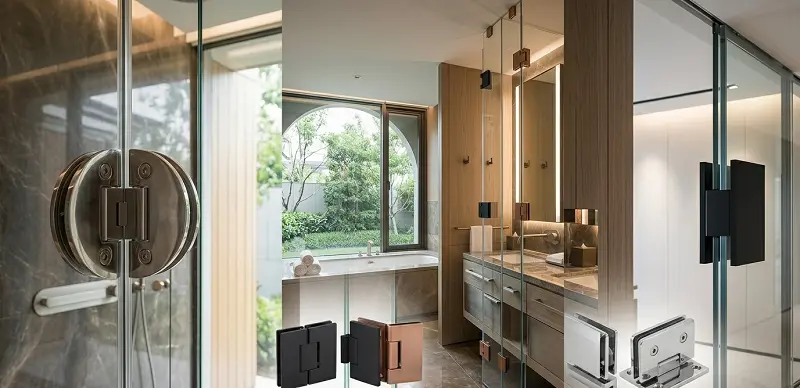
A Semicircular Shower Hinge typically features a rounded exterior profile rather than a full rectangular block. Rounded forms feel gentler in compact spaces. They also pair naturally with oval mirrors, curved basins, and softened tile edges that are common in 2026 bathroom trends.
From a performance standpoint, the hinge still has to clamp or connect glass securely, maintain alignment, and support opening motion over a specified angle such as 90 degrees, 135 degrees, or 180 degrees. Review options on the internal category page for https://www.huazhuprecision.com/shower-hinge/ to match door configuration and finish.
A Beveled Edge Glass Fitting helps a shower enclosure feel finished at a close viewing distance of 0.5 m to 1.5 m. In minimalist interiors, people notice the edge quality more easily because there is less ornament competing for attention. A bevel introduces a crisp transition that catches light softly instead of creating a blunt stop.
| Element | Common Range | Why It Matters |
|---|---|---|
| Glass thickness | 8 mm to 12 mm | Determines hinge compatibility, cutout pattern, and door rigidity. |
| Door width | 600 mm to 900 mm | Affects leverage on the pivot and the required load rating. |
| Door mass | 30 kg to 55 kg | Impacts long-term performance and mounting requirements. |
| Opening angle | 90 to 180 degrees | Controls access, cleaning clearance, and user comfort. |
| Maintenance interval | 3 to 6 months | Helps preserve finish and smooth operation in wet conditions. |
Minimalist Pivot Design is not only about hiding mechanics. It is about using motion elegantly. A shower door should open with controlled resistance, hold alignment along the vertical axis, and return to rest without wobble. When pivot geometry is well planned, the enclosure feels calm and expensive even if the room size is only 4 m.
Minimalist pivots are especially useful in bathrooms with large-format wall tile, slim drain channels, and low-profile shower trays. They improve cleaning access by allowing a wider opening angle such as 180 degrees and reduce visual clutter compared with multiple framed joints.

In modern bathrooms, decoration is usually subtler. It may appear as a soft radius, a beveled face, a satin finish, or a refined cap detail with only 1 mm to 3 mm of chamfer. The hinge is decorative because it contributes intentional beauty, not because it is loud. A rounded profile or beveled edge adds character because it catches light gently.
Sleek Bathroom Hardware must perform under moisture and cleaning chemicals. Common choices includestainless steel, brass-based alloys, and zinc-alloy die cast components. Die-cast components are often selected for precise repeatable forms within a compact footprint of 50 mm to 100 mm.
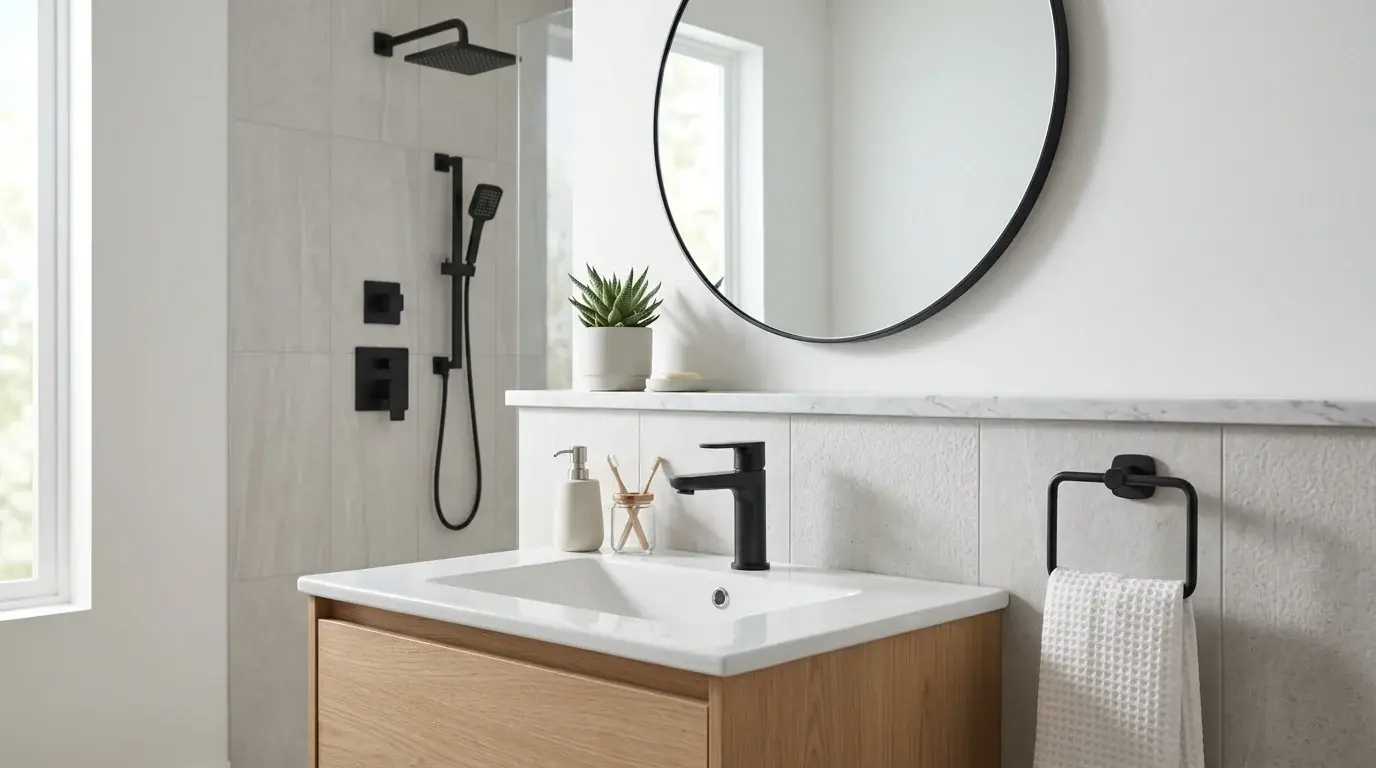
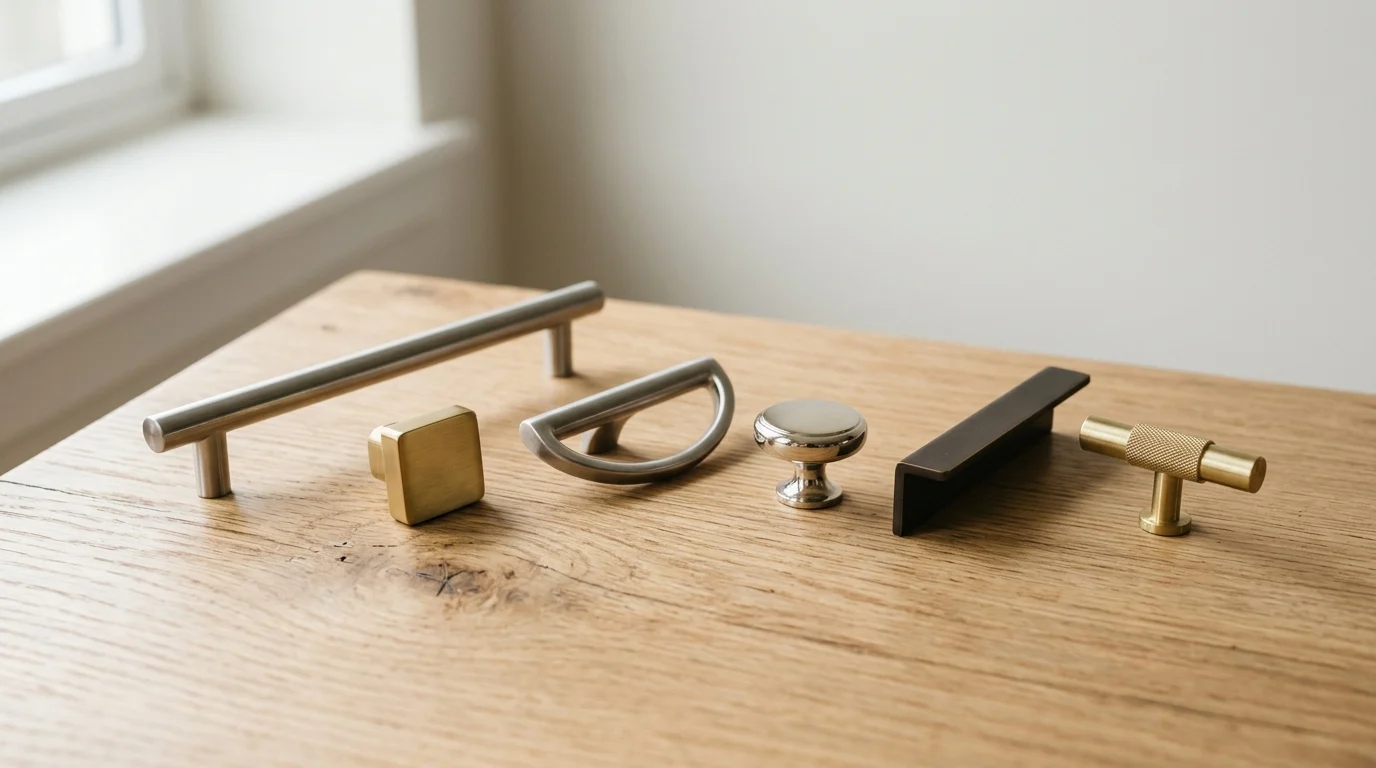
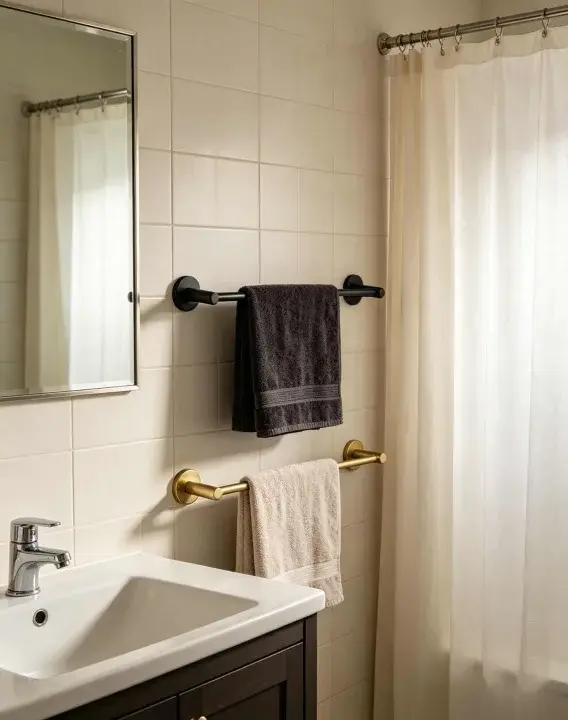
Popular finishes include matte black, satin chrome, brushed nickel, and polished stainless. Matte surfaces often hide fingerprints better over 7 days to 14 days of use. Brushed textures suit minimalist palettes, while highly reflective finishes look elegant but reveal water spotting faster.
Minimalist hardware gives little room for field error. A vertical deviation of only 2 mm to 4 mm can affect door swing and visual symmetry. Pre-installation measurement is critical. The hinge specification must match the door mass and cutout pattern exactly.
Wipe hinges with a soft cloth every 3 days to 7 days, and perform a more thorough inspection every 3 months to 6 months. Avoid abrasive pads. This extends the original appearance for more years. Rounded hinges and low-profile fittings interrupt transparency less, making the room feel larger by 1 m to 3 m in visual effect.
The move toward minimal bathrooms is about choosing details that carry more value with less visual weight. A Semicircular Shower Hinge offers softness and clarity. When combined with regular maintenance every 3 months to 6 months, these components define a shower space that looks refined today and remains relevant in 2026 and beyond.