


Introduction
High-quality Bathroom Fittings play a surprisingly important role in LEED certification for new school buildings, where everyday water use and fixture durability directly affect both sustainability goals and operating costs. By selecting efficient, durable, and code-compliant washroom components early in design, project teams can help meet indoor water reduction targets, reduce maintenance burdens, and support long-term performance in high-traffic environments. This article explains why these fixtures matter, what makes them suitable for school projects, and how they contribute to earning certification points without compromising reliability.
Why Bathroom Fittings matter for LEED certification
When I first started managing school construction projects, I spent most of my time worrying about HVAC systems and solar panels to hit our sustainability targets. Over the years, however, I've realized that we often overlook one of the most efficient paths to certification: the washrooms. Bathroom Fittings are massive point-drivers for any LEED v4.1 BD+C (Building Design and Construction) project. In fact, to even meet the basic prerequisites for indoor water use, you must demonstrate a baseline 20% reduction in aggregate water consumption.
Schools are incredibly high-traffic environments. A mid-sized high school with 1,500 students will cycle through restroom facilities thousands of times a day. By focusing on the right fixtures early in the design phase, we not only secure essential certification points but also drastically reduce long-term utility and maintenance costs for the school district.
How to define high-quality Bathroom Fittings
So, what exactly makes a fixture "high-quality" in this context? For commercial school applications, it goes way beyond a shiny chrome finish. I look for heavy-duty, solid brass construction and ceramic disc cartridges that are factory-tested to withstand at least 500,000 cycles. These components must survive daily abuse and intentional vandalism.
Furthermore, high-quality means strict material compliance. We need components that meet the AB1953 standard, containing less than 0.25% weighted average lead content. You will also want to source Environmental Certification Fixtures that come with transparent supply chain documentation, as the manufacturing footprint of the metal itself plays a major role in modern green building standards.
Which LEED credit categories Bathroom Fittings can influence
If we break down the LEED scorecard, Bathroom Fittings directly influence several key categories. The most obvious isWater Efficiency (WE). You can score up to 11 points simply by pushing your indoor water use reduction past the 20% prerequisite up to the 40% or 50% mark.
But it doesn't stop there. Under the Materials and Resources (MR) category, specifying fixtures that carry Environmental Product Declarations (EPDs) or Health Product Declarations (HPDs) helps you earn points for building product disclosure. Even the Indoor Environmental Quality (EQ) category can see minor benefits if we ensure the sealants, gaskets, and adhesives used during the installation of these fixtures meet stringent low-VOC (Volatile Organic Compound) limits.
Which Bathroom Fittings specifications improve LEED outcomes
Getting into the weeds of specifications is where the real magic happens. We cannot just slap a "green" label on a blueprint and call it a day; we need to look at exact flow rates, sensor technologies, and lifecycle metrics. When you multiply a small efficiency gain across fifty or sixty washroom sinks in a school building, the aggregate savings become staggering.
How water efficiency, durability, hygiene, and maintenance affect performance
Water efficiency is the baseline. Standard public lavatory faucets flow at 2.2 gallons per minute (GPM). For a LEED-optimized school, I always push for 0.35 to 0.5 GPM aerators. If we are using metering faucets (the push-button type), they need to deliver no more than 0.20 gallons per cycle, ideally set to a strict 10-second automatic shutoff.
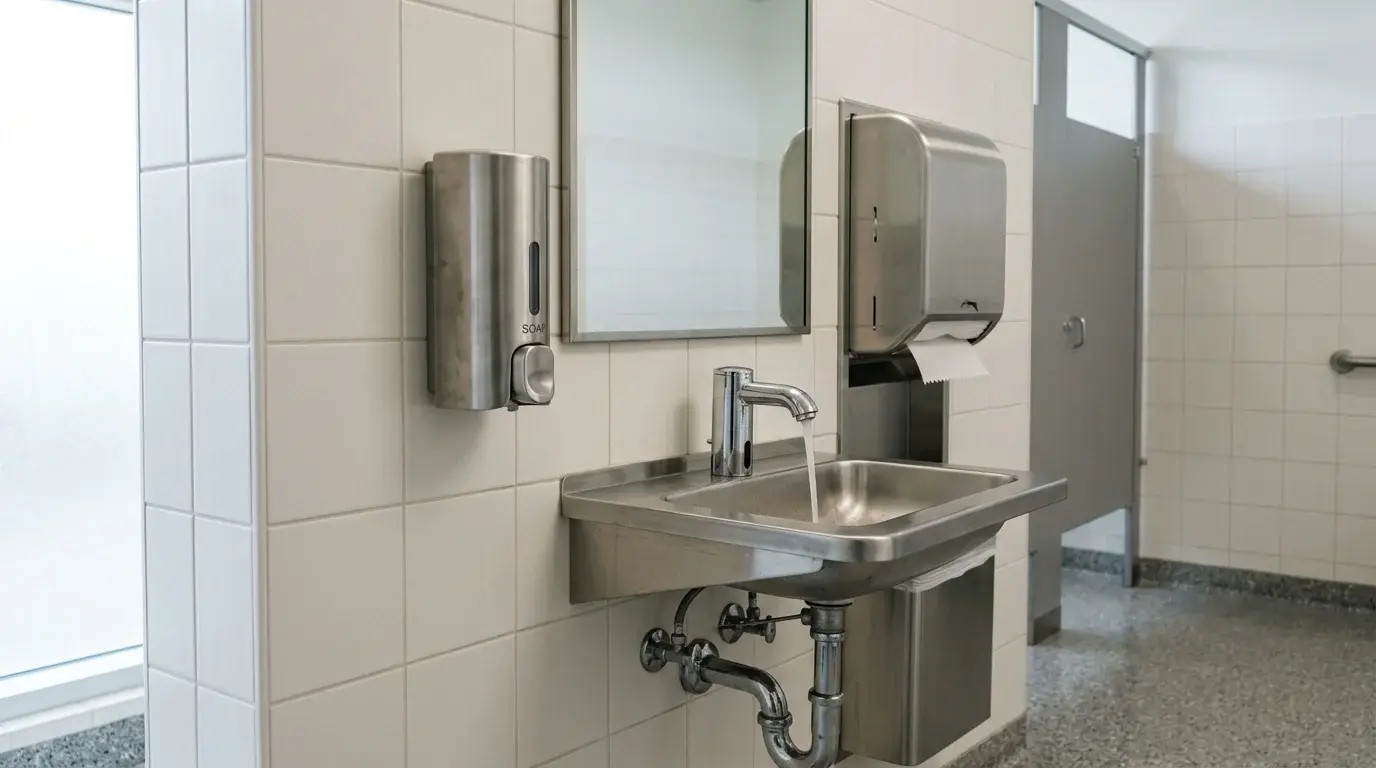
Durability and hygiene go hand-in-hand here. Touchless sensors are great for reducing the spread of germs in schools, but they require reliable power. I prefer specifying High-Efficiency Fittings powered by internal hydro-generators—which use the flow of water to charge a capacitor—or, at minimum, long-life lithium batteries rated for a 10-year lifespan. From a maintenance perspective, standardizing these internal cartridges across the entire school district reduces the parts inventory the janitorial staff needs to keep on hand, dropping maintenance downtime by as much as 40%.
What comparison table to include for Bathroom Fittings
To make this easier to visualize for your procurement team, I like to use a straightforward comparison matrix. Here is a breakdown of standard baseline specifications versus what we actually need for a LEED-optimized school project:
| Fitting Type | Standard Baseline Spec | LEED-Optimized Spec | Est. Annual Water Savings (per 100 users) |
|---|---|---|---|
| Lavatory Faucet | 2.2 GPM | 0.35 - 0.5 GPM | ~15,000 Gallons |
| Metering Faucet | 0.25 gal/cycle | 0.15 - 0.20 gal/cycle (10s limit) | ~8,000 Gallons |
| Urinal Flush Valve | 1.0 GPF | 0.125 GPF (Pint flush) or Waterless | ~25,000 Gallons |
| Toilet Flush Valve | 1.6 GPF | 1.28 GPF or Dual-Flush (1.1/1.6) | ~18,000 Gallons |
Using a matrix like this during the early bidding phase ensures that contractors do not accidentally substitute lower-tier products that could jeopardize your Water Efficiency credits during the final review.
How to choose Bathroom Fittings for LEED-ready school projects
Knowing the specs is only half the battle. Actually procuring these items and getting them installed correctly without blowing up the project budget requires a strategic approach. I have seen too many projects scramble at the last minute because the fixtures they ordered lacked the right paperwork for the LEED documentation team.
Practical steps from product sourcing to installation
My first rule is to start sourcing during the schematic design phase. Do not wait until the plumbing rough-in is done. You need to request the EPDs, HPDs, and WaterSense certifications from the manufacturers upfront. If a supplier cannot provide that documentation immediately, it is best to move on to one who can.
When it comes to installation, calibration is everything. You can buy the best LEED Compliant Hardware on the market, but if the plumbers do not properly calibrate the infrared sensor ranges—typically needing a tight 2- to 6-inch activation zone—the sinks will "ghost flush" when people merely walk by. This entirely negates your calculated water savings. I always mandate a post-installation commissioning walkthrough specifically tailored to bathroom sensors.
How to balance upfront cost, regional code, and compliance
Balancing the upfront cost with regional code requirements and LEED compliance is usually where I get the most pushback from school boards.
Key Takeaways
- The most important conclusions and rationale for Bathroom Fittings
- Specs, compliance, and risk checks worth validating before you commit
- Practical next steps and caveats readers can apply immediately
Frequently Asked Questions
How do bathroom fittings help a school earn LEED points?
Low-flow, durable fixtures reduce indoor water use, helping meet LEED Water Efficiency requirements and supporting Materials and Resources credits with documented products.
What flow rates should school bathroom faucets have for LEED?
Aim for 0.35 to 0.5 GPM aerators, or metering faucets limited to 0.20 gallons per cycle with about a 10-second shutoff.
What materials make bathroom fittings suitable for new school buildings?
Choose solid brass bodies, ceramic disc cartridges, and lead-compliant products meeting AB1953 standards with less than 0.25% weighted average lead content.
Do touchless bathroom fittings improve LEED performance?
Yes. Touchless fittings support hygiene and can improve water control when paired with reliable power like hydro-generators or long-life batteries.
What product documentation should be requested from bathroom fitting suppliers?
Ask for EPDs, HPDs, and clear supply-chain documentation to support LEED materials credits and verify environmental claims.