
Introduction
By 2026, minimalist Furniture Hardware is no longer a niche preference but a clear market direction shaped by architects, OEM buyers, and premium interior brands. Concealed hinges, push-to-open systems, recessed pulls, and other low-visibility components are redefining how furniture looks and functions, especially in compact, design-driven spaces. This article explains what “invisible” and sleek hardware really includes, why demand is accelerating, and which practical factors matter most in specification, sourcing, and product development. From aesthetics to performance expectations, it sets up the key shifts influencing Furniture Hardware decisions across residential and commercial interiors.
Why Furniture Hardware Is Moving Toward Invisible and Sleek Designs
I've spent years on the manufacturing floor, and if there's one thing I can tell you about the 2026 design landscape, it's that less is officially more. Since we started operations in 2007, producing everything from Bathroom Fittings to custom door hardware, the shift in buyer preferences has been massive. Today, demand isn't just about functionality; it's about making that functionality disappear entirely.
Over the last few years, we've seen a 35% jump in OEM requests specifically asking for concealed mechanisms over traditional exposed designs. The market is moving fast, and understanding the mechanics behind this minimalist shift is crucial for anyone involved in product development or sourcing.
Market drivers among architects, OEM buyers, and premium interior brands
When speaking with architects, OEM buyers, and premium interior brands, the market drivers are crystal clear: uninterrupted surfaces and clean geometric lines. High-end residential and commercial spaces are rapidly moving away from bulky handles and exposed joints.
For premium interior brands, integrating seamless Furniture Hardware is no longer a luxury upgrade—it's a baseline expectation to stay competitive. The push is heavily driven by urbanization, where smaller, multi-functional spaces require hardware that doesn't visually clutter the room.
What defines minimalist and invisible hardware
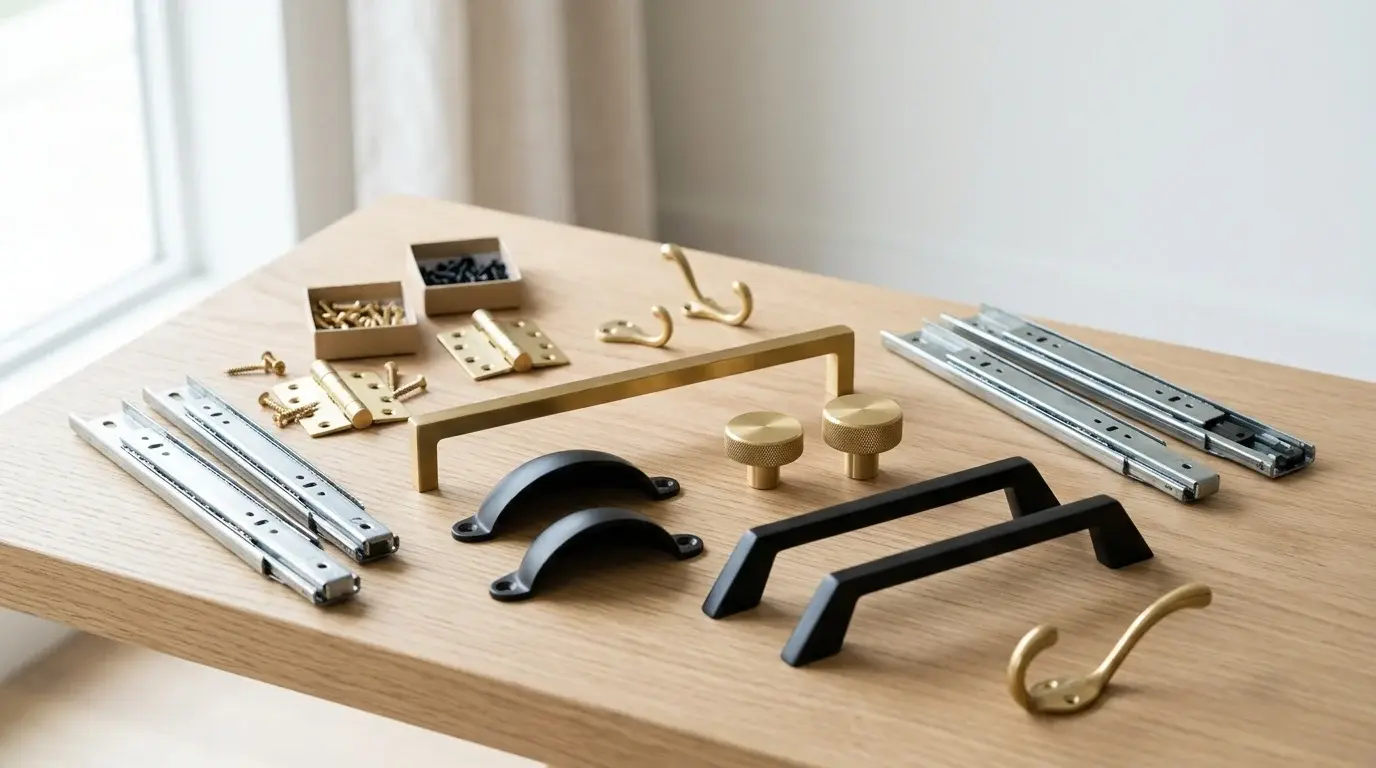
What exactly falls under this umbrella? True Minimalist Hardware is defined by its ability to perform high-load tasks while remaining completely out of sight. This includes Invisible Hinges recessed directly into the door frame and cabinet chassis, alongside sophisticated Push-to-Open Systems that eliminate the need for knobs or pulls altogether.
The engineering behind this is incredibly precise. To pull off this aesthetic, manufacturers are shrinking gap tolerances from a standard 3.0mm down to a razor-thin 1.5mm or less. This leaves absolutely zero room for error and requires flawless die-casting and machining capabilities.
How to Compare Furniture Hardware for Minimalist Design
Comparing these sleek components isn't quite the same as picking out standard knobs and hinges off a catalog page. Because the mechanics are hidden, the engineering has to be flawless.
Sourcing teams must look past the surface aesthetic and dig into the technical specs. If the internal components fail, the entire minimalist illusion falls apart.
Key trade-offs between visible and concealed hardware
The biggest hurdle I see teams face is balancing the aesthetic payoff against practical trade-offs. Visible hardware is generally cheaper, easier to install, and highly forgiving of minor cabinet misalignments. Concealed hardware, like Hidden Drawer Slides, requires extreme precision during the milling and assembly phases.
Load capacity is another major factor. You must ensure the sleek look doesn't compromise the structural integrity of the furniture. Here is a quick breakdown of how they compare:
| Feature | Visible Hardware | Concealed / Minimalist Hardware |
|---|---|---|
| Installation Tolerance | High (forgiving) | Very Low (requires precision) |
| Average Load Capacity | Up to 80kg+ | 40kg - 60kg (per pair) |
| Aesthetic Impact | Prominent / Decorative | Seamless / Invisible |
| Relative Cost | Baseline | Premium (20-40% higher) |
Practical evaluation steps for sourcing teams
When evaluating these components, practical steps are essential. First, always request lifecycle testing data. A high-quality concealed hinge should easily pass the 50,000 to 100,000 cycle mark without sagging or losing tension.
Second, check for 3D adjustability. Because minimalist designs rely on tight 1.5mm gaps, the hardware must allow for micro-adjustments in depth, side, and height after installation. If a supplier can't provide components with reliable 3D adjustment, you'll end up with crooked cabinet doors and frustrated end-users.
What Decision-Makers Should Prioritize When Sourcing Furniture Hardware
Finding the right supplier for this highly engineered hardware takes more than just looking at a price sheet. It requires a deep understanding of manufacturing capabilities.
As someone whose facility handles the entire industrial chain—from mold making and die-casting to electroplating, inspecting, and packing—I know exactly where corners get cut and what you need to prioritize to protect your brand.
Compliance, lead times, customization, and channel fit
When sourcing for 2026 lines, prioritize compliance, lead times, and customization. You want a partner with strict ISO9001 certification to ensure batch-to-batch consistency. Lead times are also critical: expect 30 to 45 days for standard concealed parts, but budget 60+ days if commissioning custom molds for proprietary designs.
Furthermore, channel fit matters. If your brand requires specialized electroplating or unique polishing finishes to match other room elements, you need a supplier with those capabilities in-house. Keeping these processes under one roof is the most reliable way to keep defect rates strictly under the 0.5% industry benchmark.
A simple framework for supplier selection
I always recommend a simple, four-point framework for supplier selection. First, look for vertical integration. Suppliers who control their own mold-making and machining are far more reliable than those who outsource.
Second, verify their testing protocols; ask to see their salt spray test results for corrosion resistance, especially if the hardware is going into humid environments like bathrooms. Third, evaluate their Minimum Order Quantities (MOQs). For custom minimalist hardware, a reasonable MOQ is usually between 1,000 and 5,000 pieces.
Finally, assess their OEM track record. A supplier already successfully providing OEM services to global companies is usually a safe bet for scaling your premium minimalist lines.
相关阅读:Furniture Hardware
Key Takeaways
- The most important conclusions and rationale for Furniture Hardware
- Specs, compliance, and risk checks worth validating before you commit
- Practical next steps and caveats readers can apply immediately
Frequently Asked Questions
What furniture hardware fits the 2026 minimalist trend?
Concealed hinges, hidden drawer slides, and push-to-open systems are the main choices. They keep surfaces clean while preserving function in modern cabinets, wardrobes, and doors.
How precise should invisible hardware be?
Aim for installation gaps around 1.5mm or less. Choose hardware with 3D adjustment in height, side, and depth to fine-tune alignment after assembly.
How can buyers verify concealed hardware quality?
Request lifecycle test reports and confirm the product passes 50,000 to 100,000 cycles. Also check load ratings and adjustment performance under real installation conditions.
Why does concealed furniture hardware cost more?
It needs tighter tolerances, more precise machining, and stricter assembly control. In many projects, minimalist hardware is about 20% to 40% higher than standard visible options.
Can HZ Die Casting support custom minimalist furniture hardware?
Yes. HZ Die Casting provides OEM/ODM support with in-house mold making, die-casting, finishing, inspection, and packing, which helps control quality and lead times for custom concealed hardware.