
Introduction
In compact homes, efficient furniture depends less on visible design than on the hardware that makes movement, folding, and hidden storage possible. Hinges, slides, lift systems, and locking mechanisms determine whether a wall bed operates smoothly, a table expands safely, or a cabinet makes full use of awkward corners. This article examines the hardware innovations behind space-saving furniture, explains what sets specialized systems apart from standard fittings, and shows how the right components improve durability, usability, and everyday comfort in small living spaces.
Why Furniture Hardware Matters for Space Optimization
When maximizing a tiny apartment, the conversation usually revolves around clever cabinetry, minimalist design, and decluttering. But the unsung hero of any space-saving setup is the hardware. Since starting our journey in precision manufacturing in 2007, I've seen firsthand how precision engineering transforms static wood panels into dynamic, multifunctional lifesavers. Without the right hinges, tracks, and slides, a fold-out desk is just a heavy piece of wood waiting to break your toes. We have evolved from simple brackets to highly engineered systems because modern living demands furniture that actively adapts to our daily routines.
What defines space-saving furniture hardware
What exactly separates standard hardware from true space-saving solutions? It comes down to kinematics, load distribution, and strict tolerances. Space-saving hardware relies on complex linkages, gas springs, and heavy-duty pivots that allow furniture to fold, slide, or hide seamlessly. These mechanisms are engineered with clearance tolerances tighter than 0.5mm to ensure there is absolutely no wobble when a bed or table is deployed. Furthermore, these components must survive rigorous, long-term cycle testing. A standard cabinet hinge might be tested for 10,000 cycles, but premium space-saving hardware needs to hit 50,000 to 80,000 actuations without sagging or losing its smooth action and structural integrity. We often incorporate integrated damping systems calibrated to specific forces—usually between 50N and 120N—to ensure heavy fold-away pieces glide safely into place rather than slamming shut.
Which compact living formats drive demand
The demand for these specialized components is a direct response to changing global real estate trends. We are seeing a massive push from urban developers building micro-apartments—often measuring well under 400 square feet—as well as a booming residential market for Accessory Dwelling Units (ADUs) and tiny homes. In these hyper-compact formats, every square inch of floor space carries a premium. Interior designers and furniture builders increasingly rely on Murphy Bed Mechanisms to reclaim precious bedroom floor space during the day, instantly converting a sleeping area into a home office or lounge. Similarly, heavy-duty Folding Table Hinges have become the backbone of dining areas that disappear into kitchen islands or wall units the moment dinner is over.
Furniture Hardware Solutions for Compact Living
Designing for small footprints means we have to ask our furniture to do double, or even triple, duty throughout the day. It is not enough for a piece to simply look good on a showroom floor; it has to perform flawlessly under varying, unpredictable loads in real-world conditions. Our approach to manufacturing Furniture Hardware focuses heavily on marrying this functional necessity with long-term reliability, ensuring that the moving parts outlast the wood they are attached to.
Which mechanisms improve multifunctional furniture
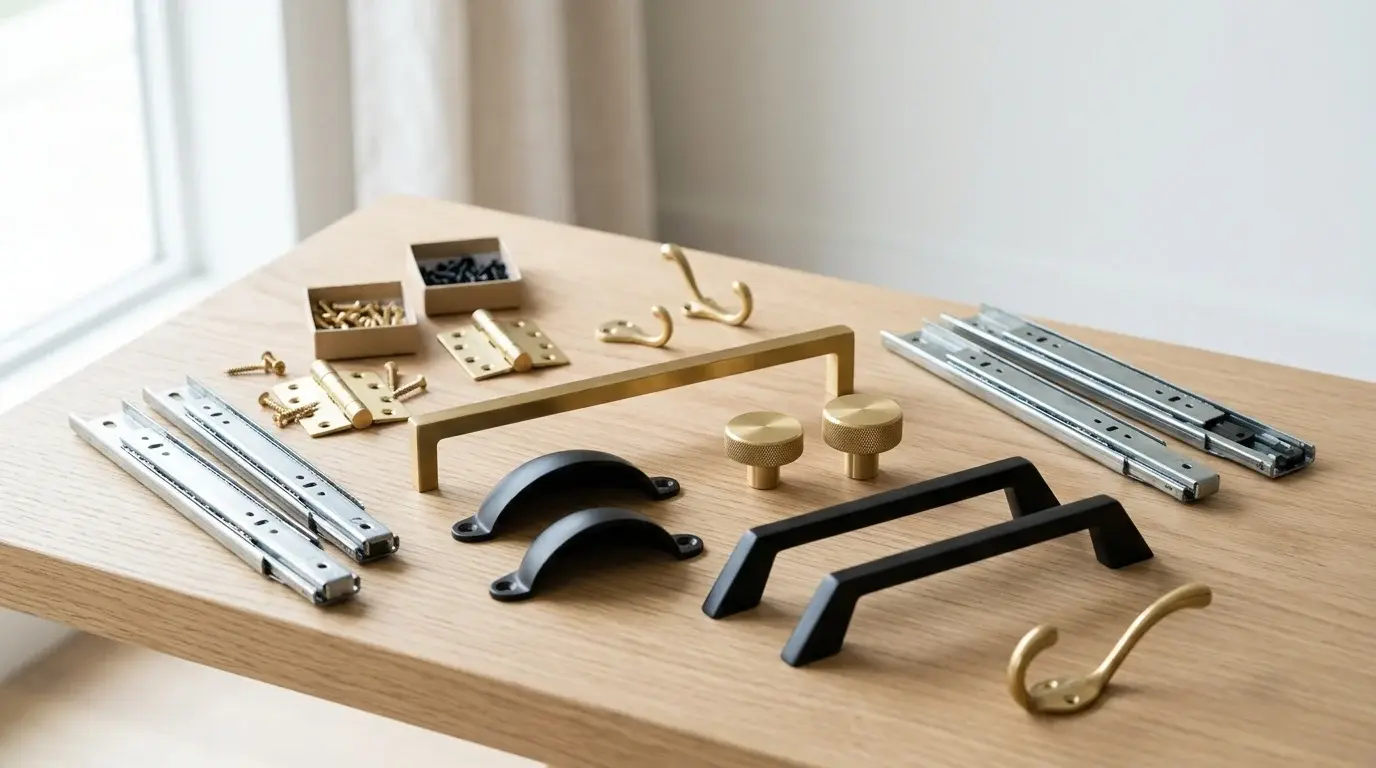
When breaking down the specific components that make multifunctional furniture genuinely work, a few engineering standouts immediately come to mind. Heavy-duty telescopic slides and Pull-out Trays are absolute game-changers for deep, narrow kitchen pantries or hidden workstation keyboards. When engineered correctly with ball-bearing carriages, these tracks can easily support dynamic loads of up to 150 lbs while fully extended, preventing any dangerous tipping or sagging. Additionally, Swivel Plates allow heavy shelving units, room dividers, or TV mounts to rotate smoothly from 180 to 360 degrees. This enables a single piece of media furniture to service two entirely different rooms from a single dividing wall. These precise, high-load mechanisms give end-users the flexibility they desperately need without compromising on safety.
What specifications affect performance and durability
A mechanism is only as good as its underlying specifications. If you specify the wrong material or a subpar finish, that clever fold-out desk will inevitably sag, bind, or rust within its first year of use. Durability heavily depends on raw material choice, gauge thickness, and the specific surface treatment applied during manufacturing. For instance, we routinely run accelerated salt spray tests to guarantee corrosion resistance, pushing finishes to withstand anywhere from 48 to 96 hours depending on whether the furniture will live in a dry bedroom or a humid coastal apartment. The structural alloy matters just as much as the coating.
| Material / Spec | Typical Application | Load Capacity (Max) | Salt Spray Resistance | Tooling Complexity |
|---|---|---|---|---|
| Cold-Rolled Steel (1.5mm) | Standard drawer slides & tracks | 100 lbs | 24 - 48 hours | Low |
| Zinc Alloy Die-Cast | Complex pivots, joints & mounts | 150 lbs | 48 - 72 hours | High |
| 304 Stainless Steel | High-moisture & heavy-load environments | 250+ lbs | 96+ hours | Medium |
How to Source and Specify Furniture Hardware
Knowing exactly what hardware you need is only half the battle. Actually sourcing it, specifying the right manufacturing tolerances, and ensuring consistent quality from your production partner can easily make or break your entire product line. Over the years, we have helped countless clients navigate these exact supply chain challenges, taking their concepts from rough napkin sketches all the way to seamless mass production. It is a collaborative process that requires transparency and technical alignment.
How to balance cost, customization, and function
Balancing your project's cost with its functionality usually comes down to understanding the realities of tooling and production volume.
Key Takeaways
- The most important conclusions and rationale for Furniture Hardware
- Specs, compliance, and risk checks worth validating before you commit
- Practical next steps and caveats readers can apply immediately
Frequently Asked Questions
What hardware is best for a fold-away bed or desk?
Use heavy-duty pivots or Murphy bed mechanisms with integrated damping. For compact living, choose systems tested for 50,000+ cycles to keep motion smooth and safe.
How do I choose furniture hardware for small apartments?
Check load rating, motion type, and clearance tolerance. For reliable compact furniture, prioritize hardware with tight tolerances under 0.5mm and proven long-cycle testing.
Which hardware helps hidden storage work better?
Telescopic slides, pull-out trays, and swivel plates are practical choices. They improve access in deep cabinets, rotating units, and compact workstations without wasting floor space.
Why does surface treatment matter for furniture hardware?
It protects against rust and wear. For humid homes or coastal areas, choose hardware with corrosion-resistant finishes validated by salt spray testing, such as 48 to 96 hours.
Can HZ Die Casting support custom compact furniture hardware?
Yes, www.huazhuprecision.com focuses on precision manufacturing for Furniture Hardware. Ask about custom mechanisms, material selection, load requirements, and finish options for space-saving furniture projects.