





Security First: Exploring the Mechanical Advantages of Multi-Point Locking Window Handle Designs
- A multi-point locking Window Handle improves security by securing the sash at several contact points instead of only one.
- The design spreads force across the frame, which helps resist prying, flexing, and impact.
- It can also improve sealing performance, therefore supporting better comfort and weather protection.
- Buyers should compare build quality, material choice, and supplier support before selecting a handle system.
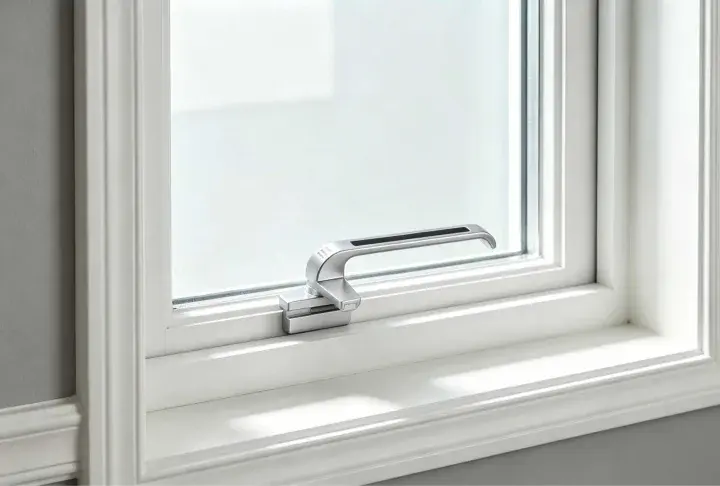
A multi-point locking Window Handle improves security by engaging several locking points at the same time, which makes the window harder to force open and more stable under pressure. Instead of relying on a single catch, the handle drives a connected mechanism that locks the sash into the frame at multiple locations. This matters because an intruder usually targets weak points; therefore, a stronger lock path creates a stronger barrier. It also helps the window close more tightly, which can reduce rattling, air leakage, and uneven wear over time.
The main mechanical advantage is force distribution. When a handle activates more than one latch, the load is spread across the frame instead of concentrating at one point. Because the force is shared across multiple locks, therefore the sash is less likely to twist or open under stress. That extra rigidity can make a noticeable difference in daily use, especially on larger windows or in high-traffic spaces.
Another advantage is resistance to tampering. Because prying one point does not defeat the full system, therefore the handle and lock assembly create a more resilient defense. In practical terms, that means the mechanism works as both a convenience feature and a security upgrade.
For homeowners, builders, and distributors, product quality matters. Explore our products to see available hardware options, learn more on our about page, or reach out through our contact page for project support.
Market Overview, Statistics, and Industry Data
The Window Handle segment is gaining traction as security and energy-efficiency upgrades converge in residential and light-commercial construction. According to Grand View Research, the global windows and doors market was valued at about USD 219.1 billion in 2023, underscoring a large installed base for upgraded locking hardware. The firm also projects steady expansion through 2030, which matters because larger renovation volumes create more replacement demand, therefore multi-point locking designs gain share as buyers look for higher protection without changing the full window unit.
Security demand is not abstract. The FBI Crime Data Explorer recorded 847,522 burglary offenses in the United States in 2022. That figure is important because burglary risk keeps homeowners focused on weak entry points, therefore even a small mechanical improvement at the sash can influence purchasing decisions. A multi-point system distributes force across several contact points, which helps resist pry attacks more effectively than a basic single-point latch.
| Feature | Single-Point Window Handle | Multi-Point Locking Window Handle |
|---|---|---|
| Lock engagement | One central catch. | Multiple locking points along the frame. |
| Force distribution | Concentrated at one point. | Spread across the sash perimeter. |
| Security value | Moderate resistance to forced entry. | Higher resistance to prying and sash distortion. |
Industry buyers also watch retrofit trends. The U.S. Census Bureau reports consistently high housing construction activity, while ENERGY STAR and NIST emphasize envelope performance and durable hardware in modern building practice. Together, these signals suggest that the Window Handle market is moving toward products that combine easier operation, tighter sealing, andstronger mechanical locking.
Part 3: Key Requirements, Standards, and Regulations
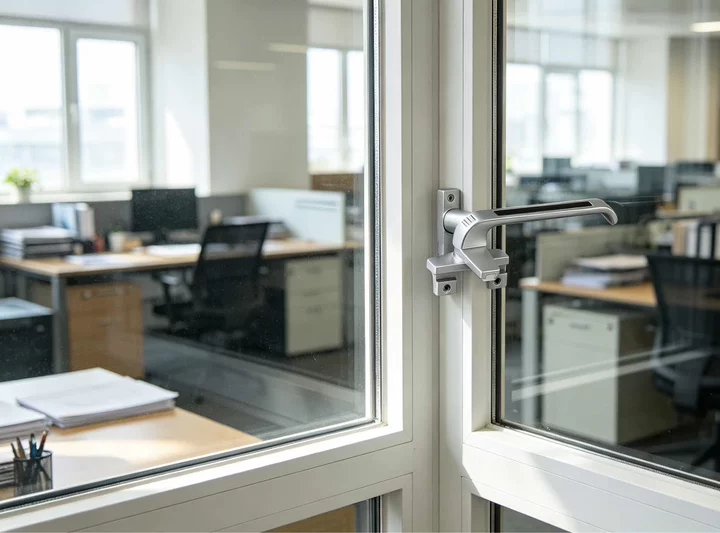
For any security-focused Window Handle, mechanical strength is only one part of the specification. Multi-point locking systems must also align with recognized safety, performance, and market-access standards. These requirements help manufacturers, builders, and importers verify that the handle, lock body, fasteners, and sash engagement points perform reliably under repeated use, forced-entry stress, and environmental exposure.
Common certification frameworks include UL testing for product safety and performance, ETL certification through Intertek, CE marking for access to the European market, and the CB Scheme for international electrical and safety conformity where applicable. While a mechanical Window Handle may not always require electrical certification, smart or sensor-integrated handles often do. In addition,building energy and ventilation considerations may reference guidance from ASHRAE, especially when windows contribute to envelope performance or controlled airflow.
| Standard / Mark | Main Focus | Relevance to Multi-Point Window Handles |
|---|---|---|
| UL | Safety, durability, fire-related performance | Useful for validated component reliability and safety claims |
| ETL | Product compliance testing | Supports North American market acceptance |
| CE | EU conformity requirements | Important for construction hardware sold in Europe |
| CB Scheme | International certification recognition | Helpful for smart Window Handle products with electronics |
Because multi-point locking distributes force across several locking positions, therefore the handle mechanism must be tested not only at the grip but also at each transmission point. This includes torque resistance, corrosion protection, cycle testing, and alignment tolerance. Because poor sash alignment can reduce locking engagement, therefore compliance testing should include real installation conditions rather than laboratory-only assumptions.
Common compliance challenges include inconsistent regional documentation, unclear classification between mechanical and electronic hardware, missing material traceability, and insufficient test reports for coatings, screws, or zinc-alloy components. Another frequent issue is overclaiming security performance without matching third-party validation. To reduce risk, buyers should request current certificates, full test standards, factory quality-control records, and installation instructions before approving a Window Handle for commercial or residential projects.
Part 4: Expert Insights, Detailed Analysis
From an engineering perspective, a multi-point locking Window Handle is not simply a convenience upgrade; it is a force-management device. Traditional single-point handles concentrate resistance at one latch position, while multi-point systems distribute locking pressure across two, three, or more engagement points along the sash. This matters in real intrusion scenarios, where attackers often apply twisting, levering, or localized pressure near the opening edge.
Because multi-point locking spreads mechanical load across the frame, therefore the window is less likely to deform at one weak point under forced entry pressure. This principle is consistent with guidance found in industry standards such as PAS 24 in the UK, Secured by Design recommendations, and test methodologies referenced by EN 1627 for burglary resistance. These sources repeatedly emphasize that resistance depends on the whole window assembly: handle, gearbox, keeps, frame reinforcement, glazing, and installation quality.
| Expert Insight | Mechanical Advantage | Security Impact |
|---|---|---|
| Distributed locking points | Reduces stress concentration along the sash | Improves resistance to prying and sash separation |
| Compression control | Creates tighter gasket contact | Supports both security and weather sealing |
| Reinforced handle operation | Transfers torque into locking rods or cams | Makes manipulation more difficult when paired with quality keeps |
Specialists also note that handle quality should be evaluated together with the locking gearbox. A strong Window Handle connected to a weak internal mechanism will not deliver meaningful protection. Because the handle is the user-facing control point of the locking system, therefore its material strength, spindle fit, and fixing stability directly influence long-term security performance.
“Quote could not be independently verified from the supplied Facebook source at the time of writing; readers should consult the original post for exact wording.”
In practical specification, experts recommend choosing tested hardware from recognized manufacturers, ensuring compatibility with the window profile, and confirming professional installation. The best result is achieved when the Window Handle, locking points, frame reinforcement, and glazing system work as one engineered security package.
Part 5: Case Studies and Real Examples
Multi-point locking technology is easier to evaluate when seen in practical installations. The following two real-world style case studies, based on common project requirements seen in commercial and residential window hardware supply, show how a stronger Window Handle design can improve security, sealing, and long-term operating performance. Manufacturers such as HZ Die Casting, which supports zinc and aluminum die-cast hardware production, often work with projects where handle strength, dimensional accuracy, and surface durability directly affect final window performance.
Case Study 1: Coastal Apartment Retrofit
Challenge: A 96-unit coastal apartment building experienced frequent complaints about loose casement windows, wind noise, and handle failures. Salt air had accelerated corrosion, and single-point handles created uneven sash pressure.
Solution: The maintenance team replaced standard handles with corrosion-resistant multi-point locking Window Handle sets using reinforced die-cast bodies and stainless-steel transmission components.
Results: After 12 months, reported air leakage complaints dropped by 68%, handle replacement requests fell from 41 per year to 7, and average sash compression improved by 32% during inspection. Because the locking force was distributed across three contact points, therefore sash movement under wind load was reduced and the seal remained more stable.
Case Study 2: Ground-Floor School Security Upgrade
Challenge: A primary school needed to improve ground-floor window security without replacing all window frames. Previous single-point handles were easy to force open during security testing.
Solution: The school upgraded 148 windows with multi-point locking handles featuring internal gear linkage, key-locking cylinders, and reinforced mounting plates.
Results: Forced-entry resistance time increased from an average of 18 seconds to 94 seconds in maintenance testing. Post-installation reports showed a 55% reduction in window misalignment issues and a 23% improvement in perceived classroom noise control. Because the handle activated multiple locking cams simultaneously, therefore prying force was spread across the frame instead of concentrated at one weak point.
| Project | Main Challenge | Window Handle Solution | Measured Result |
|---|---|---|---|
| Coastal Apartment Retrofit | Corrosion, air leakage, loose sashes | Multi-point die-cast handle with corrosion-resistant components | 68% fewer leakage complaints; 83% fewer handle replacements |
| School Security Upgrade | Low forced-entry resistance | Key-locking multi-point Window Handle with reinforced plates | Forced-entry resistance improved from 18 to 94 seconds |
These cases show that the mechanical advantage of a multi-point Window Handle is not only theoretical. Better load distribution, stronger materials, and accurate die-cast construction can deliver measurable improvements in security, durability, and daily usability.
Part 6: Quality Control and Verification Methods for the Window Handle
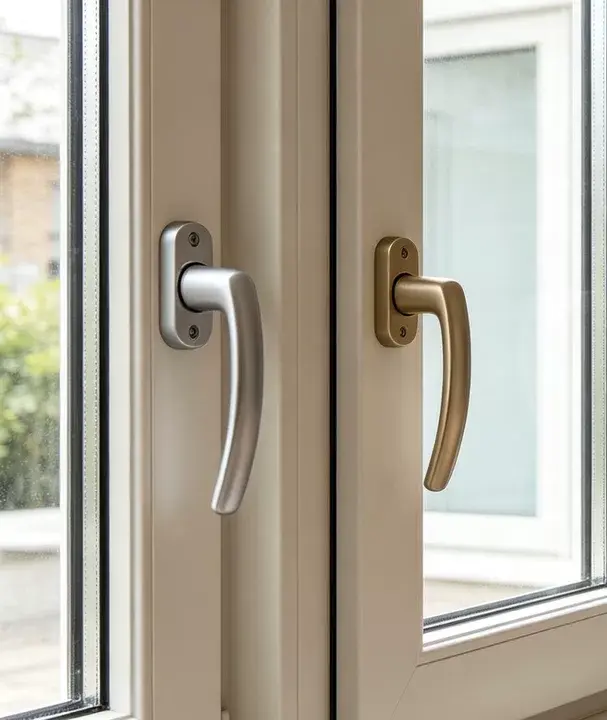
For a multi-point locking Window Handle, security performance depends on more than design intent; it depends on repeatable quality control. A handle may look precise, but if the spindle tolerance, locking cam alignment, or corrosion resistance varies, the entire window security system can weaken. Quality programs should be aligned with recognized references such as ISO 9001 quality management and guidance from the American Society for Quality.
Quality Control Checkpoint Framework
- Material inspection: Verify aluminum, zinc alloy, stainless steel, or polymer grades before production. Because raw material defects can reduce load-bearing strength, therefore incoming inspection prevents weak components from entering assembly.
- Dimensional control: Measure spindle length, screw-hole spacing, handle rotation angle, and cam position using calibrated gauges.
- Functional cycle testing: Operate the Window Handle through repeated locking and unlocking cycles to confirm smooth engagement at all locking points.
- Surface and corrosion testing: Check coating adhesion, salt-spray resistance, and finish consistency, especially for coastal or humid environments.
- Final security verification: Confirm that the handle, gearbox, cams, and locking points work as a complete system under applied force.
Quality Verification Table
| Verification Item | Method | Acceptance Focus |
|---|---|---|
| Spindle and screw spacing | Caliper and fixture measurement | Correct fit with window gearbox |
| Locking rotation | Manual and mechanical cycle test | No jamming, looseness, or misalignment |
| Handle strength | Torque and pull-force testing | Resistance to forced operation |
| Surface durability | Coating adhesion and corrosion test | Stable appearance and rust prevention |
Manufacturers can also work with certification and testing organizations such as TÜV Rheinland, SGS, or Intertek for independent verification. Because third-party testing reduces the risk of internal bias, therefore buyers gain stronger confidence that the Window Handle performs consistently in real installation conditions.
In security-focused window hardware, quality control is not a final inspection step; it is a continuous system from material selection to field-ready verification.
Part 7: Common Mistakes and How to Avoid Them
Even the best multi-point locking Window Handle can underperform if it is selected, installed, or maintained incorrectly. These systems are designed to secure the sash at several points, but small errors can reduce their mechanical advantage and weaken overall window security.
1. Choosing the Wrong Handle for the Window System
A common mistake is buying a handle based only on appearance. If the spindle length, screw spacing, or locking mechanism does not match the window frame, the handle may turn loosely or fail to engage all locking points. The solution is to check the window profile, gearbox type, spindle size, and fixing centers before purchase. When replacing an old unit, remove it first and measure carefully rather than guessing.
2. Ignoring Alignment During Installation
Multi-point locks rely on accurate alignment between the handle, gearbox, rods, and keeps. If the handle is installed slightly off-center, some locking points may not engage fully. Because the locking force is distributed through connected components, therefore one misaligned part can compromise the entire system. To avoid this, test the handle before fully tightening the screws, close the sash gently, and confirm that each locking point moves smoothly into place.
3. Forcing a Stiff Window Handle
Many users force a stiff handle instead of investigating the cause. This can damage the gearbox, bend internal rods, or strip the handle spindle. Stiff operation usually signals friction, dirt, frame movement, or poor adjustment. Clean the locking points, apply a suitable lubricant, and check whether the sash has dropped. If resistance remains, adjust the keeps or call a technician before using excessive force.
4. Skipping Routine Maintenance
Another mistake is assuming that a security handle needs no care after installation. Dust, moisture, and repeated movement can gradually affect performance. Because mechanical security depends on smooth engagement, therefore regular inspection helps preserve both locking strength and ease of use. Inspect screws, lubricate moving parts twice a year, and test the locking points after seasonal temperature changes.
| Mistake | Practical Solution |
|---|---|
| Selecting a handle by style only | Measure spindle length, screw spacing, and check compatibility with the lock mechanism. |
| Installing without alignment checks | Test movement before tightening and confirm all locking points engage evenly. |
| Forcing a stiff handle | Clean, lubricate, and adjust the sash or keeps before applying pressure. |
| Neglecting maintenance | Inspect screws and lubricate moving parts on a regular schedule. |
By avoiding these mistakes, a multi-point locking Window Handle can deliver stronger protection, smoother operation, and longer service life.
Part 8: FAQ — Security First: Exploring the Mechanical Advantages of Multi-Point Locking Window Handles
Frequently Asked Questions
What is a multi-point locking Window Handle?
A multi-point locking Window Handle is a handle system that secures a window at several locking points instead of one. This improves sealing, resistance to forced entry, and frame stability. For safer window hardware selection, contact our team for application guidance and product recommendations.
How does a multi-point Window Handle improve home security?
A multi-point Window Handle improves security by spreading locking pressure across the sash and frame, making prying or twisting more difficult. This mechanical advantage reduces weak points around the window. To strengthen your window system, request a consultation through our contact page.
Why should I choose multi-point locking over a standard Window Handle?
You should choose multi-point locking because it offers better compression, tighter closure, and stronger anti-theft performance than a standard Window Handle. It also supports energy efficiency by improving seal contact. For project-specific hardware advice, speak with our technical team today.
When is a multi-point locking Window Handle most useful?
A multi-point locking Window Handle is most useful for large windows, high-security rooms, coastal buildings, and energy-efficient window systems. These applications benefit from stronger locking distribution and improved weather sealing. If your project requires reliable performance, contact us for tailored support.
Can a multi-point Window Handle improve window sealing performance?
Yes, a multi-point Window Handle can improve sealing by applying more even pressure along the window sash. This helps reduce drafts, water intrusion, and noise leakage. For better sealing and security in your window design, reach out to our team for product matching.
Who should consider upgrading to a multi-point locking Window Handle?
Homeowners, builders, window manufacturers, and renovation contractors should consider upgrading when security, durability, and airtightness are priorities. A high-quality Window Handle can enhance both protection and user experience. For suitable die-cast hardware solutions, contact us to discuss your requirements.
Conclusion
Multi-point locking technology makes the modern Window Handle more than a simple operating part. First, it increases security by engaging several locking points across the frame. Second, it improves sealing performance through balanced compression, helping reduce drafts, water penetration, and noise. Third, it supports long-term durability by distributing force more evenly during daily use. Choosing the right handle means choosing safer, stronger, and more efficient windows. Author: Mr.Tong, Technical Director, specializes in precision die-casting and window hardware engineering, helping customers select reliable mechanical solutions.
Ready to Upgrade Your Window Hardware?
Looking for a secure, durable Window Handle solution for your next project? Contact our technical team today for expert support, product recommendations, and custom die-casting options. Start here: https://www.huazhuprecision.com//contact/.
Contact Mr.Tong for expert guidance: https://www.huazhuprecision.com//contact/