


OEM Precision: Why Die-Casting Quality Matters for Furniture Hardware Manufacturer Success
Die-casting quality matters because Furniture Hardware must fit accurately, carry load safely, and look consistent across every production batch.
A reliable Precision Die-casting Part reduces rework, warranty risk, and assembly delays for OEM furniture programs.
Zinc Alloy Furniture Fitting production depends on stable tooling, controlled pressure, and disciplined inspection.
Choosing the right Industrial Sourcing Fitting partner helps manufacturers protect brand reputation and supply continuity.
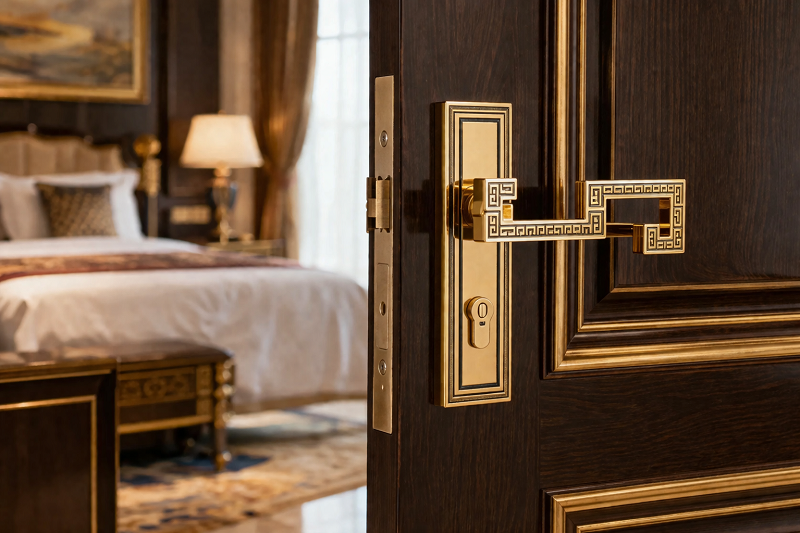
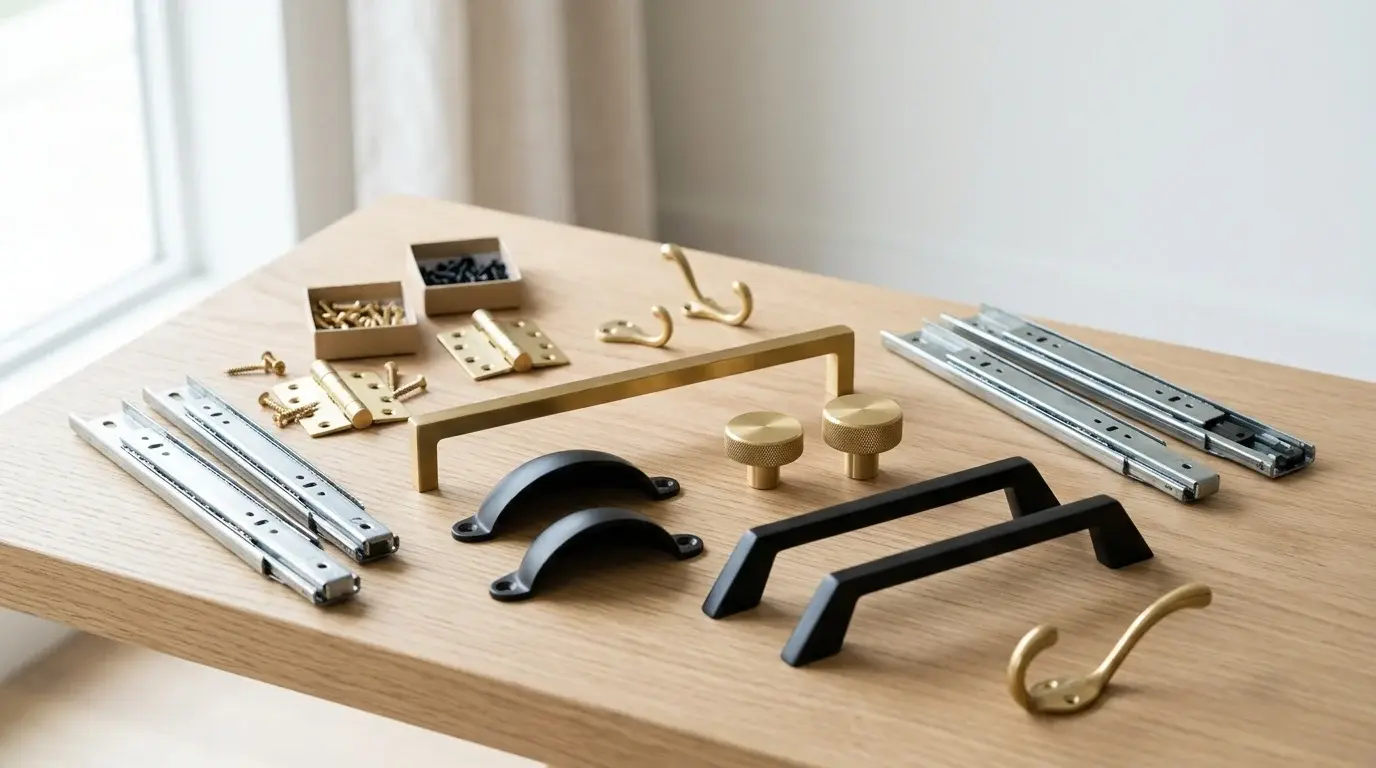
Die-casting quality matters for a Furniture Hardware Manufacturer because every hinge base, connector, bracket, and OEM Metal Handle must perform reliably after repeated daily use. Poor casting accuracy creates loose assembly, weak fastening, rough surfaces, and inconsistent plating. High-quality die-casting keeps dimensions stable, improves load resistance, and supports attractive finishes. Because furniture buyers judge both function and appearance at the same time, therefore hardware defects can damage the value of the entire product. For OEM projects, precision is not optional; it is the foundation of predictable installation, long service life, and dependable mass production.
In furniture hardwaremanufacturing, small dimensional errors can become large production problems. A Precision Die-casting Part must match holes, slots, threads, and mating surfaces within controlled tolerance ranges, often measured in millimeters. When a Zinc Alloy Furniture Fitting is cast with stable geometry, installers can complete assembly faster, and factories can reduce sorting, grinding, or replacement work.
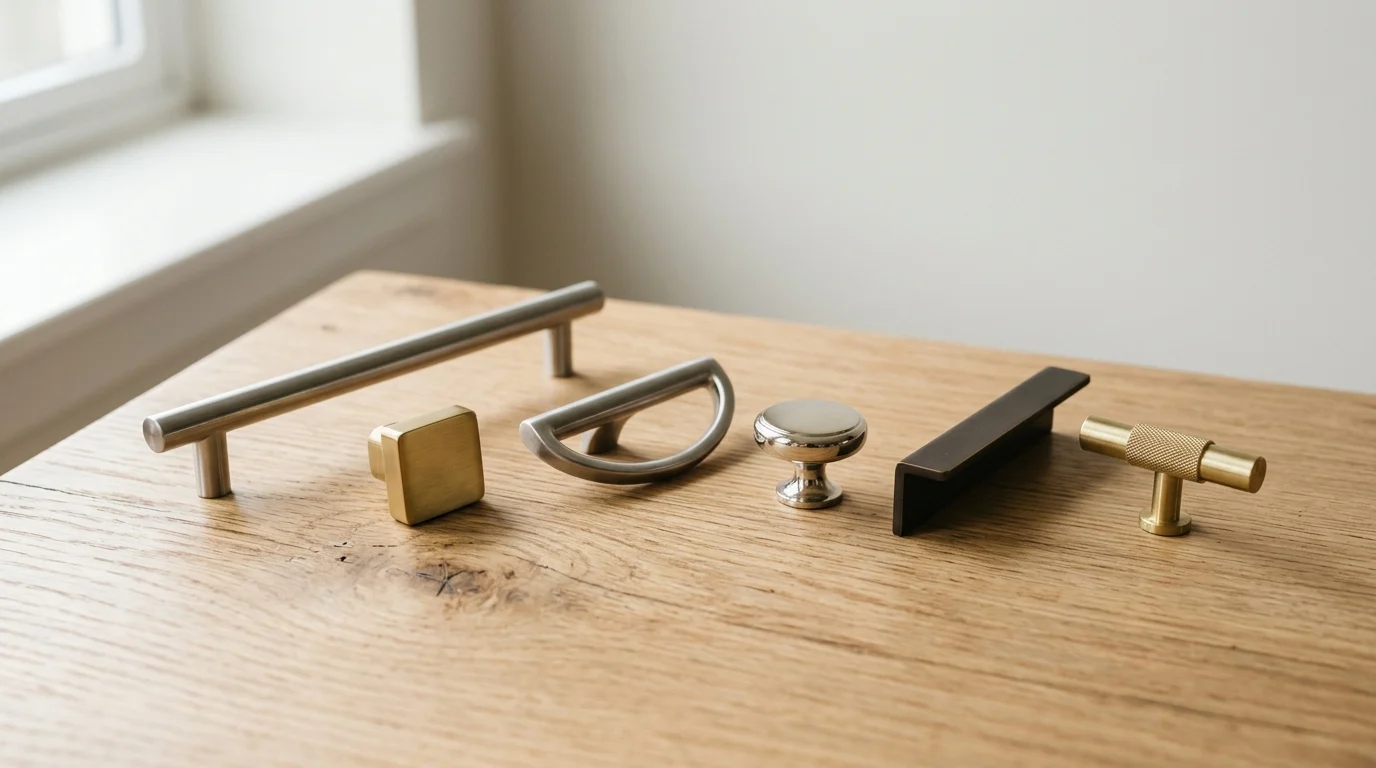
Because die-casting controls the original shape before machining, polishing, and plating, therefore early casting quality determines the final quality of the visible hardware. This is especially important for handles, knobs, decorative feet, cabinet connectors, and structural fittings where surface texture and edge definition influence customer perception.
Supplier Capability Checkpoints
- The supplier should use controlled tooling maintenance to keep cavity wear from changing part dimensions over long production runs.
- The supplier should inspect key dimensions with calibrated measurement equipment before shipment.
- The supplier should understand how Zinc Alloy flow, cooling speed, and mold temperature affect strength and surface quality.
- The supplier should support drawings, samples, and packaging requirements for OEM and export furniture programs.
For buyers comparing an Industrial Sourcing Fitting partner, reviewing product range, company background, and communication speed is a practical first step. You can explore related capabilities at HZ Die Casting products, learn about the manufacturer at HZ Die Casting about us, or discuss OEM requirements through the HZ Die Casting contact page.
Part 2: Market Overview, Statistics, and Industry Data
For every Furniture Hardware Manufacturer, the market signal is clear: hardware is no longer a low-visibility accessory. It affects assembly speed, perceived product value, warranty risk, and brand consistency. According to Statista, worldwide furniture market revenue is projected at approximately US$766 billion in 2024, while Grand View Research reports that the global die-casting market was valued at about US$77.99 billion in 2023, with continued growth expected through 2030. These figures show why sourcing teams are paying closer attention to every Precision Die-casting Part used in cabinets, wardrobes, office systems, and modular furniture.
| Market Factor | Impact on Furniture Hardware | OEM Sourcing Priority |
|---|---|---|
| Rising global furniture demand | More hinges, connectors, knobs, and handles are required across residential and commercial projects. | Buyers need scalable production capacity and stable lead times. |
| Growth in flat-pack and modular furniture | Hardware must fit accurately during rapid assembly by factories or end users. | Buyers need tight-tolerance die-casting and reliable inspection reports. |
| Higher expectations for visible finishes | An OEM Metal Handle must combine strength with decorative surface quality. | Buyers need controlled polishing, plating, powder coating, and salt-spray testing. |
Industry references also support this quality-driven shift. The North American Die Casting Association highlights die casting as a process suited to high-volume, repeatable metal components, while the National Institute of Standards and Technology emphasizes measurement reliability as a foundation of manufacturing quality. In sourcing terms, this means an Industrial Sourcing Fitting should be evaluated by tooling accuracy, alloy control, process stability, and documented inspection, not only by unit price.
Part 3: Key Requirements, Standards, and Regulations
For a Furniture Hardware Manufacturer, die-casting quality is not only a production issue; it is also a compliance, safety, and sourcing requirement. When an OEM buyer specifies a Precision Die-casting Part, such asa hinge base, connector, bracket, Zinc Alloy Furniture Fitting, or OEM Metal Handle, the part must meet dimensional, mechanical, surface, and regulatory expectations before it can enter global markets.
Key standards often referenced in Furniture Hardware sourcing include UL safety requirements, ETL certification through Intertek, CE conformity for the European market, and the CB Scheme for international electrical and safety recognition. For factory ventilation, coating, and indoor air considerations, manufacturers may also review ASHRAE guidance.
| Requirement Area | Common Standard or Check | Impact on OEM Furniture Hardware |
|---|---|---|
| Safety Certification | UL, ETL, CB Scheme | Supports acceptance in projects involving electric desks, lighting, or smart furniture. |
| Market Access | CE Conformity | Helps confirm that the Industrial Sourcing Fitting meets EU safety and documentation expectations. |
| Material Control | RoHS, REACH, internal alloy testing | Limits restricted substances in zinc alloy, plating, passivation, and coatings. |
| Dimensional Quality | 2D drawings, CMM, gauge inspection | Ensures repeatable assembly, stable screw positioning, and consistent handle alignment. |
Part 4: Expert Insights, Detailed Analysis
For a Furniture Hardware Manufacturer, die-casting quality is no longer a back-end production detail; it is a sourcing-risk control point. A Precision Die-casting Part used in hinges, connectors, brackets, locks, and handles must meet dimensional, cosmetic, and mechanical expectations at the same time.
| Expert Checkpoint | Why It Matters | Buyer Evaluation Focus |
|---|---|---|
| Mold Precision | Controls repeatability and reduces secondary correction | Tooling design, trial reports, tolerance records |
| Zinc Alloy Control | Improves strength, surface quality, and plating stability | Material certificates and batch traceability |
| Surface Treatment | Determines visual quality for visible fittings and handles | Plating adhesion, salt spray testing, finish consistency |
| OEM Process Control | Reduces variation across mass production | Inspection plans, CPK data, defect analysis |
Part 5: Case Studies Real OEM Die-Casting Results
Case Study 1: Zinc Alloy Furniture Fitting for Cabinet Connectors
Challenge: A cabinet hardware brand needed a Zinc Alloy Furniture Fitting with tighter hole-position accuracy. The previous supplier delivered parts with 0.25 mm variation, causing difficult assembly and a 6.8% rejection rate.
Solution: The OEM die-casting team optimized mold flow, adjusted gate position, and added CNC post-machining for critical holes. A new inspection plan was introduced.
Results: Dimensional tolerance improved to 0.08 mm. Assembly rejection dropped to 1.1%. Monthly efficiency increased by 18%.
Case Study 2: OEM Metal Handle for Modular Office Furniture
Challenge: A modular office furniture supplier required an OEM Metal Handle with a brushed nickel finish. The old handle had visible porosity after polishing, leading to inconsistent plating.
Solution: The supplier changed to a higher-pressure die-casting process, improved venting, and specified zinc alloy material with better surface performance.
Results: Surface defect rate decreased from 9.5% to 1.7%. Customer complaints fell by 72% over three months.
| Project | Challenge | Solution | Measured Result |
|---|---|---|---|
| Zinc Alloy Furniture Fitting | High assembly rejection | Mold flow optimization plus CNC machining | Rejection reduced from 6.8% to 1.1% |
| OEM Metal Handle | Porosity and plating defects | Improved pressure, venting, and finishing control | Surface defects reduced from 9.5% to 1.7% |
Part 6: Quality Control and Verification Methods
| Verification Item | Method | Purpose |
|---|---|---|
| Alloy Composition | Spectrometer test / material certificate review | Ensure correct zinc alloy performance |
| Critical Dimensions | CMM, go/no-go gauge, caliper inspection | Confirm assembly accuracy |
| Surface Finish | Visual inspection, adhesion test, salt spray test | Reduce corrosion and cosmetic defects |
| Functional Strength | Pull test, torque test, cycle test | Verify durability in furniture use |
Part 7: Common Mistakes and How to Avoid Them
| Mistake | Better Solution |
|---|---|
| Selecting only the lowest price | Compare total cost, quality systems, and OEM experience |
| Unclear material or plating requirements | Specify alloy grade, coating standard, and test criteria |
| Incomplete drawings and tolerances | Provide critical dimensions, 3D files, and assembly conditions |
| No pilot production validation | Test a trial batch before mass production approval |
Part 8: FAQ
Conclusion
For OEM furniture hardware projects, three takeaways matter most: first, precision die-casting protects assembly accuracy and product reliability; second, zinc alloy enables strong, detailed, and finish-ready fittings; third, supplier process control reduces sourcing risk from tooling to shipment. Author: Mr. Tong, Technical Director, focuses on die-casting engineering, OEM manufacturing support, and practical quality solutions for global furniture hardware buyers.
Ready to Start Your OEM Project?
Send drawings, samples, or sourcing requirements to Huazhu Precision today. Our team will review materials, tooling, die-casting tolerances, and finishing options.
Contact us here: https://www.huazhuprecision.com/contact-us/ for a practical OEM quotation.
Ready to Source Quality Range Hoods?
Contact Mr. Tong for expert guidance: https://www.facebook.com/people/Ningbo-Huazhu-Precision-Machinery-CO-Ltd/61586937534622/