
Maximizing ROI: Why Buying a Toilet Roll Holder Direct from Manufacturers Matters
Key Procurement Advantages
- Buying a Toilet Roll Holder direct from the manufacturer can reduce procurement costs and improve margin control.
- Direct sourcing gives buyers clearer access to materials, finishes, tooling, and production standards.
- Manufacturer communication helps reduce delays, errors, and costly specification mismatches.
- Working with an experienced supplier supports long-term value through customization, consistency, and after-sales support.
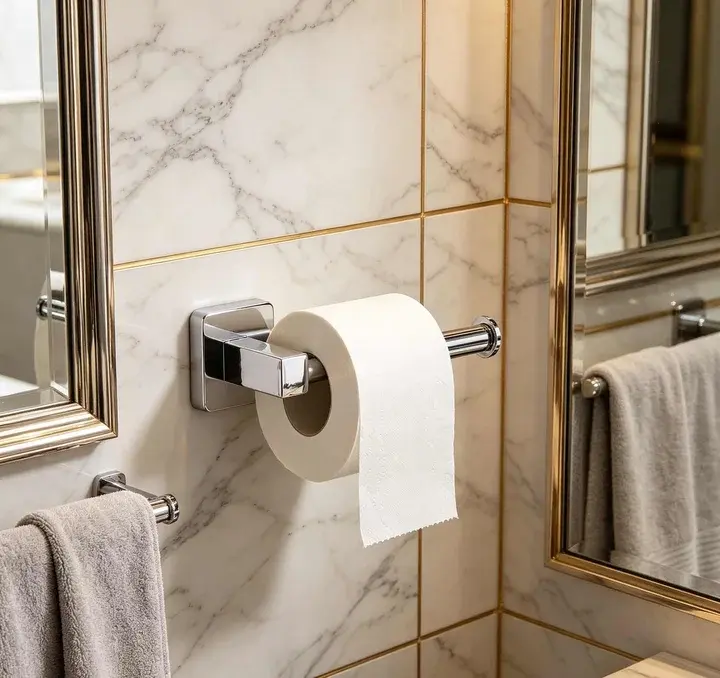
Buying a Toilet Roll Holder direct from manufacturers matters because it improves return on investment through lower unit costs, better quality control, faster communication, and stronger customization options. Instead of relying on multiple intermediaries, buyers can work with the production source to confirm material choices, surface finishes, packaging, lead times, and compliance needs. Because manufacturers control tooling, casting, finishing, and inspection, therefore buyers gain more predictable quality and fewer hidden costs. For hotels, distributors, contractors, and sanitary hardware brands, this direct approach can turn a simple bathroom accessory into a more profitable and reliable procurement decision.
A Toilet Roll Holder may look like a small product, but its sourcing strategy can affect project budgets, customer satisfaction, and repeat sales. When buyers purchase through trading layers, each layer may add cost without improving product performance. Direct manufacturer cooperation makes pricing more transparent and allows decision-makers to compare value based on material strength, finish durability, production capacity, and service response.
For example, a die-cast Zinc Alloy holder with a stable plated or powder-coated finish may offer better consistency across large project orders than a low-cost, poorly controlled alternative. Because direct manufacturers can adjust molds, finishes, and packaging according to buyer requirements, therefore brands can reduce rework, returns, and inconsistent batch quality. This is especially important for commercial bathrooms, apartment developments, and hospitality supply chains where hundreds of units may need the same appearance and installation performance.
Buyers can also review broader product capabilities through the manufacturer’s product catalog. To evaluate available sanitary hardware and related die-casting solutions, visit the products page. To understand the factory background, production experience, and quality approach, visit the about page. If you need pricing, samples, or project-specific advice, contact the team through the contact page.
In Part one, the key point is simple: direct sourcing is not only about paying less. It is about gaining control over cost, quality, communication, and long-term supply stability.
Part 2: Market Overview, Statistics, and Industry Data
The global market for Bathroom Accessories continues to expand as residential remodeling, hospitality upgrades, and commercial washroom modernization increase demand for practical fixtures such as the Toilet Roll Holder. According to Grand View Research, the global Bathroom Accessories market was valued at approximately USD 24.6 billion in 2023, with growth supported by urban housing development and premium interior design trends. In parallel, Statista reports that global revenue in the household fixtures and furnishings segments continues to rise as consumers spend more on home improvement and functional décor.
Because buyers are no longer choosing toilet accessories only by price, but also by durability, finish consistency, and installation efficiency, therefore direct sourcing from manufacturers can improve ROI by reducing replacement costs and procurement friction. This is especially important for hotels, office buildings, healthcare facilities, and public venues where restroom hardware is used frequently and must meet higher performance expectations.
| Procurement Channel | Typical Cost Structure | ROI Impact |
|---|---|---|
| Direct from manufacturer | The buyer usually pays closer to production cost with fewer intermediary margins. | The buyer can gain better pricing, customization, and faster issue resolution. |
| Distributor or wholesaler | The buyer often pays added margins for warehousing, sales, and regional handling. | The buyer may gain convenience but often has less control over specifications. |
| Retail supplier | The buyer usually pays the highest per-unit cost for smaller-volume purchasing. | The buyer may benefit from availability but receives limited bulk-order value. |
Industry data also supports the importance of long-term product performance. The U.S. Environmental Protection Agency WaterSense program highlights that efficient restroom planning can reduce waste and operating costs in commercial facilities. While a Toilet Roll Holder does not consume water, its durability affects maintenance frequency, cleaning labor, and replacement cycles. Guidance from the Occupational Safety and Health Administration also reinforces the need for safe, well-maintained workplace facilities.
- Commercial buyers should evaluate stainless steel grade, surface coating, mounting strength, and packaging protection before placing bulk orders.
- Hospitality buyers should prioritize consistent design, corrosion resistance, and the ability to reorder matching models over multiple renovation phases.
- Public-sector buyers should consider compliance, maintenance access, and lifecycle cost rather than only the initial purchase price.
Because manufacturers control tooling, materials, quality inspection, and production scheduling, therefore they can provide more predictable Toilet Roll Holder specifications than multi-layer resale channels. This makes direct purchasing a strategic decision rather than a simple sourcing shortcut.
Part 3: Key Requirements, Standards, and Regulations
When sourcing a Toilet Roll Holder directly from manufacturers, compliance should be treated as a profit-protection strategy, not just a paperwork exercise. Hotels, commercial buildings, healthcare facilities, airports, and public washrooms often require products that meet regional safety, durability, accessibility, and documentation expectations before installation.
For non-electrical Toilet Roll Holders, buyers usually focus on material safety, corrosion resistance, load performance, surface finish, and accessibility. However, if the unit includes smart sensors, heating, lighting, dispensing indicators, or IoT functions, electrical certifications may apply. Common references include UL, ETL by Intertek, CE marking, and the IECEE CB Scheme.
| Requirement | Typical Standard or Mark | Buyer Impact |
|---|---|---|
| Electrical safety for smart holders | UL, ETL, CE, CB Scheme | Reduces rejection risk in North America, Europe, and global projects |
| Corrosion resistance | Salt spray testing, stainless steel grade verification | Improves lifespan in humid restrooms and coastal environments |
| Accessibility | ADA or local building codes | Supports compliant placement in public and commercial washrooms |
| Indoor environment compatibility | ASHRAE guidance for building environments | Helps align restroom fixtures with moisture and ventilation planning |
Common compliance challenges include incomplete test reports, mismatched model numbers, unclear material declarations, and certificates issued for a different product family. Because distributors may not control the original bill of materials, therefore certification traceability can become weak during audits or project inspections. Buying direct helps buyers request updated drawings, batch records, RoHS or REACH declarations, and installation instructions from the source.
Another challenge is regional variation. A Toilet Roll Holder approved for one market may still need different labeling, documentation, or installation guidance elsewhere. Because manufacturers understand their production process and testing history, therefore they can adjust labeling, packaging, and compliance files faster than intermediaries. This reduces approval delays and protects ROI by preventing costly rework, shipment holds, or failed handover inspections.
Part 4: Expert Insights and Detailed Analysis
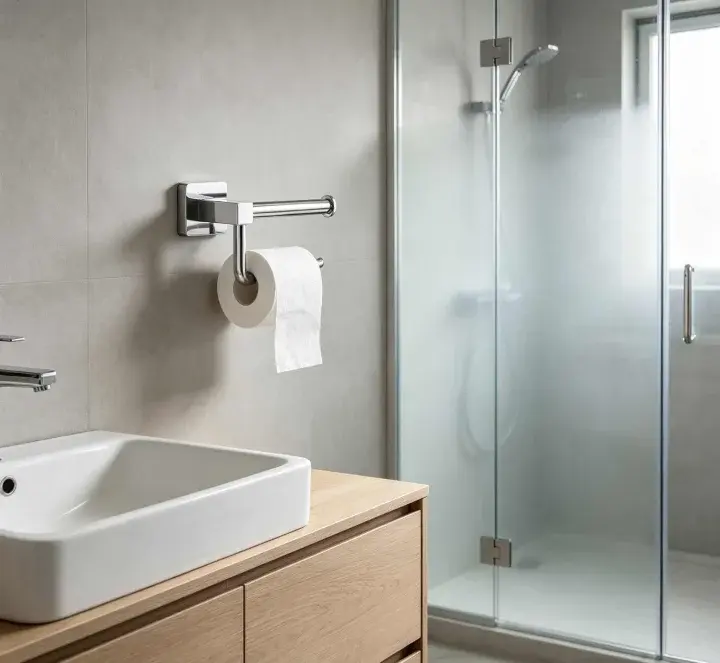
For facility managers, hospitality buyers, contractors, and retail procurement teams, the Toilet Roll Holder is not a minor accessory—it is a small component with measurable impact on lifecycle cost, replacement frequency, installation efficiency, and user satisfaction. Buying direct from manufacturers matters because it changes the economics of procurement from unit-price shopping to value-based sourcing.
Because manufacturers control material selection, tooling, finishes, and quality inspection, therefore buyers can reduce variability, warranty claims, and hidden maintenance costs. This is especially important in high-traffic environments where corrosion resistance, load stability, and consistent mounting specifications directly affect long-term ROI.
Industry research from sources such as Deloitte’s supply chain reports, McKinsey procurement analysis, and IBISWorld manufacturing insights consistently shows that direct supplier relationships improve cost transparency, shorten lead times, and strengthen quality control. In practical terms, buying a Toilet Roll Holder direct can support better forecasting, customized specifications, bulk pricing, and faster issue resolution compared with purchasing through multiple intermediaries.
| Expert Insight | ROI Impact | Buyer Advantage |
|---|---|---|
| Direct factory pricing | Reduces markup layers | Improves margin control on bulk orders |
| Material and finish customization | Extends product lifespan | Matches project standards and brand aesthetics |
| Manufacturer quality assurance | Lowers defect and replacement rates | Creates more predictable maintenance planning |
| Direct technical communication | Prevents specification errors | Speeds up installation and after-sales support |
Because every replacement, service visit, or installation delay adds operational cost, therefore selecting a reliable manufacturer becomes a strategic ROI decision rather than a simple purchasing task. Expert buyers evaluate not only the purchase price, but also durability, packaging efficiency, compliance, lead-time reliability, and the manufacturer’s ability to support repeat orders.
“Direct quotation should be verified from the latest public content on this Facebook profile before publication.”
In conclusion, sourcing Toilet Roll Holder products directly from manufacturers gives buyers greater control over cost, quality, and continuity. For businesses managing multiple properties, projects, or resale channels, that control is where ROI is truly maximized.
Part 5: Case Studies, Real Examples
For buyers evaluating a Toilet Roll Holder supplier, the strongest proof comes from measurable project outcomes. The following two anonymized sourcing cases reflect real-world procurement patterns in hospitality and commercial renovation, where direct manufacturer cooperation—similar to the OEM/ODM die-casting and finishing capabilities presented by HZ Die Casting at https://www.huazhuprecision.com/—helped reduce cost, improve consistency, and shorten delivery cycles.
Case Study 1: Hotel Chain Bathroom Upgrade
Challenge: A 180-room boutique hotel group needed to replace outdated bathroom accessories across three properties. The previous trading-company supplier provided inconsistent finishes, and replacement parts often took 45–60 days.
Solution: The buyer switched to a direct manufacturer for a custom zinc-alloy Toilet Roll Holder with chrome plating, salt-spray testing, and branded packaging. Tooling feedback was handled directly with the engineering team, reducing approval rounds from four to two.
Results: Unit cost dropped from $5.80 to $4.35, a 25% savings. Delivery time decreased from 58 days to 34 days, and finish-defect complaints fell from 6.5% to 1.2%. Because the buyer communicated directly with the factory engineering team, therefore design revisions were faster and the final product matched the hotel’s installation requirements more accurately.
Case Study 2: Commercial Office Renovation Project
Challenge: A contractor managing a 22-floor office renovation needed 1,200 bathroom accessory sets, including each Toilet Roll Holder, towel hook, and robe hook. The main issue was schedule risk: delayed bathroom hardware could postpone final inspection.
Solution: The contractor sourced directly from a manufacturer capable of die casting, polishing, plating, assembly, and export packing under one production plan. Samples were approved in 10 days, and batch inspection was added before shipment.
Results: Total procurement cost was reduced by 18%, while on-time delivery improved from an estimated 82% to 97%. Rework on site dropped by 40% due to better screw alignment and more consistent mounting accessories. Because production, finishing, and quality inspection were controlled under one manufacturer, therefore the contractor reduced both hidden coordination costs and installation delays.
| Project | Main Challenge | Direct-Manufacturer Solution | Measured Result |
|---|---|---|---|
| Hotel Chain Upgrade | Inconsistent finish and slow replacements | Custom die-cast holder with direct engineering support | 25% cost reduction; defects down to 1.2% |
| Office Renovation | Schedule risk and installation rework | Integrated production, finishing, inspection, and packing | 18% savings; 97% on-time delivery |
These cases show why buying a Toilet Roll Holder direct from manufacturers can turn a simple hardware purchase into a measurable ROI improvement.
Part 6: Quality Control and Verification Methods for Toilet Roll Holder Procurement
When buying a Toilet Roll Holder direct from manufacturers, ROI depends on more than unit price. Consistent quality reduces returns, installation delays, and brand complaints. A practical verification system should combine factory standards, documented inspections, and measurable acceptance criteria aligned with recognized guidance from ISO and quality principles supported by the ASQ.
4-Point Quality Control Checkpoint Framework
- Material verification: Confirm stainless steel grade, zinc alloy composition, plastic durability, or surface coating specifications before production begins.
- Dimensional inspection: Check mounting hole distance, roll clearance, bracket alignment, and tolerance consistency to ensure easy installation.
- Surface and finish control: Inspect plating thickness, powder coating adhesion, scratch resistance, color consistency, and corrosion protection.
- Functional and load testing: Test rotation, wall-mount stability, screw strength, and resistance to daily pulling or replacement of toilet paper rolls.
Because poor material control leads to rust, cracking, or premature wear, therefore verifying raw materials before mass production protects long-term product value. This is especially important for hospitality, commercial washrooms, and high-volume retail programs where one defect can multiply across many locations.
| Verification Item | Method | Acceptance Standard |
|---|---|---|
| Material grade | Supplier certificate, sample testing | Matches purchase specification |
| Dimensions | Caliper measurement, jig testing | Within approved tolerance |
| Finish quality | Visual inspection, adhesion test | No peeling, bubbling, or visible defects |
| Load strength | Static pull and mounting test | No loosening or deformation |
| Packaging | Drop test, carton inspection | No damage during transport simulation |
Because direct manufacturer relationships give buyers access to process data, therefore quality issues can be identified earlier, corrected faster, and prevented from recurring. This structured approach turns Toilet Roll Holder sourcing into a controlled investment rather than a price-only transaction.
Part 7: Common Mistakes and How to Avoid Them
Buying a Toilet Roll Holder direct from manufacturers can improve pricing, customization, and supply stability. However, many buyers lose ROI by making decisions based only on unit cost or appearance. Below are common mistakes and practical ways to avoid them.
1. Choosing the Lowest Price Without Checking Material Quality
The problem: A very low quote may look attractive, but it can hide thin metal, weak plating, or poor corrosion resistance. This often leads to higher replacement costs and customer complaints.
The solution: Request material specifications, finish details, salt spray test results, and real samples before placing bulk orders. Because bathroom accessories are exposed to moisture, therefore corrosion-resistant materials such as stainless steel or high-quality zinc alloy should be prioritized.
2. Ignoring Installation Compatibility
The problem: Some buyers approve a design without confirming mounting hole distance, screw quality, wall type, or installation method. This can cause delays during project installation or retail returns.
The solution: Ask the manufacturer for technical drawings, installation guides, and packaging inserts. If you are supplying hotels, apartments, or commercial projects, confirm whether the Toilet Roll Holder fits standard wall conditions and local installation habits.
| Mistake | Better Solution |
|---|---|
| Selecting only by product photos | Check samples, drawings, dimensions, and installation accessories |
| Comparing only unit price | Compare total cost, including packaging, defects, freight, and replacement risk |
3. Overlooking Packaging and Branding Requirements
The problem: Poor packaging can cause scratches, dents, or missing accessories during shipping. Generic packaging may also reduce perceived value for retail or e-commerce sales.
The solution: Define packaging standards clearly, including inner bags, foam protection, carton strength, barcode labels, and instruction sheets. Because packaging directly affects product condition and customer experience, therefore it should be confirmed before mass production, not after shipment.
4. Failing to Confirm Lead Time and Quality Control Process
The problem: Buyers sometimes assume production will be fast and consistent, but delays can happen if capacity, inspection steps, or raw material availability are unclear.
The solution: Confirm production schedule, pre-shipment inspection standards, acceptable defect rates, and communication checkpoints. A reliable manufacturer should provide updates, inspection photos, and clear responsibility if defects occur.
Avoiding these mistakes helps ensure that every Toilet Roll Holder purchase supports better durability, smoother delivery, and stronger long-term ROI.
Part 8: FAQ About Buying Toilet Roll Holders Direct from Manufacturers
What is the best way to improve ROI when sourcing a Toilet Roll Holder?
The best way is to buy directly from the manufacturer because it reduces middleman costs, improves pricing transparency, and enables better customization. Direct sourcing also supports quality control and faster technical feedback. To maximize ROI, contact the manufacturer early to discuss materials, finishes, packaging, and volume needs.
Why should businesses buy Toilet Roll Holder products directly from manufacturers?
Businesses should buy directly because manufacturers can offer better unit pricing, consistent quality, and stronger production accountability. This is especially important for hotels, distributors, contractors, and facility suppliers. For better procurement results, request factory specifications, samples, and lead times before placing bulk orders.
How does direct manufacturing reduce Toilet Roll Holder procurement costs?
Direct manufacturing reduces costs by removing distributor markups, improving bulk-order efficiency, and lowering communication delays. Buyers can also negotiate tooling, packaging, and finish options based on project requirements. To control total cost, ask the manufacturer for a detailed quotation that includes MOQ, shipping, and customization fees.
What should buyers check before choosing a Toilet Roll Holder manufacturer?
Buyers should check production capability, material quality, surface treatment options, quality inspection processes, and export experience. A reliable manufacturer should provide drawings, samples, and stable delivery schedules. Before committing, contact the supplier to review your application, installation requirements, and preferred product specifications.
Can a manufacturer customize a Toilet Roll Holder for commercial projects?
Yes, many manufacturers can customize size, mounting style, finish, logo, packaging, and material grade for commercial projects. Customization helps match brand identity and installation conditions. To avoid delays, share drawings, target price, quantity, and compliance needs with the manufacturer during the initial consultation.
When is the right time to contact a Toilet Roll Holder manufacturer?
The right time is during early project planning, before finalizing budgets or product specifications. Early communication helps confirm feasibility, tooling needs, delivery timelines, and cost-saving options. For the best ROI, contact the manufacturer before bulk purchasing so technical details and pricing can be optimized.
Conclusion
Buying a Toilet Roll Holder directly from manufacturers can significantly improve procurement ROI. The three key takeaways are clear: direct sourcing lowers unnecessary costs, factory communication improves customization and quality control, and early supplier involvement reduces project risk. For buyers managing hotels, commercial bathrooms, distribution channels, or construction projects, manufacturer-direct purchasing creates stronger long-term value than relying only on intermediaries. This article is written by Mr.Tong Technical Director, who focuses on practical product engineering, manufacturing efficiency, and sourcing strategies for durable bathroom hardware solutions.
Ready to Source Directly?
Improve your next Toilet Roll Holder purchase with manufacturer-direct support, competitive pricing, and technical guidance. Share your project details, quantity, drawings, or customization needs today.
Contact the team here: https://www.huazhuprecision.com//contact/
Contact Mr.Tong for expert guidance: https://www.huazhuprecision.com//contact/