
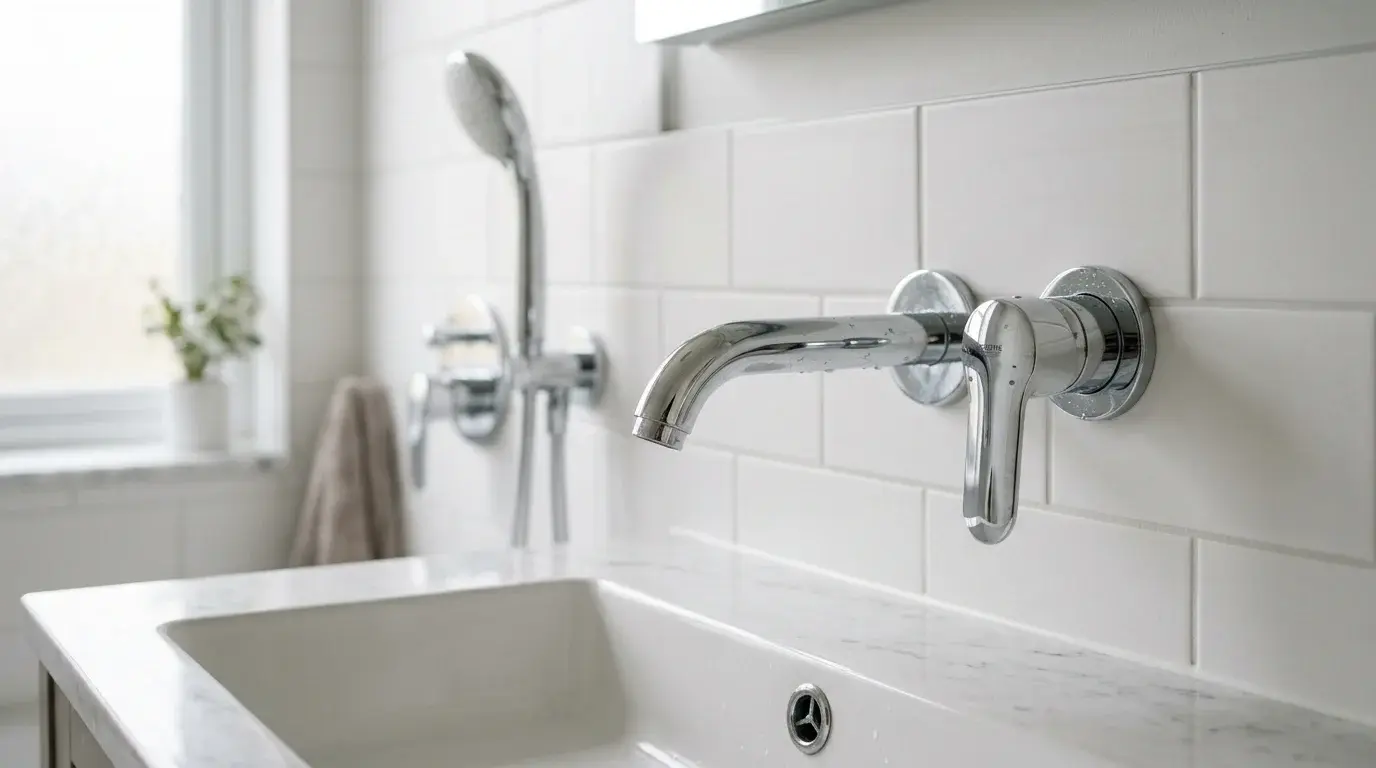
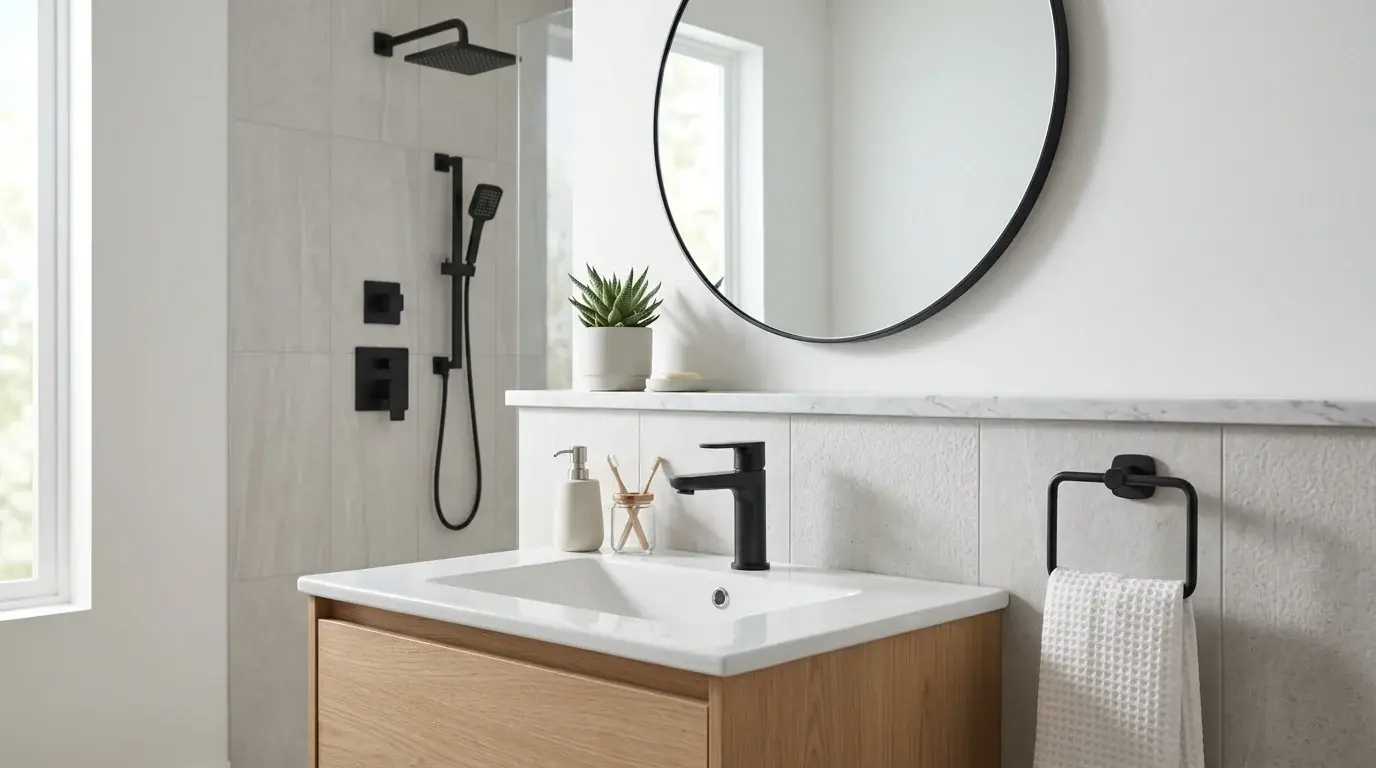
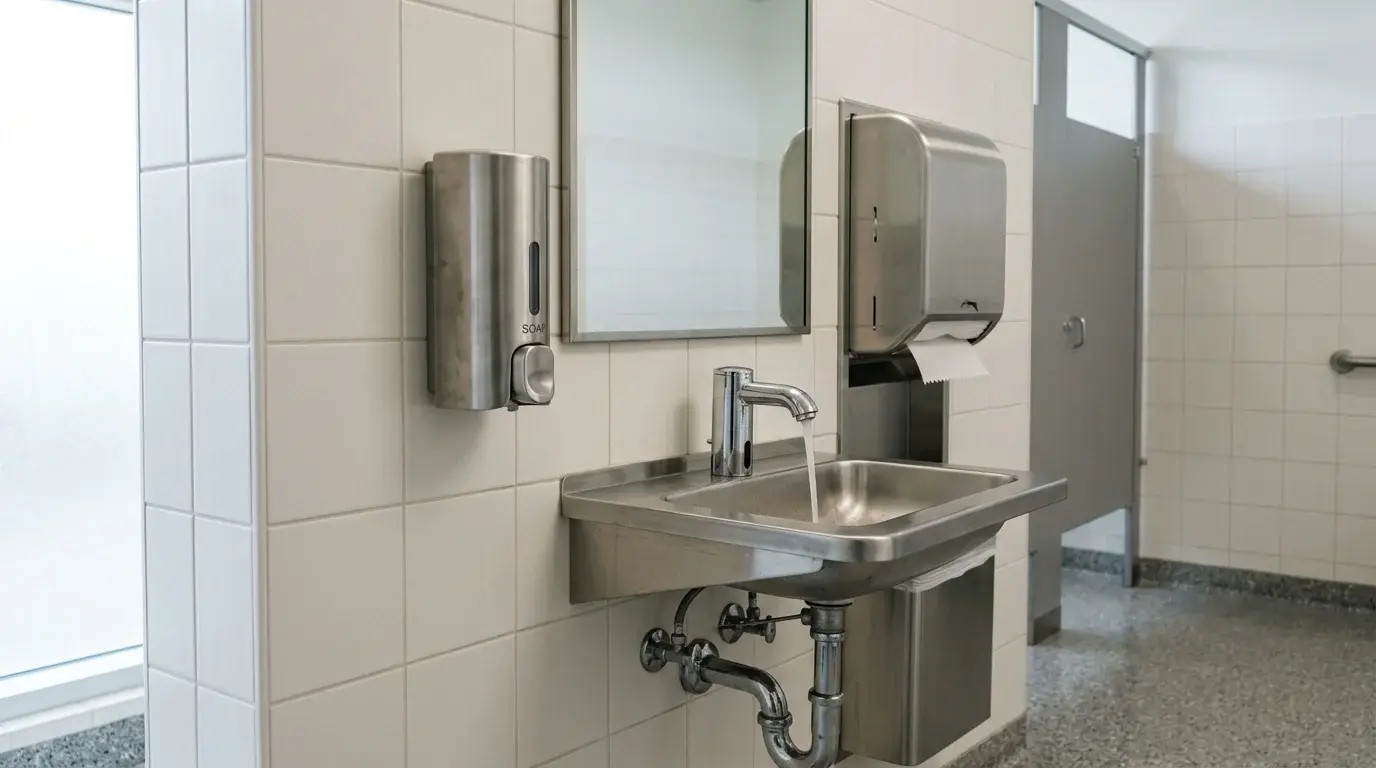
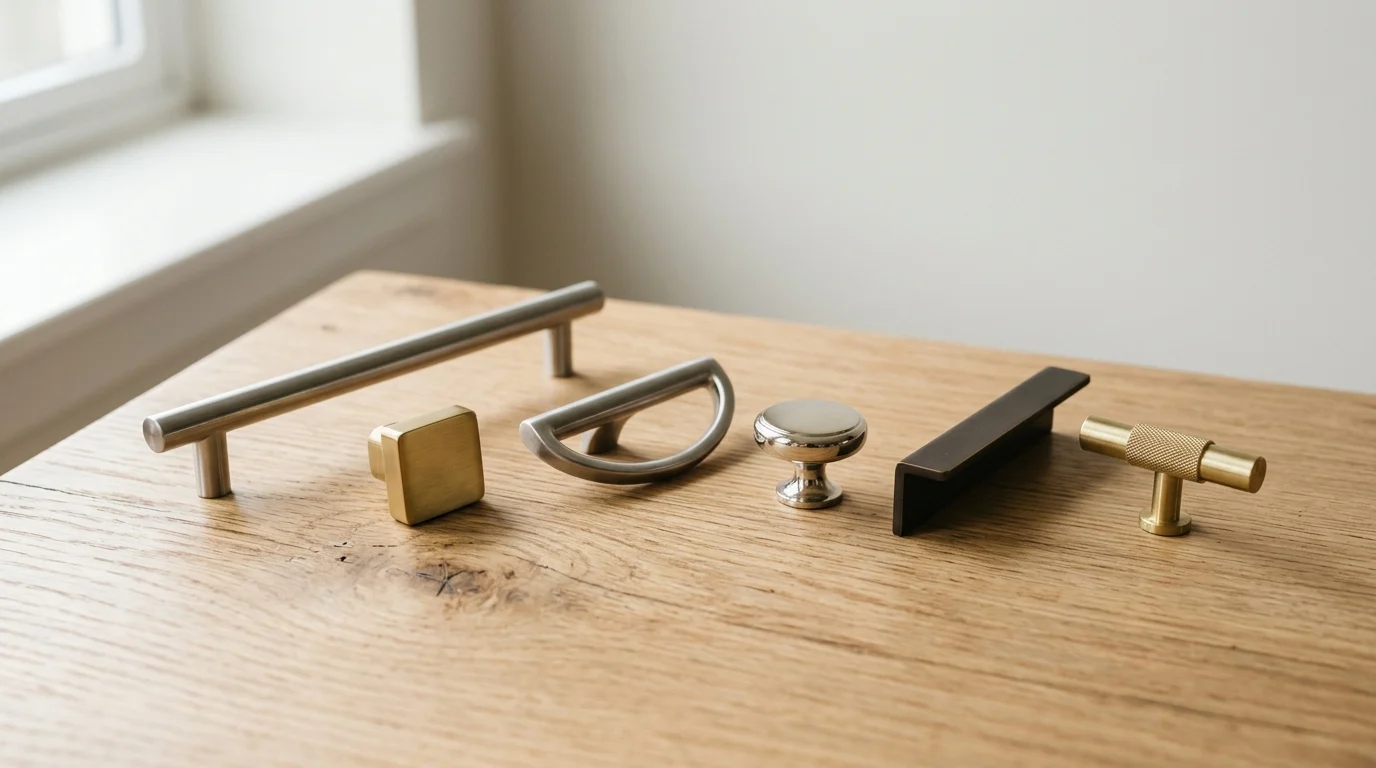
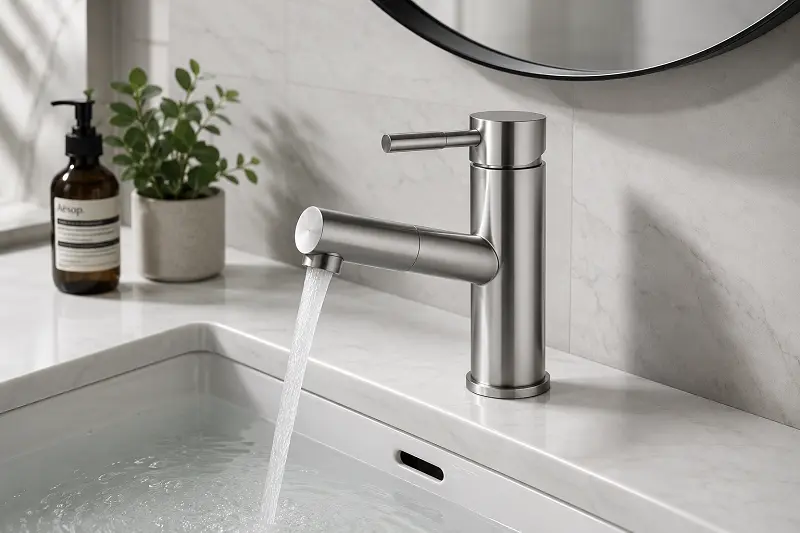
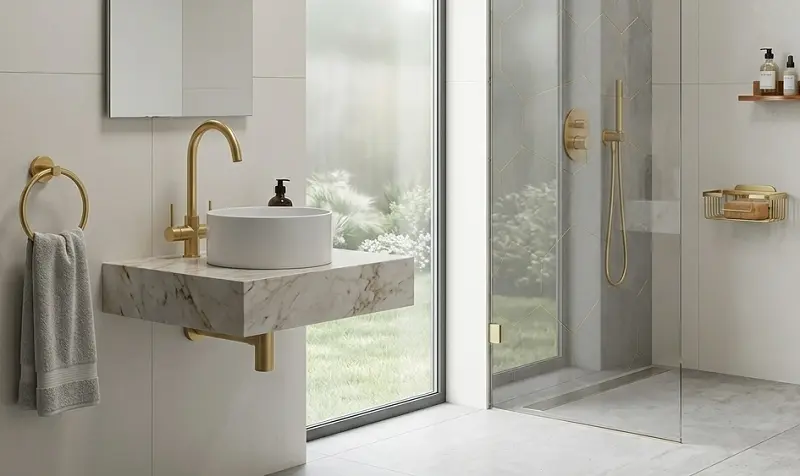
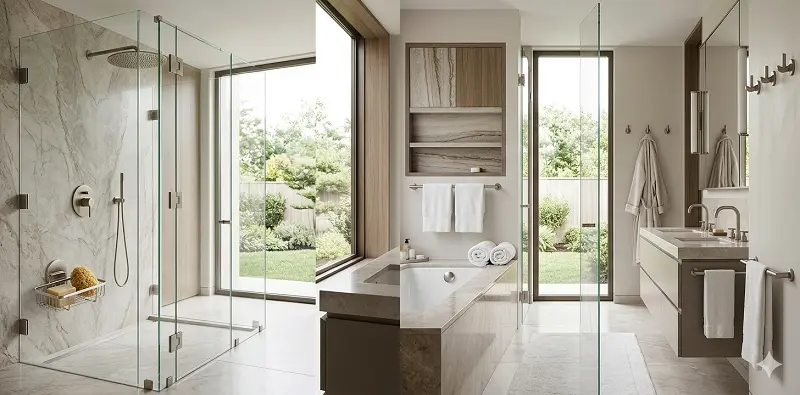
High corrosion resistance is the new standard for luxury hotel hardware because premium properties cannot afford rust marks, pitting, finish failure, and unplanned replacements in spaces guests use every 24 hours. In a luxury hotel, hardware is judged at close range: on shower doors, faucet trim, robe hooks, Grab Bars, handles, hinges, and otherBathroom Fittings. When those parts lose color, develop stains, or feel rough after only 12 months or 24 months, the room no longer feels premium. Hotels now understand that corrosion is not just a cosmetic defect. It is an operating cost, a housekeeping problem, a maintenance problem, and sometimes a safety problem.
High corrosion resistance matters most because hotel hardware lives in harsh micro-environments, especially bathrooms where steam, water droplets, hard-water residue, chlorine-based cleaners, soaps, body oils, and fluctuating temperatures interact every day. A polished surface may look luxurious on installation day, but if the base alloy, coating thickness, or pretreatment is weak, deterioration can start surprisingly fast. Luxury hotels need hardware that keeps its appearance and function for years, not one season. That is why corrosion-resistant materials, engineered finishes, and verified testing have become expected. In short, luxury hospitality has raised the bar because guest expectations are higher, maintenance budgets are scrutinized more carefully, and replacement downtime is more expensive than ever in 2026.
Bottom line: hotels buy image, uptime, and consistency. They choose high-corrosion-resistance hardware because moisture and chemicals are unavoidable, so the hardware must be designed to endure them.
The Shift from Decorative Hardware to Performance Hardware
For many years, some hotel projects selected hardware mainly by finish sample, color card, and initial price per piece. That approach is far less acceptable today. Luxury hardware is now evaluated by its long-term behavior. A brushed or polished finish still matters, but it is no longer enough. The hidden questions are more important: What alloy is underneath? What pretreatment was used? How thick is the coating? How will it behave after 500 hours, 720 hours, or more in corrosion testing? How will it respond after repeated exposure to cleaners every 7 days?
Hotels made this shift because guest spaces are more intensively used, so failure becomes visible sooner. Occupancy pressures, rapid turnover, and premium branding leave less room for visible wear. In upscale properties, even a small rust halo around a fastener or a darkened edge on a shower fitting can undermine the perception of cleanliness. Perception is operational reality in hospitality. If a guest sees corrosion, they do not think about metallurgy; they think about standards.
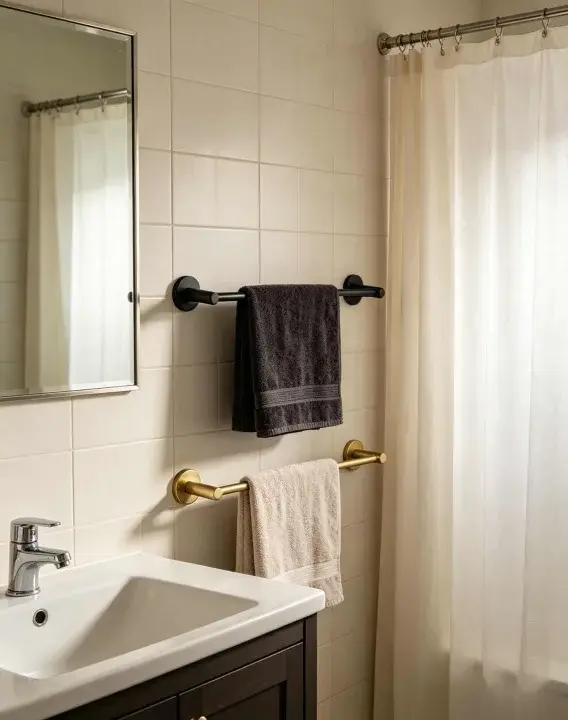
Bathroom Fittings are at the center of this change. They are touched, splashed, wiped, heated, cooled, and cleaned more often than many other hardware categories. Towel rails, flush plates, soap dispenser components, shower brackets, mirror supports, and door accessories all live in environments where moisture may remain on the surface for several hours after each use cycle. That is why many specifiers now start material selection from corrosion demands first and style second.
Why Bathrooms Create the Toughest Conditions
Bathrooms are corrosion accelerators. This is true in city hotels, resort hotels, spa properties, airport hotels, and beachfront villas alike. Moisture alone is not the whole story. The main challenge comes from the combination of water, oxygen, temperature changes, dissolved salts, cleaning chemistry, and contact frequency.
Here is why bathroom environments are so aggressive:
- Relative humidity can remain above 60% or 70% for extended periods.
- Condensation cycles happen daily, especially on metal surfaces after hot showers.
- Cleaning agents may contain acids, alkalis, or chlorides in controlled but repeated doses.
- Hard water deposits trap residues, which can hold moisture against the finish for many hours.
- Human touch adds oils, salts, and abrasion to knobs, levers, handles, and trim pieces.
These factors matter because corrosion rarely comes from one cause alone, so robust resistance must be built as a system. A hotel cannot simply order a shiny part and assume performance. The substrate, coating, sealant, assembly method, and maintenance routine must all work together.
In premium hospitality, a bathroom fitting is not exposed to water in a simple sense; it is exposed to a repeating chemical and thermal cycle every 24 hours.
Luxury Hotels Have Less Tolerance for Visible Degradation
High-end guests notice details. They notice the smoothness of a lever, the consistency of a finish, the absence of stains around screw points, and the way surfaces look under bright mirror lighting. A room can feature marble, custom lighting, and high-thread-count linens, but if the metal hardware shows pitting or tarnish after only 18 months, the luxury message weakens instantly.
This is one of the strongest reasons corrosion resistance has become a standard. Luxury hotels sell confidence. They need guests to feel that every element is deliberate, clean, and durable. Corroded hardware suggests the opposite: short-term thinking, deferred maintenance, or poor material selection.
Hotels also face image risk online. A single close-up photo of a stained Shower Hinge or rusted bathroom bracket can circulate widely. That mattersbecause visual evidence spreads quickly, so small hardware failures can produce outsized brand damage. Premium operators therefore treat corrosion prevention as part of the guest experience, not just a back-of-house maintenance issue.
The Real Cost of Corrosion: More Than Replacement Price
Many procurement teams once compared hardware largely by unit cost. Today, more buyers look at lifecycle cost over 36 months, 60 months, or even 120 months. This is a smarter way to buy.
Consider what corrosion can trigger in a luxury hotel:
- Housekeeping complaints when stains reappear after cleaning.
- Maintenance labor for inspections, touch-ups, resealing, or replacement.
- Room downtime if hardware must be removed or repaired.
- Guest dissatisfaction if bathrooms look aged before the next renovation cycle.
- Inventory costs for spare parts and emergency replacements.
- Potential safety concerns if structural fittings weaken or seize.
Corrosion-resistant hardware lowers all of these risks. Even if the initial purchase price is higher by a certain percentage, the total cost often drops across several years. Hotels have recognized this because reactive maintenance is expensive, so preventive material performance delivers better financial control.
| Cost Factor | Lower Corrosion Resistance | Higher Corrosion Resistance |
|---|---|---|
| Appearance retention | Visible staining or pitting within as little as 12 months to 24 months in harsh areas | More stable finish retention over multiple years |
| Maintenance frequency | Frequent inspections and cleaning adjustments every 1 month to 3 months | Lower intervention frequency with predictable care cycles |
| Room downtime | Higher likelihood of unplanned service events lasting several hours | Reduced disruption and longer uninterrupted use periods |
| Guest perception | Luxury impression declines quickly | Premium appearance remains consistent |
| Replacement cycle | Shorter cycle, more spare inventory | Longer cycle, fewer urgent orders |
What High Corrosion Resistance Really Means
High corrosion resistance is not one single feature. It is the combined result of correct material choice, precision manufacturing, proper surface preparation, coating or plating quality, sound design geometry, and realistic testing. In hotel hardware, especially Bathroom Fittings, corrosion resistance must address both visible surfaces and concealed points such as joints, threaded areas, edges, cavities, and mounting interfaces.
Key contributors include:
- Base material qualitysuch as Zinc Alloy, stainless steel, brass, or aluminum selected for the right environment.
- Pretreatment quality to ensure coating adhesion and surface cleanliness.
- Plating or coating thickness measured in controlled layers.
- Sealant and passivation processes to protect vulnerable surfaces.
- Design details that reduce water traps and crevices.
- Assembly compatibility to avoid galvanic issues between dissimilar metals.
- Testing discipline that matches real-world exposure conditions.
A good finish is engineered, not painted on as an afterthought. This matters because corrosion usually starts at weak points, so uniform process control is essential. A fitting may look flawless on the showroom table, yet fail early at edges or hidden interfaces if process consistency is poor.
Materials Commonly Used in Luxury Hotel Hardware
Stainless Steel
Stainless steel is valued for durability and clean aesthetics. In many hotel applications, it offers strong resistance to moisture and wear, especially when grades are matched to the environment. However, not all stainless behaves identically, and chloride-rich conditions can still be challenging.
Brass
Brass remains popular for premium fittings due to machinability, weight, and finish quality. It often performs well when plating systems and environmental exposure are properly controlled.
Zinc Alloy
Zinc Alloy is widely used in decorative and functional hardware because it can achieve detailed shapes and consistent mass production. Its performance depends heavily on plating quality and design protection.
Aluminum Alloys
Aluminum can offer low weight and modern styling, but it requires correct finishing and application-specific evaluation, particularly in humid and chemically exposed spaces.
Material choice should never be isolated from environment. A coastal spa suite within 1 km of the sea may need a different hardware strategy than a business hotel in a dry inland city. The best specification is always contextual.
Why Coatings and Plating Systems Matter So Much
Surface engineering is one of the biggest differentiators in hotel hardware performance. The base metal provides structure, but the outer system often provides the first line of defense against moisture, oxygen, and chemical attack. Chrome plating, PVD-type finishes, powder coatings, anodizing, and layered electroplating systems all play roles depending on design and application.
However, a finish should not be judged only by color or gloss. Buyers should ask deeper questions:
- How many layers are applied?
- What is the total thickness in controlled measurements?
- What adhesion tests were performed?
- How are corners and recessed areas protected?
- What corrosion test duration in hours has been achieved?
These questions matter because a beautiful finish can still fail from underneath, so hidden process quality is as important as visible appearance. In luxury hotel projects, the finish must endure frequent wiping, cleaner contact, and steam exposure without losing uniformity.
Testing Is No Longer Optional in 2026
By 2026, serious hotel buyers increasingly expect performance data. Verified testing has become part of responsible sourcing. A supplier should be able to explain what corrosion tests have been used, what standards guided them, and how results relate to real hotel conditions.
Common evaluation methods may include salt spray testing, humidity exposure, coating adhesion checks, thickness verification, and appearance retention inspections after accelerated cycles. While accelerated tests are not perfect replicas of real life, they are still useful benchmarks when interpreted correctly.
Testing matters because decisions based only on catalog photos create risk, so measurable performance evidence improves confidence. Luxury hotels often run on tight operational schedules. They need fewer surprises, not more.
If you are reviewing supplier capabilities or exploring production options, it is sensible to examine available https://www.huazhuprecision.com/products/ solutions in relation to intended room type, exposure level, and maintenance plan. Specification should fit the environment, not just the design board.
Bathroom Fittings: The Category Where Corrosion Resistance Pays Back Fastest
Bathroom Fittings deliver some of the clearest return on corrosion-resistant design because they are exposed to the most demanding combination of moisture and guest scrutiny. This includes:
- Shower door hinges
- Handles and knobs
- Towel bars and robe hooks
- Soap and lotion dispenser housings
- Toilet partition hardware
- Mirror mounting accessories
- Shelving brackets
- Decorative trim elements
Every one of these items must maintain both function and appearance. A seized hinge, stained bracket, or roughened grab point is unacceptable in a luxury room. Hotels increasingly specify better-performing systems because bathrooms are inspected visually at close distance, so surface failure is noticed immediately.
Coastal, Urban, Spa, and Poolside Environments Raise the Stakes
Not all hotels face the same corrosion profile. Coastal hotels encounter airborne salt particles. Spa resorts deal with warm humidity and chemical treatment products. Poolside areas face chlorinated moisture. Urban hotels may encounter pollution and acid-forming residues. Each environment changes how fast corrosion may begin and how aggressively it may spread.
For example, a beachfront resort located less than 2 km from the shore may expose exterior-adjacent hardware to salt deposition every 24 hours. A wellness facility with steam rooms may keep nearby surfaces damp for long periods measured in multiple hours each day. In both cases, the finish system must be selected accordingly.
Environment-specific design is now expected in luxury projects. It is no longer sufficient to use one standard hardware specification across all property types.
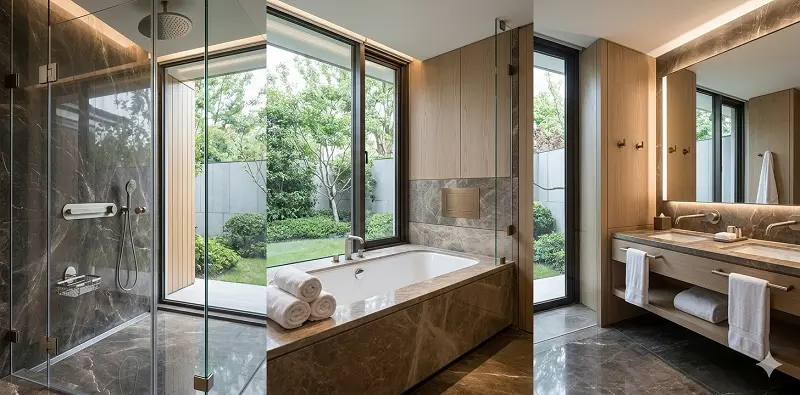
How Corrosion Resistance Supports Housekeeping Efficiency
Housekeeping teams play a major role in preserving guest-room quality. Better corrosion resistance makes housekeeping easier. When surfaces resist staining, spotting, and chemical attack, teams spend less time reworking the same fixtures. They also avoid aggressive scrubbing practices that can further damage weak finishes.
This operational benefit is often underestimated. A room attendant may only save a few minutes per room when hardware stays cleaner and smoother, but across hundreds of rooms and 365 days per year, that time adds up significantly. Moreover, visually stable hardware reduces the number of can this be cleaned questions sent to engineering.
Hotels value this because repeated cleaning labor accumulates, so durable finishes protect both appearance and staffing efficiency.
Why Safety and Function Matter Alongside Appearance
Corrosion is not only a cosmetic issue. In some hardware categories, it can affect movement, alignment, strength, or sanitation. Shower fittings that seize, door hardware that sticks, and brackets that loosen due to material degradation create service issues and possible hazards.
In wet areas, pitting and roughness can also trap more residue, making surfaces harder to clean thoroughly. This is another reason corrosion resistance has moved into the must-have category. Luxury hotels need hardware that stays smooth, stable, and reliable over long service periods.
Design Details That Improve Corrosion Performance
Good corrosion resistance begins at the design stage. Even strong materials can underperform if part geometry traps water or exposes weak edges. Designers and engineers now pay closer attention to:
- Drainage-friendly shapes that reduce standing water.
- Rounded transitions that improve coating consistency.
- Protected fastener locations that reduce direct splash exposure.
- Reduced crevice areas where moisture can remain for many hours.
- Assembly methods that minimize coating damage during installation.
Design matters because water seeks edges, gaps, and recesses, so geometry strongly influences real-world durability. This is why experienced hardware manufacturers treat corrosion resistance as a design-and-process problem, not just a material problem.
Procurement Teams Now Ask Better Questions
Hotel developers, designers, operators, and purchasing teams have become more sophisticated. Instead of asking only, What finish is available they increasingly ask:
- What hotel projects have used this hardware in similar climates?
- What test data supports the corrosion claim?
- What maintenance products are approved every 7 days or 30 days?
- How long is the expected service life in years?
- What spare parts plan is recommended over 60 months?
This is a positive shift. Better questions lead to better specifications, fewer callbacks, and more consistent guest-room quality. When researching manufacturing partners or application options, the product range at https://www.huazhuprecision.com/products/ can be reviewed in the context of finish system, alloy choice, and hospitality use case.
The Influence of Sustainability, Renovation Cycles, and Asset Planning
Another reason corrosion resistance is becoming standard is that hotels want longer-performing assets. Replacing hardware too often is disruptive and wasteful. Every early replacement requires manufacturing, shipping, labor, packaging, and disposal. As renovation planning becomes more disciplined, properties prefer hardware that remains attractive and functional over longer cycles measured in several years.
This trend is especially important for branded luxury chains that want consistent property standards across regions. Durable hardware supports planning accuracy. If corrosion-related failures are reduced, operators can schedule refurbishments more strategically instead of reacting to scattered defects room by room.
How to Evaluate Corrosion Resistance Before You Buy
Selection should be evidence-based. For hotel developers, interior designers, and procurement professionals, the following checklist can help:
- Define the environment: inland, coastal, spa, pool, or mixed-use.
- Identify the exact application: direct splash zone, high-touch trim, concealed support, or decorative accent.
- Review material specifications for substrate suitability.
- Ask for coating process details and thickness control information.
- Request corrosion testing data with durations in hours.
- Confirm cleaning compatibility with the hotels standard chemical program.
- Assess service strategy for spare parts and maintenance intervals in months.
- Compare lifecycle value, not only unit price.
Buyers who follow this process usually make more durable decisions. They are less likely to discover too late that a decorative-grade product was installed where a hospitality-grade solution was required.
What Luxury Hotels Should Prioritize in 2026
In 2026, the strongest hardware programs in luxury hospitality will prioritize five things: verified corrosion resistance, environment-specific material selection, finish system quality, cleaning compatibility, and lifecycle value. These priorities are practical, measurable, and aligned with how guests actually experience a room.
Hotels that adopt this standard tend to see more stable room presentation across many months and years. They also gain more predictable maintenance planning. That is why high corrosion resistance is no longer a premium extra; it is becoming the minimum acceptable benchmark for true luxury hardware.
FAQ
1. Why is corrosion resistance so important in luxury hotels?
Corrosion resistance is critical in luxury hotels because hardware is used constantly and viewed up close by guests who expect flawless conditions every 24 hours. In wet areas, even a small amount of pitting, rust staining, or finish dulling changes how the entire room feels. Luxury depends on consistency, and hardware is one of the most visible indicators of maintenance quality. When fittings resist moisture, chemical cleaners, and repeated touching over several years, the hotel protects its image, reduces service calls, and keeps rooms in premium condition longer.
2. Which hotel areas need the highest corrosion resistance?
The most demanding areas are guest bathrooms, shower enclosures, spa facilities, steam-adjacent zones, poolside washrooms, beachfront suites, and other locations where condensation or salt exposure may occur for many hours each day. Bathroom Fittings deserve particular attention because they combine direct water exposure with high guest visibility. Public restroom hardware, exterior door accessories, and valet-area components may also require elevated protection depending on climate and cleaning routines.
3. Are all shiny metal finishes equally durable?
No. Two products can appear nearly identical on day 1 yet perform very differently after 12 months or 36 months. The difference usually comes from substrate quality, pretreatment, coating thickness, edge coverage, passivation, and installation conditions. Appearance alone does not prove durability. A polished finish may still degrade quickly if the system beneath it is not engineered for humid hotel service.
4. How do corrosion-resistant fittings reduce total cost?
They reduce total cost by extending replacement intervals, lowering maintenance labor, preventing room downtime, and helping hotels avoid repeated spot repairs. A fitting that costs more upfront can still be the better investment if it avoids several service interventions over 60 months. Lifecycle value is what matters. In luxury operations, even a few avoided failures per floor can translate into meaningful savings in labor time, coordination effort, and guest satisfaction protection.
5. What tests should buyers ask suppliers to provide?
Buyers should ask for corrosion testing data such as salt spray results measured in hours, coating thickness records, adhesion test outcomes, substrate details, and evidence of performance in similar hotel environments. They should also ask how the test conditions relate to bathrooms, spa humidity, or coastal exposure. Good suppliers can explain both the numbers and the application meaning. That combination is far more useful than a simple brochure claim.
6. Can cleaning products damage bathroom fittings?
Yes. Some cleaners contain ingredients that can gradually attack coatings or accelerate discoloration if concentration, contact time, or wiping method is unsuitable. This is especially important when surfaces are cleaned every 1 day or every 2 days. Cleaning compatibility should be part of the specification process. Hotels should follow recommended product lists and avoid harsh combinations that shorten finish life.
7. Is corrosion resistance only relevant for coastal hotels?
No. Coastal air increases risk, but inland hotels still face steam, hard water deposits, urban pollutants, disinfectants, and repeated humidity cycles. In many city properties, bathroom corrosion remains a persistent issue even when the sea is hundreds of km away. Any environment with water, chemistry, and time can create corrosion pressure. That is why corrosion resistance matters across nearly all luxury hotel formats.
8. What should hotels prioritize in 2026 when sourcing hardware?
In 2026, hotels should prioritize proven corrosion performance, environment-matched materials, durable finishes, easy maintenance, and realistic service life measured in years. They should compare lifecycle cost rather than only unit price and should evaluate whether the hardware can maintain appearance under actual room-cleaning and occupancy conditions. The best hardware programs treat fittings as long-term operational assets, not as purely decorative accessories.
Conclusion
High corrosion resistance is the new standard for luxury hotel hardware because luxury today is measured in lasting performance. Guests expect flawless rooms, operators need predictable costs, and maintenance teams need hardware that withstands moisture, chemicals, and constant use. This is especially true for Bathroom Fittings, where every flaw is visible and every failure feels immediate.
As the hospitality sector moves through 2026, the message is clear: durability, appearance retention, and operational reliability now belong together. Hotels that choose corrosion-resistant hardware are not simply buying metal parts. They are buying longer service life, cleaner presentation, fewer interruptions, and a stronger guest impression over many years.