
Sustainability in Procurement: Eco-Friendly Materials for Commercial Soap Baskets
The most sustainable approach to buying a commercial Soap Basket is to choose a material that lasts for 10 years or more in wet conditions, uses recyclable metal content, and minimizes coating failure, replacement waste, and maintenance labor. In practice, that means procurement teams should compare stainless steel, zinc alloy, and other metal options by corrosion resistance, recycled input, finish durability, weight, and end-of-life recyclability. A low-cost basket that fails after 18 months is usually less sustainable than a higher-quality model that stays functional for 8 years, because repeated replacement consumes more raw material, packaging, shipping energy, and installation time, so the total environmental burden rises. For commercial restrooms, hotels, healthcare spaces, and residential projects, the smartest buying strategy is to focus on lifecycle value, not just unit price. Buyers should request test data, verify coating performance, examine mounting strength, and favor designs that drain water quickly to reduce soap residue and corrosion exposure. For product sourcing examples, review thisSoap Basketcategory page and this customized Zinc Alloy soap holder product page to see how material, finish, and design choices can support durable, lower-waste procurement.
TL;DR
- Service life matters most: choosing a basket that lasts 8 years to 12 years can cut replacement purchases by 50% to 80%.
- Corrosion resistance reduces waste: in humidity above 70%, better alloys and finishes can lower failure risk within the first 24 months.
- Recyclable metals add value: many metal baskets can be recycled at end of life, reducing landfill volume by several kg per 100 units.
- Drainage and cleaning design matter: water retention of even 5 mL to 15 mL per use cycle can accelerate residue buildup and shorten finish life.
- Total cost beats low sticker price: a unit costing $12 per piece may outperform one at $7 per piece if it avoids 2 replacements in 5 years.
Why sustainability in soap basket procurement matters
A commercial Soap Basket looks simple, yet it sits in one of the harshest indoor environments: constant moisture, cleaning chemicals, hand contact, soap residue, and repeated loading. That matters for procurement, because wet-service hardware fails in predictable ways, so buyers can reduce waste by selecting the right material from the start. The environmental benefit often comes from longevity more than novelty. A basket that stays intact and presentable for 96 months avoids manufacturing and shipping replacement units every 12 months to 24 months.
Sustainability also affects operations. If a facility manager replaces 200 units across a hotel or apartment project, that work may involve labor hours, room access coordination, packaging disposal, and customer disruption. Because every replacement has a material and labor footprint, so longer-lasting products usually support more efficient procurement programs. In 2026, buyers are expected to look beyond appearance and ask tougher questions about coatings, recyclability, supply consistency, and maintenance frequency.
Which materials are most eco-friendly for commercial soap baskets?
| Material | Sustainability strengths | Procurement concerns | Best fit |
|---|---|---|---|
| Stainless steel | High corrosion resistance, long service life, widely recyclable | Higher initial cost, finish quality varies by grade | High-humidity and high-use facilities |
| Zinc Alloy | Precise casting, attractive finishes, durable structure, recyclable metal base | Coating quality is critical in wet spaces | Architectural designs and custom shapes |
| Aluminum alloy | Low weight, recyclable, lower shipping mass in some designs | Surface protection and strength design require care | Lightweight wall-mounted solutions |
| Plastic composites | Lower weight and sometimes lower cost | May crack, discolor, or recycle poorly depending on resin | Temporary or budget installations |
In many commercial settings, stainless steel and zinc alloyare the leading options. Stainless steel is attractive for sustainability goals because it is durable and typically recyclable. Zinc Alloy is highly relevant when buyers need intricate forms, branded styling, or custom development. Because Zinc Alloy supports accurate die casting, so manufacturers can create compact structures with efficient material use and strong dimensional consistency.
That does not mean one material wins in every case. The real answer is contextual: room humidity, cleaning protocol, expected load, and design life all matter. A premium coating on Zinc Alloy may outperform an inferior finish on another metal. Because the finish acts as the first barrier against moisture, so surface treatment quality can be just as important as base material.
How to evaluate sustainability beyond the material label
1. Lifespan under real wet-use conditions
The first sustainability metric should be expected service life in actual use, not only in a catalog description. Ask how the basket performs at humidity levels above 65%, cleaning intervals of 1 time per day to 3 times per day, and installation loads of 0.5 kg to 2 kg. Durability is a sustainability feature because long life reduces replacement volume.
2. Recycled and recyclable content
Many buyers now ask whether metal content includes recycled input and whether the product can be recycled at end of life. That is a reasonable question, especially when facilities buy in batches of 100 units to 5,000 units. Recyclability does not erase manufacturing impact, but it helps preserve material value after use.
3. Surface finish chemistry and thickness
A basket’s environmental profile is strongly influenced by the coating or finish. Electroplating, powder coating, brushed surfaces, and passivation processes differ in durability and maintenance behavior. Buyers should ask for finish specifications, salt spray or corrosion test references when available, and cleaning recommendations measured in pH units or concentration percentages. Finish stability matters because premature peeling can turn a usable metal body into waste.
4. Drainage, cleaning, and soap residue control
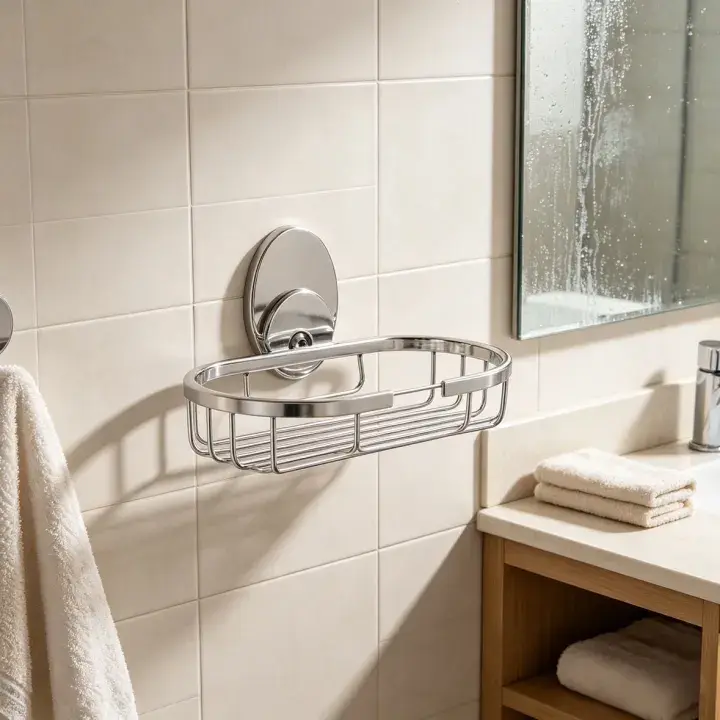
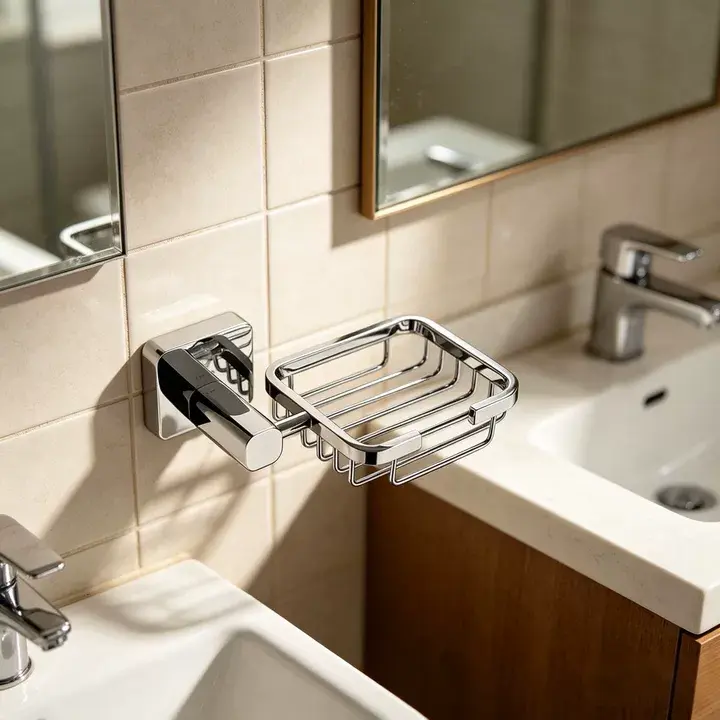
The geometry of the basket has a direct sustainability effect. Open-wire and ventilated designs often dry faster than enclosed trays. If water sits for 6 hours after use instead of drying in 30 minutes, corrosion risk and soap sludge buildup usually increase. Because poor drainage traps moisture, so even a good alloy can age faster than expected.
A sustainable buying decision combines material, finish, design, and maintenance fit. A buyer who evaluates only upfront price may miss the largest environmental gains.
Why zinc alloy remains important in sustainable commercial hardware
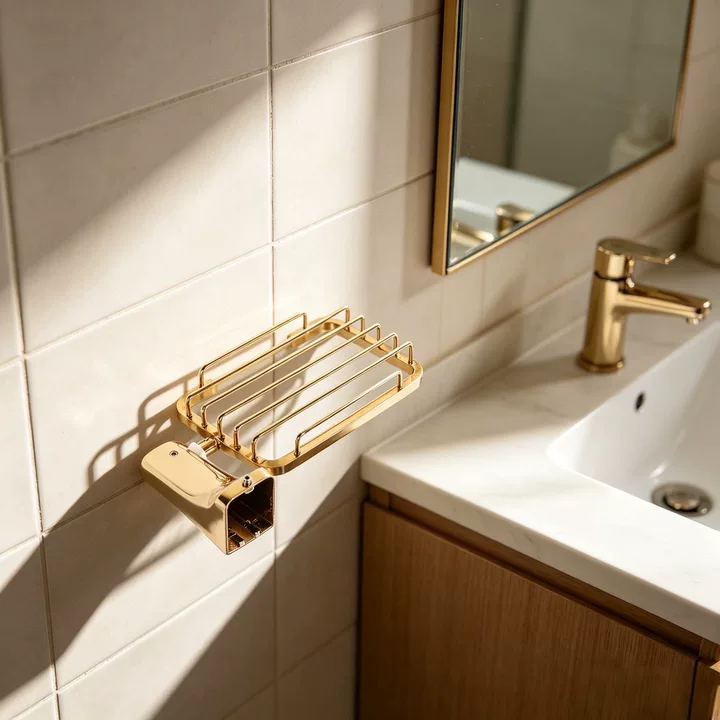
Zinc alloy deserves specific attention because it is frequently used for Bathroom Accessories that need a refined shape, stable dimensions, and decorative finish options. In a procurement context, zinc alloy can support sustainability when the product is well engineered, plated or coated correctly, and matched to the use environment. The category and custom product examples athttps://www.huazhuprecision.com/soap-basket/ and https://www.huazhuprecision.com/customized-zinc-alloy-soap-holder-product/ show how manufacturers can align design flexibility with durable hardware performance.
Die-cast Zinc Alloy can reduce waste in production by supporting high repeatability across large batches such as 1,000 pieces to 10,000 pieces. Because dimensional consistency lowers rejection rates, so procurement teams may see fewer defects, fewer returns, and more predictable installation. If the supplier also controls coating quality and packaging efficiency, the sustainability profile improves further.
Practical procurement criteria for 2026
- Specify target service life of at least 5 years to 10 years for commercial installations.
- Request corrosion data for wet-room or coastal environments.
- Ask about recycled metal content and end-of-life recyclability pathways.
- Review finish durability and cleaner compatibility in measurable concentrations such as 2% to 5% detergent dilution.
- Check mounting hardware quality to prevent early loosening or wall damage.
- Optimize packaging by reducing excess inserts and using recyclable cartons measured in g per unit.
- Consider spare-part availability for brackets, screws, or covers.
These criteria matter in 2026 because buyers increasingly need products that stay functional under frequent cleaning and occupancy pressure. Because facilities are under pressure to reduce both cost and waste, so procurement standards are becoming more lifecycle-oriented.
Common mistakes that make a soap basket less sustainable
One frequent mistake is buying by appearance alone. A bright finish can look premium on day 1 day, yet if adhesion is poor, defects may appear by month 6 months. Another mistake is ignoring cleaning chemicals. Chloride-rich or abrasive cleaners can shorten surface life. Because the wrong cleaner attacks the finish, so the basket may corrode long before the metal body is structurally weak.
Overdesign can also hurt sustainability. A very heavy product may use more material than needed without giving meaningful performance gains. Underdesign is equally risky if thin sections or weak brackets lead to breakage. The most sustainable choice is often a balanced design with enough strength, efficient geometry, and practical drainage.
How to calculate lifecycle value for a commercial soap basket
A simple lifecycle comparison can transform procurement decisions. Imagine Option A costs $7 per piece and lasts 2 years. Option B costs $12 per piece and lasts 6 years. Over 6 years, Option A may require 3 units per location, totaling $21 per location, before labor and disposal. Option B uses 1 unit per location, totaling $12 per location. If installation labor is $4 per replacement, the gap widens further.
That is why sustainability and cost often align. Lifecycle costing reveals that fewer replacements can lower total spend, reduce shipping cartons, and cut maintenance calls. For projects with 300 rooms, this difference becomes substantial in both budget and waste terms.
FAQ
1. What makes a soap basket sustainable?
A sustainable soap basket combines long service life, recyclable material, durable finishing, and a design that drains water efficiently. In practical terms, sustainability improves when the basket resists corrosion for 5 years to 10 years or more, needs minimal maintenance, and does not require frequent replacement. A product that lasts longer creates less waste, uses fewer shipping resources, and reduces labor demand across the building lifecycle.
2. Is stainless steel better than zinc alloy for commercial use?
Not always. Stainless steel is often excellent for aggressive humidity and frequent washing, while zinc alloy is highly useful for cast precision, decorative quality, and customized shapes. The better choice depends on finish system, mounting design, and exposure conditions. If the zinc alloy basket has a robust coating and suitable drainage, it can serve very well. If the environment includes high moisture and chemical exposure every 24 hours, stainless steel may have an advantage.
3. Why does drainage affect sustainability?
Drainage affects sustainability because standing water increases soap residue, finish wear, and corrosion risk. If a basket retains only 10 mL of water after repeated use, that moisture can stay in contact with the surface for many hours. Better ventilation and open geometry allow faster drying, which can extend service life and reduce the need for replacement parts. A simple design choice can therefore influence years of product performance.
4. Should procurement teams request test documents?
Yes, they should request whatever documentation the supplier can reasonably provide, including material information, finish details, and corrosion performance references. The goal is not paperwork for its own sake; it is informed risk reduction. If a product will be installed in 500 units across a property portfolio, small differences in durability can create large differences in replacement volume and maintenance cost over 36 months to 72 months.
5. Can custom products still be eco-friendly?
Yes. Custom products can be eco-friendly when they avoid unnecessary mass, use durable metal, and are made with consistent quality control. In fact, custom sizing can sometimes reduce waste by matching the exact installation requirement and preventing retrofit damage or unusable stock. A well-designed custom basket may perform better than a generic one if it fits the soap size, wall spacing, and cleaning routine more precisely.
6. Do cleaning chemicals change material selection?
Absolutely. Cleaning agents influence finish life, discoloration risk, and corrosion behavior. Procurement teams should match the basket material and coating to the facility’s approved cleaning protocol, including dilution levels such as 3% solution or daily wipe frequency of 2 times per day. A basket that is technically durable can still fail early if cleaning chemistry is too harsh for the finish.
7. How important is recyclability at end of life?
Recyclability is important because it keeps metal in circulation and reduces pressure on virgin raw material extraction. While the biggest sustainability gain often comes from using the basket for more years, end-of-life recovery still matters, especially for projects replacing 1,000 units or more. Metal hardware has a clearer path to recycling than many mixed-material alternatives, which makes it attractive for procurement teams seeking lower-waste disposal outcomes.
8. What should buyers prioritize in 2026?
Buyers in 2026 should prioritize documented durability, corrosion resistance, finish reliability, practical recyclability, and low replacement frequency. They should also consider packaging efficiency, installation hardware quality, and whether the supplier can support volume consistency across batches of 100 pieces to 10,000 pieces. The smartest approach is to purchase products that remain useful for years, not products that merely look acceptable on arrival day.
Conclusion
Sustainable procurement for a commercial Soap Basket is not about chasing a trendy material. It is about selecting the option that balances durability, recyclability, finish quality, and practical maintenance in wet environments. Stainless steel, zinc alloy, and other metals can all play a role, but the best result comes from evidence-based comparison. Buyers who focus on corrosion resistance, drainage, recycled value, and lifecycle cost are more likely to cut waste and reduce total ownership cost over 5 years to 10 years.
If you are comparing product options, start with the design and material references on the Soap Basket page and the customized zinc alloy soap holder product page. Those examples help show how sustainable procurement works in real commercial hardware: choose products that stay functional, resist moisture, and avoid unnecessary replacement.