

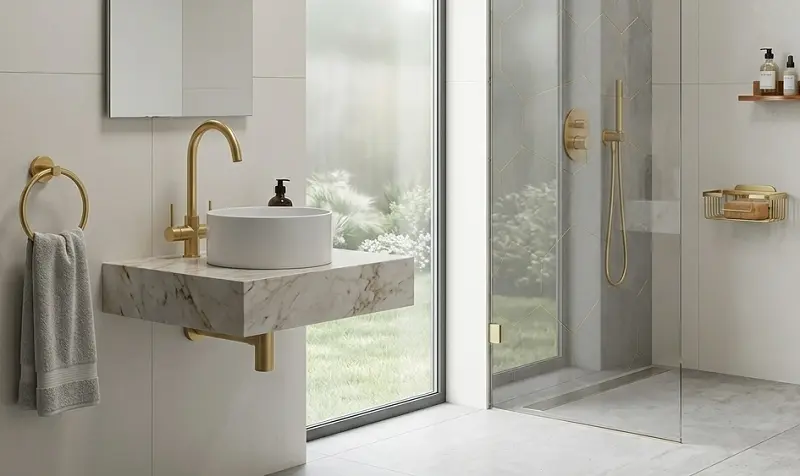
How to Choose the Right Shower Hinge for Your Bathroom Project
A Comprehensive Guide to Material Selection, Load Ratings, and Long-Term Performance
Why Shower Hinge Selection Matters More Than You Think
In my 15 years working with architects, contractors, and facility managers, I've observed a consistent pattern: Shower Hinge failures are among the most common—and most costly—bathroom maintenance issues. What starts as a minor inconvenience (a squeaky hinge) can escalate into water damage, mold growth, and complete door replacement.
This guide isn't just theoretical advice—it's based on real-world testing, failure analysis, and performance data from thousands of installations. We'll explore the 7 critical factors that determine hinge success, with practical examples and decision frameworks you can apply immediately.
The 7 Critical Factors for Shower Hinge Selection
Material Selection: The Foundation of Durability
The hinge material determines everything from corrosion resistance to load capacity. Here's what you need to know about the most common options:
| Material | Best For | Corrosion Resistance | Cost Factor | Expected Lifespan |
|---|---|---|---|---|
| 304 Stainless Steel | Commercial applications, coastal areas | Excellent | High | 15-20+ years |
| Zinc Alloy (Zamak) | Residential, budget-conscious projects | Good (with proper plating) | Low to Medium | 8-12 years |
| Brass | High-end residential, luxury hotels | Excellent | Very High | 20+ years |
| Aluminum Alloy | Lightweight doors, frameless designs | Good (anodized) | Medium | 10-15 years |
Not all "stainless steel" is created equal. 304 stainless (18/8) offers excellent corrosion resistance, while 430 stainless is more susceptible to rust in humid environments. Always verify the specific grade when comparing options.
Load Rating and Door Weight Capacity
A hinge's load rating isn't just a number—it's a safety margin that accounts for dynamic forces, user behavior, and long-term wear. Here's how to calculate your requirements:
Load Calculation Formula:
- Door Weight: Measure actual door weight (kg/lbs)
- Safety Factor: Multiply by 1.5 for residential, 2.0 for commercial
- User Factor: Add 20% for high-traffic areas
- Environmental Factor: Add 15% for coastal/high-humidity locations
Example Calculation: A 15kg frameless glass door in a hotel bathroom:
15kg × 2.0 (commercial) × 1.2 (high traffic) × 1.15 (coastal) = 41.4kg minimum load rating
Corrosion Resistance and Environmental Factors
Bathrooms are among the most corrosive environments in any building. Understanding corrosion mechanisms is key to long-term performance:
Low Risk (Standard Residential):Well-ventilated bathrooms, occasional use. Zinc Alloy with quality plating is usually sufficient.
Medium Risk (Family Bathrooms):Daily use, multiple users, moderate humidity. Consider stainless steel or heavily plated Zinc Alloy.
High Risk (Commercial/Coastal): Constant use, high humidity, salt exposure. 304 stainless steel or marine-grade brass is essential.
Extreme Risk (Spa/Wellness): Chemical exposure (chlorine, bromine), steam rooms, high temperatures. 316 stainless steel or specialized alloys required.
Surface Finish and Aesthetic Considerations
The finish does more than just look good—it provides critical corrosion protection and affects maintenance requirements:
| Finish Type | Thickness | Durability | Maintenance | Cost Impact |
|---|---|---|---|---|
| Electroplated Chrome | 0.3-0.8μm | Good (with copper/nickel underlayers) | Low (wipe clean) | +15-25% |
| PVD Coating | 1-3μm | Excellent (scratch resistant) | Very Low | +40-60% |
| Powder Coating | 60-120μm | Very Good (impact resistant) | Medium (can chip) | +20-35% |
| Anodized Aluminum | 5-25μm | Good (integral to material) | Low | +10-20% |
Thicker plating doesn't always mean better quality. Poor adhesion or inadequate surface preparation can cause peeling and corrosion even with thick coatings. Always ask for adhesion test results (ASTM B571) and salt spray test reports.
Installation Type and Mounting Considerations
How the hinge mounts to the door and frame affects everything from appearance to adjustability:
Mounting Type Comparison:
- Surface Mounted: Easiest installation, visible hardware, maximum adjustability
- Partially Concealed: Cleaner look, moderate installation complexity, limited adjustment
- Fully Concealed: Minimalist appearance, complex installation, no post-installation adjustment
- Pivot Hinges: For heavy doors, top and bottom mounting, smooth operation
For DIY/Homeowners: Surface mounted hinges with visible adjustment screws. Mistakes are easier to correct.
For Professional Installers: Partially concealed hinges. Balance aesthetics with practical adjustability.
For High-End Projects: Fully concealed hinges installed by specialized glass companies.
For Commercial/Heavy Doors: Pivot hinges with professional installation and regular maintenance.
Adjustability and Maintenance Requirements
A hinge that can't be adjusted is a hinge that will eventually fail. Consider these maintenance factors:
Key Adjustment Features to Look For:
- Vertical Adjustment: Compensates for settling and installation errors
- Horizontal Adjustment: Ensures proper door-to-frame alignment
- In/Out Adjustment: Controls door swing and seal compression
- Accessible Screws: Adjustment points that don't require disassembly
- Lubrication Points: Built-in grease fittings or accessible pivot points
Certifications and Quality Standards
Certifications provide independent verification of quality and performance claims:
| Certification | What It Covers | Testing Requirements | Validity Period |
|---|---|---|---|
| ISO 9001:2015 | Quality Management Systems | Process documentation, continuous improvement | 3 years (with surveillance audits) |
| ANSI/BHMA A156.19 | Power and Manual Operated Door Systems | Cycle testing, load testing, corrosion resistance | Product-specific (no expiration) |
| CE Marking | European Safety Standards | Material safety, mechanical performance | Product-specific (with technical file) |
| UL/ETL Listed | Electrical Safety (if applicable) | Electrical insulation, grounding | Product-specific (requires retesting for changes) |
Always verify certifications directly with the issuing body. Some manufacturers claim certifications they don't actually hold. For ISO 9001, check the certification body's accreditation and the certificate's validity dates.
Practical Decision Framework
Step-by-Step Selection Process
Budget Residential:Zinc Alloy with electroplated chrome, surface mounted, basic adjustment
Mid-Range Residential: 304 stainless steel, PVD coating, partially concealed, good adjustment
Luxury Residential: Brass or 316 stainless, PVD coating, concealed or pivot, full adjustment
Commercial Standard: 304 stainless steel, electroplated or PVD, surface mounted, excellent adjustment
Commercial Premium: 316 stainless steel, PVD coating, pivot hinges, industrial-grade construction
5 Common Selection Mistakes to Avoid
Tempered glass is heavier than most people realize. A standard 8mm tempered glass door can weigh 25-30kg. Always measure actual weight, not estimated weight.
Bathrooms near oceans or with poor ventilation need higher corrosion resistance. What works in Arizona may fail in Florida.
A $15 hinge that fails in 3 years costs more than a $40 hinge that lasts 15 years. Consider replacement labor costs and water damage risks.
Buildings settle, doors shift, seals compress. Non-adjustable hinges become misaligned hinges, leading to leaks and failures.
Photos and specifications don't reveal everything. Always evaluate actual samples for finish quality, smoothness of operation, and construction details.
Making the Right Choice for Your Project
Selecting the right Shower Hinge involves balancing multiple factors: material durability, load capacity, corrosion resistance, aesthetics, adjustability, and cost. The "best" hinge isn't the most expensive one—it's the one that perfectly matches your specific requirements.
Final Checklist Before Purchasing:
- Material matches environmental conditions
- Load rating exceeds calculated requirements
- Finish provides adequate protection
- Installation type matches skill level and design
- Adjustment capabilities meet long-term needs
- Certifications verify quality claims
- Samples have been evaluated
- Total cost of ownership considered
Need Help Selecting the Perfect Hinge?
If you're working on a bathroom project and need expert guidance on hinge selection, we're here to help. With 18 years of manufacturing experience and thousands of successful installations, we can provide:
- Free project consultation and hinge recommendation
- Sample evaluation program (pay shipping only)
- Custom hinge design for unique applications
- Technical support throughout your project
- Competitive pricing for quality materials