
Introduction
Brand value in furniture is often built through the smallest components customers touch first. Customized OEM hardware gives brands more control over perceived quality, design consistency, durability, and differentiation than standard off-the-shelf parts can offer. The right handle, hinge, or pull can reinforce a premium position, support a signature product identity, and reduce the risk of your collection looking interchangeable with competitors. This article explains how Furniture Hardware customization influences customer perception, solves practical branding and manufacturing challenges, and helps turn functional details into assets that strengthen pricing power and long-term market recognition.
Why Furniture Hardware Customization Matters for Brand Value
When we talk about building a furniture brand that commands premium pricing, the conversation almost always circles back to the details. I've spent years analyzing furniture manufacturing, and I can confidently tell you that using off-the-shelf handles and hinges is the fastest way to commoditize your pieces. Customizing your Furniture Hardware isn't just a design afterthought; it's a strategic move to lock in brand equity and elevate the entire user experience.
How customized hardware shapes perceived quality
The tactile experience of opening a drawer or cabinet is often a customer's first physical interaction with your product. If a buyer grabs a lightweight, hollow pull on a high-end dresser, the illusion of luxury shatters immediately. By switching to solid zinc alloy or brass hardware through an OEM partner, you can easily increase the component weight by 20% to 30%, which subconsciously signals durability and value to the user.
Furthermore, customizing allows you to specify high-grade surface treatments. For example, demanding a specialized PVD coating that passes a rigorous 120-hour salt spray test ensures the perceived quality lasts for decades without tarnishing or fading. This keeps your brand's reputation pristine long after the sale.
Which brand problems OEM customization can solve
Beyond aesthetics, OEM customization solves a massive headache for brands: intellectual property theft. When you rely entirely on standard market hardware, a competitor can reverse-engineer your $1,500 sideboard in a matter of weeks. Investing in custom molds creates an immediate and highly effective barrier to entry.
While a custom die-casting mold might require an upfront investment of $800 to $3,000 depending on its geometric complexity, it effectively prevents cheap knock-offs. Customization also solves supply chain inconsistencies. Because you own the design and the tooling, you aren't at the mercy of a generic supplier who might suddenly discontinue a catalog item your flagship product relies on.
What to Customize in Furniture Hardware
Deciding to customize is the first step, but figuring out exactly where to allocate your tooling budget is where the real strategy begins. I always recommend focusing on high-touch areas where the user interacts with the piece daily, as well as structural points where performance matters most.
Which hardware elements improve branding and performance
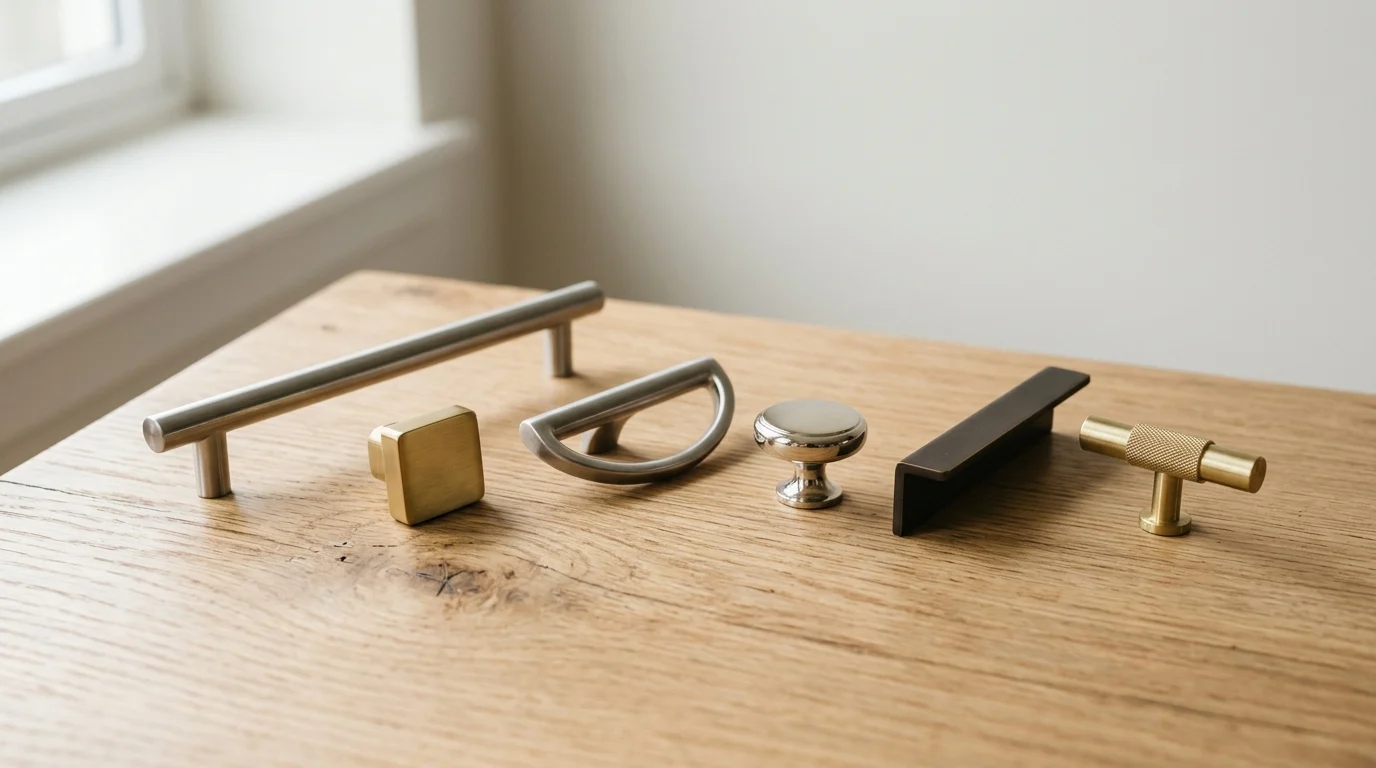
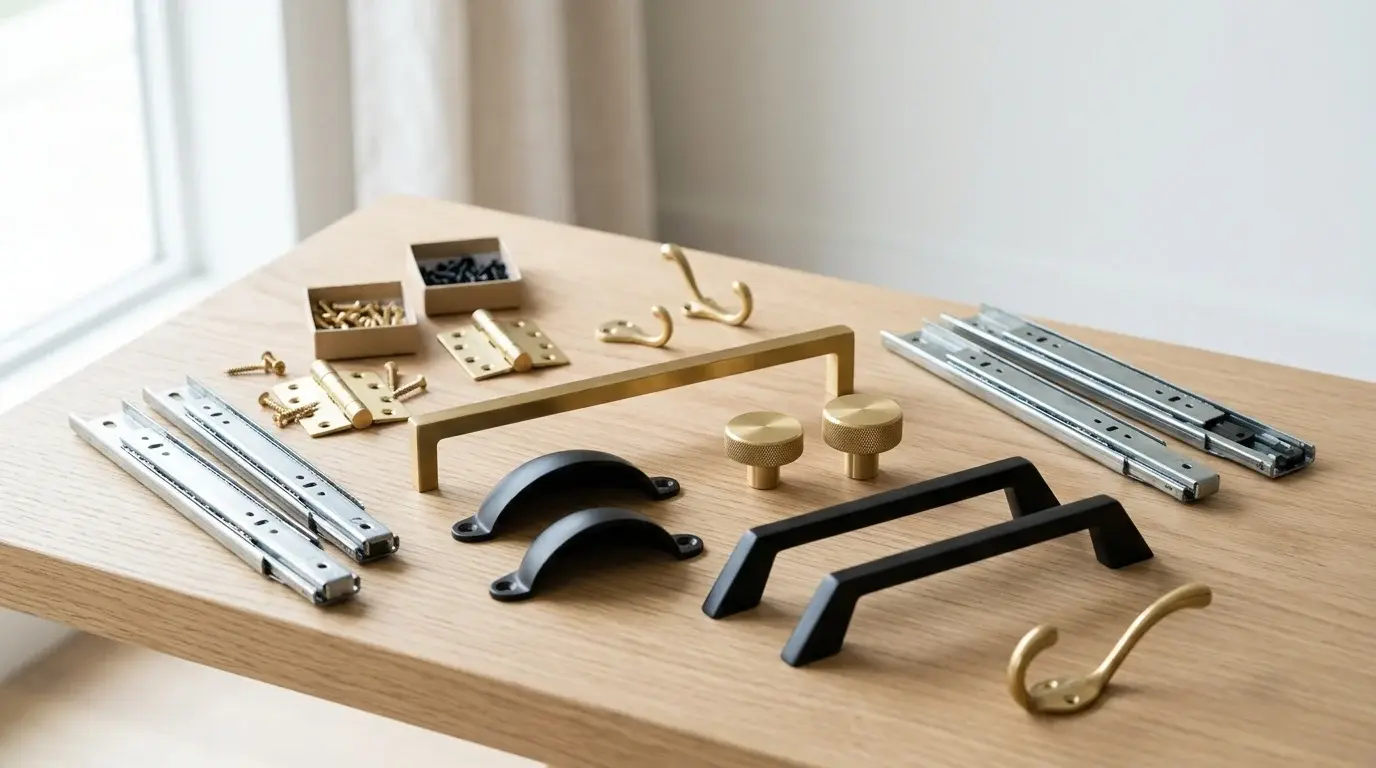
The highest return on investment usually comes from visible, frequently used components. Upgrading to Custom Cabinet Pulls allows you to match exact ergonomic profiles and proprietary brand color palettes. For a subtler branding play, integrating Logo-Engraved Hinges keeps your brand name in front of the user every time they open a door, without cluttering the exterior design.
We also see fantastic results with Special Finish Knobs that utilize bespoke electroplating to match specific interior design trends. In terms of structural performance, engineering Unique Fasteners or Bespoke Shelf Brackets with incredibly tight dimensional tolerances—often down to ±0.05mm—ensures a seamless, wobble-free assembly that standard, mass-produced parts simply cannot guarantee.
How to compare standard vs customized hardware
If you're on the fence about making the switch, it helps to look at the hard numbers. While standard hardware is undeniably easier to source in a pinch, customized hardware pays long-term dividends in brand positioning. Here is how I usually break down the comparison for my clients:
| Feature | Standard Hardware | OEM Customized Hardware |
|---|---|---|
| Upfront Tooling Cost | $0 | $800 – $3,000+ per mold |
| Typical MOQ | 100 – 500 pieces | 2,000 – 5,000 pieces |
| Lead Time | 3 – 7 days | 25 – 40 days (including prototyping) |
| Brand Differentiation | Low (Used by competitors) | High (Exclusive to your brand) |
| Defect Tolerance | Varies wildly | Strictly controlled (often <0.5%) |
While the Minimum Order Quantities (MOQs) and lead times are naturally higher, the exclusivity and tight quality control easily justify the shift for mid-to-high-end furniture lines.
How to Evaluate an OEM Furniture Hardware Partner
Finding the right factory to bring your custom hardware to life is critical. You don't just need a vendor; you need a manufacturing partner with deep expertise in precision engineering, integrated capabilities, and a proven track record of scaling with brands.
What to check in process, quality control, and collaboration
When I vet an OEM partner, I look straight at their quality control infrastructure and production capabilities. A reliable partner should seamlessly integrate R&D, die-casting, polishing, and plating under one roof. For instance, a factory established with over 15 years of dedicated development—especially one that has evolved into a full-service precision machinery enterprise—will have the nuanced technical know-how required for complex geometries and flawless finishes.
I always ask about their defect rate thresholds during the vetting process. You want a partner who guarantees a defect rate below 0.5% before any batch leaves their facility. Additionally, it is crucial to verify their compliance with international standards, ensuring their plating and materials meet stringent REACH or RoHS requirements, particularly if you export your furniture to European or North American markets.
When OEM customization is the right choice
So, when should you actually pull the trigger on OEM customization? I generally advise brands to make the leap when their retail price point crosses the $500 threshold per piece, or when their annual production volume for a specific line exceeds 5,000 units.
At these scales, amortizing a $2,000 mold cost adds merely cents to each unit. Meanwhile, the premium, bespoke feel of the hardware allows you to confidently raise your retail price by 10% to 15%. Ultimately, custom hardware stops being an operational expense and transforms into a revenue-generating asset that solidifies your brand's reputation for uncompromising quality in a crowded market.
Key Takeaways
- The most important conclusions and rationale for Furniture Hardware
- Specs, compliance, and risk checks worth validating before you commit
- Practical next steps and caveats readers can apply immediately
Frequently Asked Questions
Why should furniture brands customize hardware instead of using catalog parts?
Custom hardware improves perceived quality, protects your design from copycats, and creates a more exclusive look that supports premium pricing.
Which furniture hardware parts are best to customize first?
Start with high-touch and visible parts like cabinet pulls, knobs, hinges, and shelf brackets, where branding and daily user experience matter most.
What are the typical costs and MOQs for OEM furniture hardware customization?
Custom molds often cost about $800–$3,000, with typical MOQs around 2,000–5,000 pieces depending on design complexity and finish requirements.
How can HZ Die Casting help with custom furniture hardware projects?
HZ Die Casting can support OEM development of zinc alloy Furniture Hardware, including custom shapes, logo details, surface finishes, and tight tolerance production.
How do I evaluate a reliable OEM furniture hardware supplier?
Check material options, finish durability like 120-hour salt spray performance, dimensional tolerance control, tooling capability, and experience with branded OEM projects.