







Hot Chamber vs. Gravity Casting for Zinc Alloys What You Need to Know
Hot chamber casting stands as the generally preferred method for Zinc Alloys. This process delivers exceptional efficiency and precision. Manufacturers often choose it for materials likeZA-8/Zamak 5. Gravity casting, conversely, presents significant limitations for Zinc Alloys. Its inherent characteristics restrict its applicability for many components. This method proves less suitable for producing high-quality metalAccessories.
Key Takeaways
- Hot chamber casting is best for Zinc Alloys. It makes parts fast and precise.
- Gravity casting has limits for Zinc Alloys. It is not good for many parts.
- Hot chamber casting makes parts with smooth surfaces. They have exact sizes.
- Hot chamber casting is good for making many parts. It costs less per part.
- Gravity casting is slower. It makes parts with rougher surfaces.
- Gravity casting is only good for a few parts. It is also good for testing new designs.
- Hot chamber casting makes zinc parts stronger. It creates a fine metal structure.
- Hot chamber casting costs more to start. It saves money over time for many parts.
Hot Chamber Die Casting for Zinc Alloys: The Preferred Method
Understanding the Hot Chamber Process
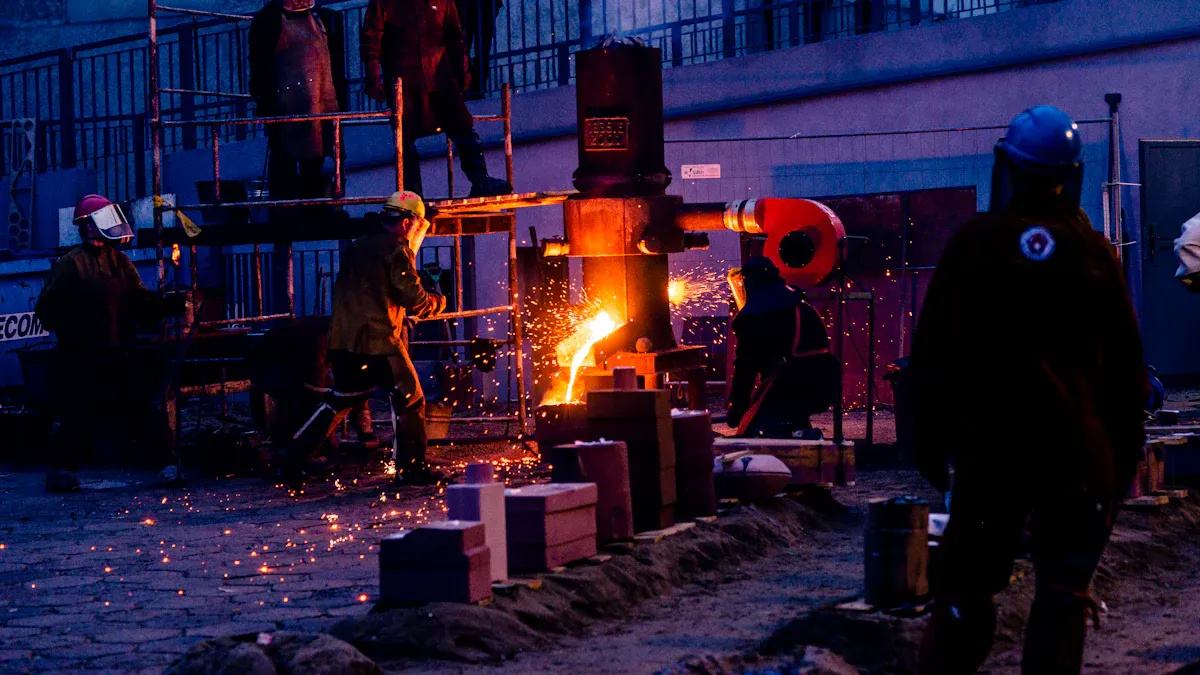
Hot chamber die casting offers a highly efficient method for producing Zinc Alloy components. This process integrates melting and injection, ensuring continuous and rapid production cycles.
Integrated Melting and Injection
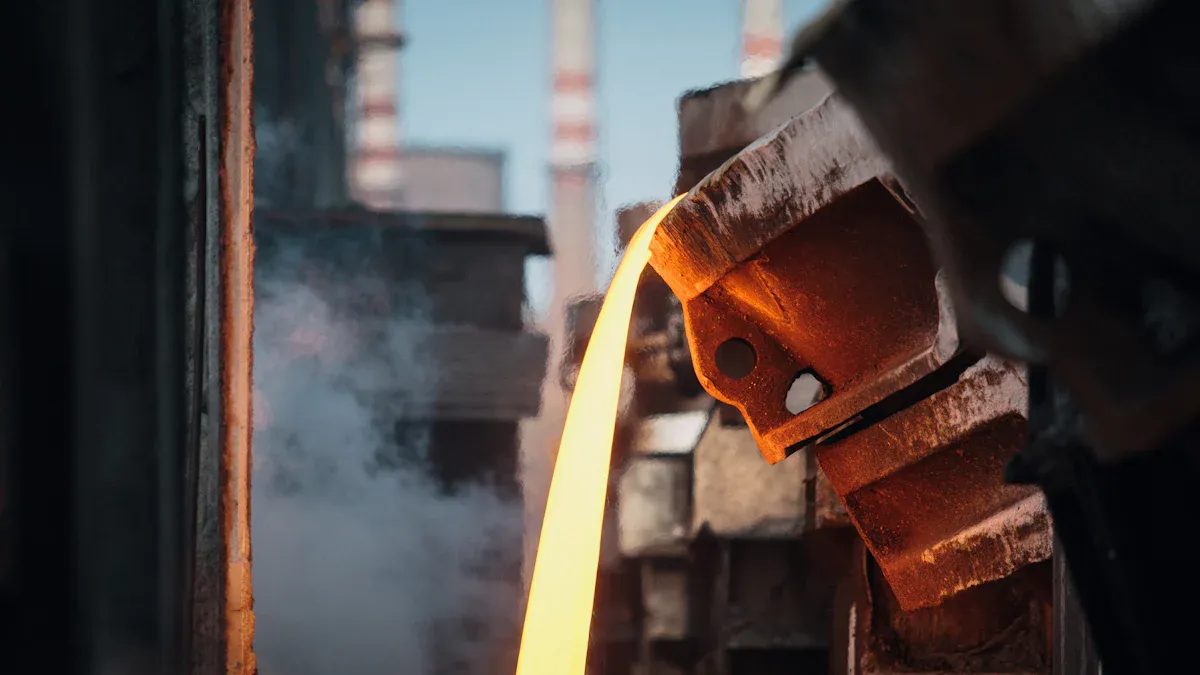
The hot chamber process begins with melting the metal. Typically, zinc or magnesium melts in an integrated furnace. The molten metal stays at a constant temperature in a pot connected to the casting machine. This setup ensures continuous operation. A portion of the molten metal then fills the gooseneck, submerged in the metal. The injection plunger retracts, allowing molten metal to flow into the gooseneck's inlet hole. Once the gooseneck is full, the plunger moves forward. It uses hydraulic or pneumatic pressure to force the molten metal through the gooseneck channel into the mold cavity (die). This happens at high speed and pressure, ensuring complete filling before solidification.
Rapid Cycle Operation
The hot metal rapidly cools and solidifies within the relatively cold steel mold. This process takes only a few seconds, depending on the part's size and complexity. Die cooling channels help remove heat, maintain cycle speed, and prevent defects like shrinkage or porosity. After solidification, the mold halves open. An ejector system, located on the movable mold half, uses ejector pins to force the finished casting out of the cavity without damage. The ejected part may have excess material, such as flash, runners, or sprues. Workers trim this material manually or automatically. Further processing, like surface finishing, machining, or coating, can then occur. The machine cleans and prepares for the next cycle. Hot chamber die casting is known for its rapid cycle times, producing parts in as little as 10 to 20 seconds.
Advantages for Zinc Alloys like ZA-8/Zamak 5
Hot chamber die casting provides significant advantages for Zinc Alloys, including ZA-8/Zamak 5. These benefits make it the preferred method for many applications.
High Production Speed and Efficiency
Hot chamber die casting achieves high production speeds. Manufacturers can produce medium-sized Zinc Alloy components at rates of400 to 1000 parts per hour. For larger Zinc Alloy parts, production reaches350-450 shots per hour. Extremely small castings can achieve approximately 900 shots per hour. Overall, cycle rates for Zinc Alloy components typically range from about 150 parts per hour for large components to over 2,000 parts per hour for small ones. This efficiency stems fromfaster cycle times and the lower melting pointsof Zinc Alloys.
Superior Dimensional Accuracy and Surface Finish
This method enables intricate details, thin walls, and smooth surfaces. It produces components with high dimensional accuracy. The rapid cooling and high injection pressure contribute to a superior surface finish, often requiring minimal post-processing.
Cost-Effectiveness for High Volume
For high-volume production, hot chamber die casting proves highly cost-effective. The rapid cycle times and efficient material usage reduce the unit cost per part.
Common Applications of Hot Chamber Zinc Castings
Hot chamber zinc castings find widespread use across various industries due to their excellent properties.
Automotive and Electronic Components
In the automotive industry, hot chamber zinc castings are used for:
- Door handles
- Lock components
- Seat-belt parts
- Fuel-system components
- Interior fittings
In the electronics industry, manufacturers use zinc die casting for:
- Connector bodies
- Smartphone mid-frames
- Laptop hinges
- Shielding cans
- Enclosures for electronic devices and components
- Brackets and supports
Consumer Goods and Hardware
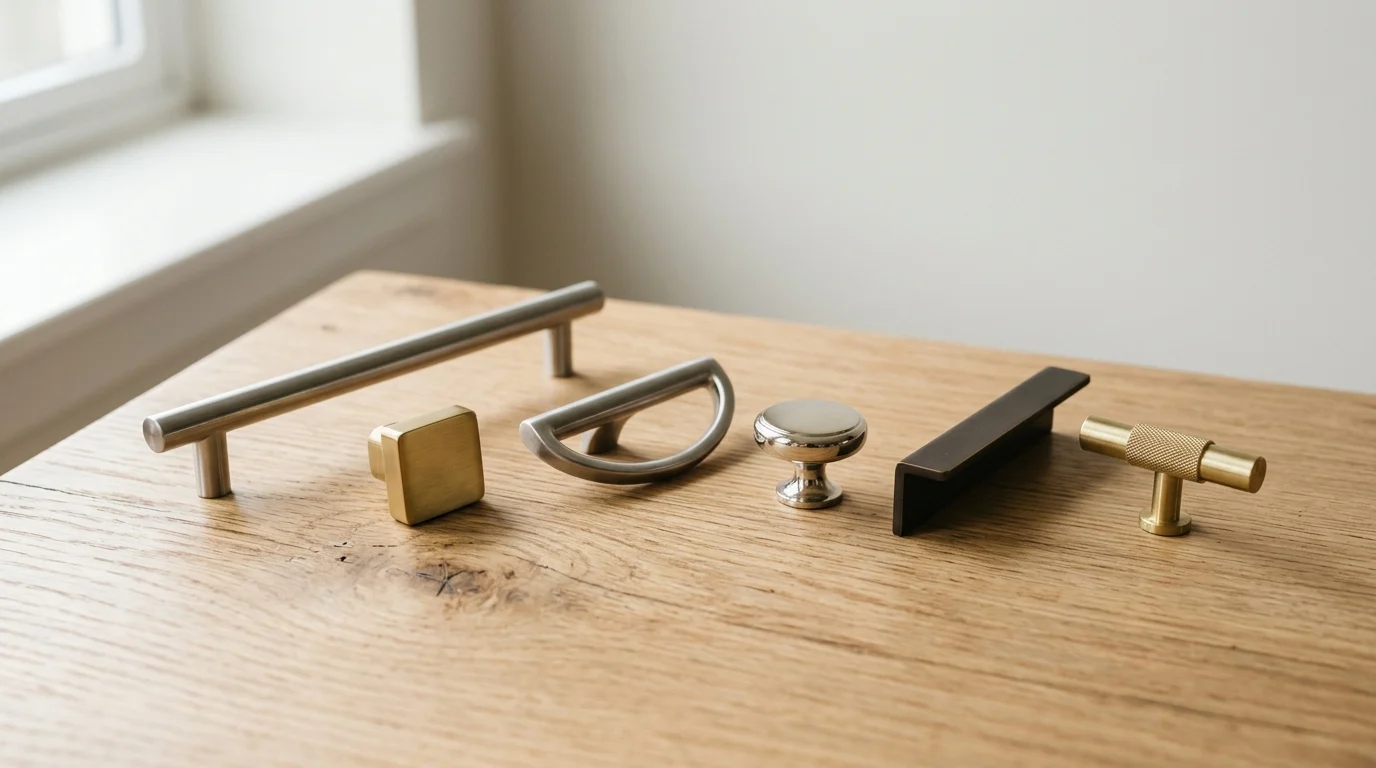
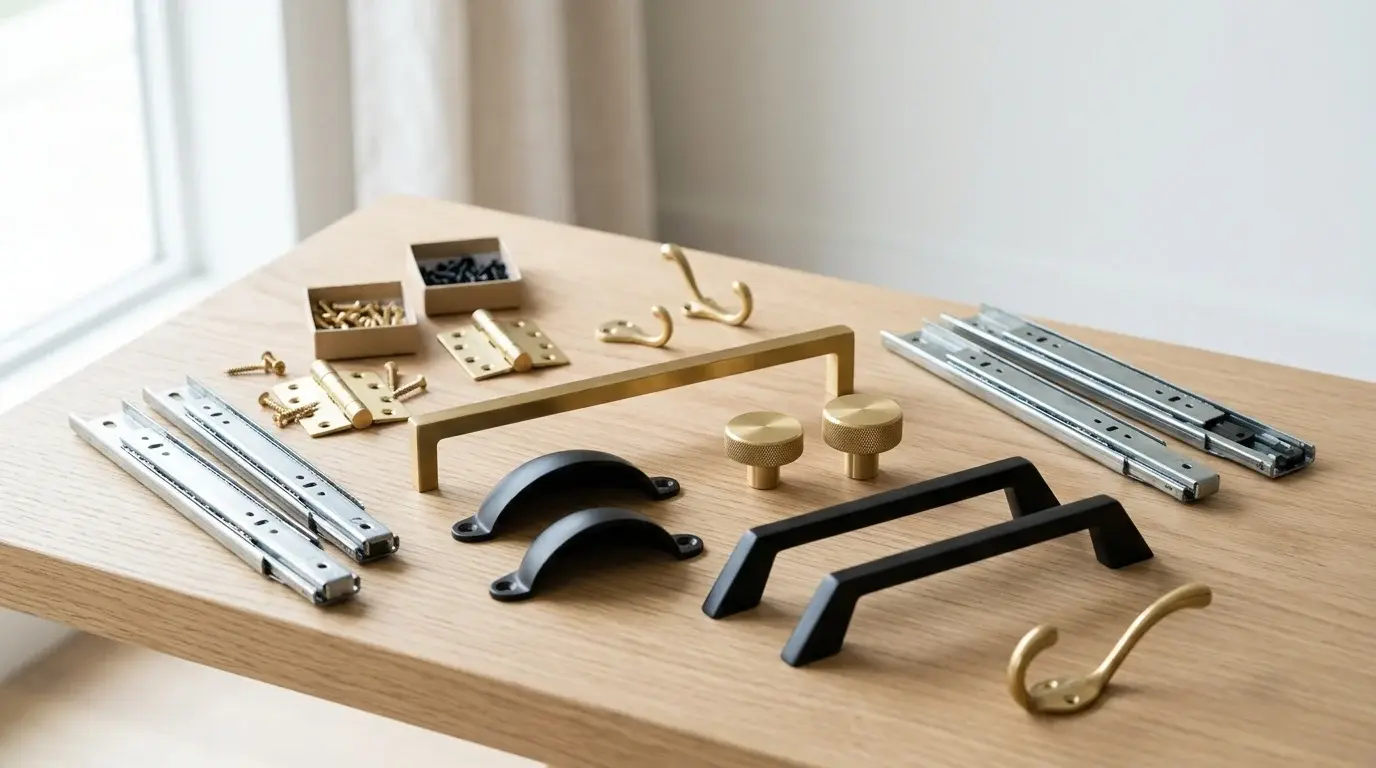
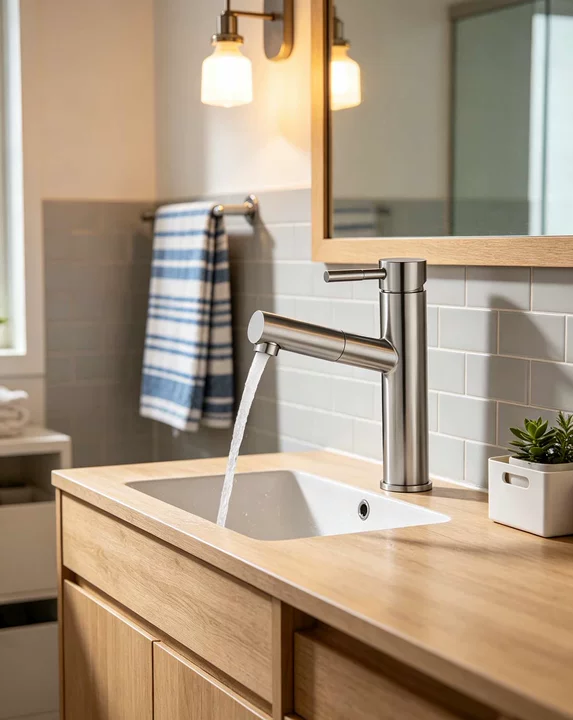
Beyond automotive and electronics, hot chamber zinc castings are prevalent in consumer goods and hardware. They appear in various household items, tools, and fixtures where durability and precision are essential.
Gravity Casting for Zinc Alloys: Limitations and Niche Uses
Gravity casting, while a foundational method in metallurgy, presents significant limitations for zinc alloys. Its inherent characteristics often make it less suitable for modern, high-precision manufacturing.
The Gravity Casting Process Explained
Gravity casting relies on the simple force of gravity to fill a mold cavity. This method contrasts sharply with the high-pressure injection of hot chamber die casting.
Manual Pouring and Slower Solidification
The gravity casting process begins with careful mold preparation. This involves designing and manufacturing a durable, reusable mold, often from high-grade tool steel. Workers then clean and preheat the mold to a specific temperature. This ensures proper metal flow and prevents premature solidification. They also apply a release agent to facilitate part removal and extend mold lifespan.
Next, metal preparation and pouring occur. The chosen metal, such as a zinc alloy, heats in a furnace to its melting point and desired fluidity. The molten metal then pours carefully into the preheated mold. It relies solely on gravitational force to fill the cavity. This minimizes turbulence and air entrapment. After pouring, the metal cools and solidifies relatively quickly. This happens due to the metal mold's heat transfer properties. This process contributes to a fine grain structure. Once solidified, the mold opens. Workers carefully remove the cast part. Sometimes, additional cooling is necessary before handling.
Open or Permanent Molds
Gravity casting typically utilizes permanent molds, often made from metal. These molds are reusable, unlike the single-use sand molds found in sand casting. The design of these molds can be open, allowing direct pouring, or closed, requiring a sprue and runner system.
Inherent Disadvantages for Zinc Alloys
For zinc alloys, gravity casting often falls short of the demands of modern industrial applications.
Lower Production Rates and Poorer Surface Quality
Gravity casting inherently offers lower production rates compared to hot chamber die casting. The manual pouring and slower solidification times extend the overall cycle. This method also typically results in a poorer surface quality. Castings often require extensive post-processing to achieve a smooth finish.
Reduced Dimensional Precision and Increased Porosity
The lack of high pressure during mold filling leads to reduced dimensional precision. Gravity castings often exhibit wider tolerances. The slower, less controlled filling process also increases the potential for porosity and internal defects. This compromises the structural integrity of the final component.
When Gravity Casting Might Be Considered for Zinc Alloys
Despite its limitations, gravity casting retains a niche role for zinc alloys in specific scenarios.
Very Low Volume or Prototyping
Manufacturers might consider gravity casting for very low-volume production runs. It is also suitable for prototyping. This applies when the cost of developing complex hot chamber dies is prohibitive for a small number of parts.
Specific Geometric Constraints
Gravity casting can be a viable option when machining from solid billets is not feasible. This occurs if a component's form is impossible to machine. It also applies if the required billet section exceeds approximately 50mm thickness, making it difficult to ensure soundness. For prototyping zinc alloys (ZP3, ZP5, ZP8, ZP2), gravity casting is used when specific properties are demanded to be similar to pressure die castings. This is indicated by alloy selection guides.
Direct Comparison: Hot Chamber vs. Gravity Casting for Zinc Alloys
Choosing the right casting method for zinc alloys significantly impacts a project's success. Hot chamber die casting and gravity casting offer distinct advantages and disadvantages. This section directly compares these two methods across key operational and quality metrics.
Production Efficiency and Cycle Time
Production efficiency and cycle time are critical factors in manufacturing. They directly influence overall cost and output.
Hot Chamber's Rapid Production
Hot chamber die casting excels in rapid production. This method offers faster cycle times and improved temperature control. These features are particularly beneficial at high production volumes. They lead to quicker product ejection and higher molten metal productivity. Zinc's lower melting point (787°F) and faster cooling rate contribute to this efficiency. This allows for quicker mold filling and solidification.
Consider the typical cycle times for different casting methods:
| Feature | Zinc Die Casting (Hot Chamber) | Aluminum Die Casting (Cold Chamber) |
|---|---|---|
| Process Method | Hot Chamber | Cold Chamber |
| Cycle Time | Faster | Slower |
| Energy Efficiency | Higher | Lower |
Hot chamber die casting cycles are usually less than 60 seconds. This makes it a highly efficient process for high-volume manufacturing.
Gravity Casting's Slower Pace
Gravity casting operates at a significantly slower pace. The manual pouring process and reliance on natural cooling extend the overall cycle time. This method cannot match the rapid production rates of hot chamber die casting. Each part requires more individual attention and longer solidification periods. This inherently limits its output capacity.
Dimensional Accuracy and Surface Quality
The precision and finish of cast parts are crucial for many applications. These aspects determine the need for post-processing.
Hot Chamber's Precision and Smoothness
Hot chamber die casting delivers superior dimensional accuracy and surface quality. This process is known for yielding the tightest as-cast tolerances. Tolerances typically range from CT1–CT4, or ±0.05–0.3% of the dimension. This translates to ±0.05–0.3 mm per 100 mm. The high pressure injection ensures complete mold filling and fine detail reproduction. This results in smooth surfaces that often require minimal post-processing. The process is also highly repeatable, ensuring consistent part quality across large production runs.
The thermal contraction rate for zinc alloys is approximately 0.7%. Tooling design accounts for this property. This minimizes shrinkage and maintains dimensional stability.
Gravity Casting's Wider Tolerances and Rougher Finish
Gravity casting generally produces parts with wider dimensional tolerances. It also results in a rougher surface finish. The absence of high injection pressure means less control over metal flow and solidification. This can lead to inconsistencies. Gravity and low-pressure die casting achieve tolerances in the CT2–CT6 range (±0.1–0.5%). These methods do not operate with high injection speeds. Consequently, parts often require extensive machining or finishing operations. This adds to the overall production cost and time.
Tooling Costs and Part Complexity
Tooling costs represent a significant initial investment. The chosen casting method also dictates the achievable part complexity.
Hot Chamber's Higher Initial Investment, Intricate Designs
Hot chamber die casting involves a higher initial investment in tooling. The steel dies are precision-engineered to withstand high pressures and temperatures. They are also designed for rapid cycling. These robust dies allow for the creation of intricate designs and complex geometries. Manufacturers can produce parts with thin walls, fine details, and integrated features. This reduces the need for assembly. The upfront cost is justified by the high production volumes and the ability to produce highly complex, precise components.
Gravity Casting's Lower Initial Cost, Simpler Geometries
Gravity casting typically requires a lower initial tooling cost. The molds are simpler in design and construction. They do not need to withstand the extreme pressures of die casting. This makes gravity casting more accessible for smaller budgets or prototyping. However, this method limits part complexity. It is best suited for simpler geometries and thicker sections. Intricate details, thin walls, or complex internal features are difficult to achieve with gravity casting. This often necessitates design compromises.
Material Properties and Performance: Hot Chamber's Edge for ZA-8/Zamak 5
The chosen casting method significantly influences the final material properties and performance of zinc alloy components. Hot chamber die casting consistently produces superior results compared to gravity casting, especially for alloys like ZA-8/Zamak 5. This advantage stems from fundamental differences in how each process forms the metal's internal structure.
Microstructure and Mechanical Strength
The internal structure, or microstructure, of a cast part directly impacts its strength and durability. Hot chamber casting creates a more refined structure.
Hot Chamber's Fine Grain Structure
Hot chamber die casting involves rapid cooling of the molten metal within the die. This quick solidification promotes a fine grain structure. This fine grain structure is often metastable. Over time, the supercooled beta phase can decompose, and supersaturated aluminum may precipitate. This process contributes to enhanced mechanical properties. The rapid cooling rate is a key differentiator.
| Casting Method | Cooling Rate | Microstructure Characteristics |
|---|---|---|
| Hot Chamber Die Casting | Rapid | Metastable; decomposition of supercooled β phase and precipitation of supersaturated aluminum |
| Gravity Casting | Slower (1-10 °C/s) | Coarse dendrites |
This fine, uniform grain structure provides superior strength and hardness. It also improves the overall integrity of the component.
Gravity Casting's Coarser Grain Structure
Gravity casting involves a slower cooling rate, typically between 1-10 °C/s. This slower solidification allows for the formation of coarser dendrites. Coarse grain structures generally result in lower mechanical strength and reduced ductility compared to fine grain structures.
Alloys like Zamak 5 and ZA-8 demonstrate excellent properties when die cast. Zamak 5, widely die cast in Europe, offers improved creep performance over Zamak 3. Its 1% copper addition makes it marginally stronger and harder than Zamak 3. ZA-8 is a versatile alloy. It performs well in gravity casting and is increasingly popular for pressure die casting. ZA-8 is the only ZA alloy suitable for hot chamber die casting due to its relatively low melting temperature. It provides improved strength, hardness, and creep properties over other ZAMAK alloys, except Zamak 2.
Consider the mechanical properties of these alloys:
| Alloy | Ultimate Tensile Strength: psi x 10^3 (MPa) | Yield Strength – 0.2% Offset: psi x 10^3 (MPa) |
|---|---|---|
| Zamak 5 | 48 (328) | 39 (269) |
| ZA-8 | 54 (374) | 42 (290) |
Specifically, ZA-8 exhibits robust mechanical properties:
| Mechanical Properties | Metric Value |
|---|---|
| Ultimate Tensile Strength | 374 MPa |
| Yield Strength (0.2% offset) | 290 MPa |
These values highlight the inherent strength of these zinc alloys, which hot chamber casting effectively maximizes.
Porosity and Internal Defects
Internal defects like porosity can significantly compromise a component's performance. The casting method plays a crucial role in controlling these defects.
Hot Chamber's Minimal Porosity
Hot chamber die casting utilizes high injection pressures. This forces molten metal into every part of the die cavity. The high pressure minimizes the formation of air pockets and voids. This results in parts with minimal porosity and excellent internal soundness. Low porosity ensures consistent mechanical properties throughout the component. It also provides a superior surface for subsequent finishing operations like electroplating.
Gravity Casting's Higher Porosity Potential
Gravity casting relies solely on gravity to fill the mold. This process lacks the high pressure of die casting. As a result, air can become entrapped more easily within the solidifying metal. This leads to a higher potential for porosity and internal defects. Such defects can weaken the part. They can also create inconsistencies in material properties. This makes gravity cast parts less reliable for critical applications.
Optimized Material Usage and Part Weight
Efficient material usage and controlled part weight are important for cost-effectiveness and performance.
Hot Chamber's Efficient Material Use
Hot chamber die casting allows for the creation of complex geometries and thin wall sections. The high pressure ensures complete filling of intricate details. This capability enables designers to optimize part designs for strength while minimizing material usage. The result is lighter components that still meet performance requirements. This efficiency reduces material costs and overall part weight.
Gravity Casting's Heavier Parts
Gravity casting typically requires thicker wall sections to ensure complete mold filling and structural integrity. The limitations of gravity flow make it difficult to produce very thin or complex features reliably. This often leads to designs that use more material than necessary. Consequently, gravity cast parts tend to be heavier. This can increase material costs and may not be ideal for applications where weight is a critical factor.
Cost Implications and Return on Investment for Zinc Alloy Casting
Manufacturers evaluate casting methods based on cost implications and return on investment. These factors significantly influence project viability. Hot chamber die casting and gravity casting present different financial profiles.
Unit Cost at Volume Production
The unit cost of a component is a primary concern for any production run. Volume plays a critical role in determining this cost.
Hot Chamber's Lower Unit Cost
Hot chamber die casting achieves a significantly lower unit cost at high production volumes. Its rapid cycle times and automated processes minimize labor costs per part. The efficiency of material usage also contributes to cost savings. For large orders, the initial investment in tooling quickly amortizes. This makes hot chamber casting the most economical choice for mass production of zinc alloy components.
Gravity Casting's Higher Unit Cost
Gravity casting typically results in a higher unit cost, especially for medium to high volumes. Slower production rates and more manual intervention increase labor costs per part. The need for more post-processing also adds to the expense. While tooling costs are lower, these operational inefficiencies drive up the overall cost per unit.
Tooling Longevity and Maintenance
Tooling represents a substantial investment. Its durability and maintenance requirements impact long-term costs.
Hot Chamber's Durable Steel Dies
Hot chamber die casting utilizes robust steel dies. These dies withstand high pressures and temperatures. Manufacturers design them for long production runs. Proper maintenance ensures these dies last for hundreds of thousands, even millions, of shots. This longevity provides a strong return on the initial tooling investment.
Gravity Casting's Simpler Molds
Gravity casting employs simpler molds. These molds are less complex and less expensive to produce. They do not endure the same extreme pressures as die casting dies. While their initial cost is lower, their lifespan might vary depending on the material and complexity. Maintenance is generally less intensive but still necessary.
Post-Processing Requirements and Finishing
Post-processing adds to the final cost and production time. The casting method influences these requirements.
Hot Chamber's Minimal Finishing Needs
Hot chamber die casting produces parts with superior surface finishes and tight tolerances. This often means minimal post-processing. Parts may only require trimming of flash or light deburring. This reduces labor and material costs associated with finishing. The smooth surface also prepares parts well for various coatings, like electroplating or powder coating.
Gravity Casting's Extensive Finishing
Gravity cast parts typically exhibit rougher surfaces and wider dimensional variations. They often require extensive post-processing. This includes machining, grinding, and polishing. These additional steps increase labor, time, and overall production costs. The rougher surface can also complicate aesthetic finishing applications.
Strategic Choice: Selecting the Right Method for Your Zinc Alloy Project
Choosing the correct casting method for zinc alloys requires careful consideration. Manufacturers must weigh various factors to ensure project success. The decision impacts quality, cost, and production efficiency.
Key Factors Influencing Decision
Several key factors guide the selection between hot chamber and gravity casting. These elements determine the most suitable process for a specific zinc alloy component.
Production Volume and Required Quality
Production volume significantly influences the casting method choice. High-volume projects typically favor hot chamber die casting. This method offers rapid production rates. The required quality also plays a crucial role. Components demanding high dimensional accuracy and a superior surface finish often necessitate hot chamber casting.
Budget Constraints and Design Complexity
Budget constraints and design complexity are also important. Hot chamber die casting involves a higher initial tooling investment. However, it accommodates intricate designs and complex geometries. Gravity casting has lower initial tooling costs. It is better suited for simpler part designs.
Why Hot Chamber is Often the Superior Choice for ZA-8/Zamak 5
Hot chamber die casting frequently emerges as the superior choice for zinc alloys like ZA-8/Zamak 5. It offers distinct advantages for modern manufacturing needs.
High Volume, Precision, and Aesthetics Critical
Hot chamber die casting supports the production of precise metal components. Speed, consistency, and a smooth surface finish are critical. This method is highly effective with lower melting point alloys. It is a common choice in industries requiring high-volume manufacturing and reliable dimensional accuracy. These parts benefit from the process’s ability to maintain tight tolerances. This supports proper fit and function in high-performance systems. The smooth surface finish achieved reduces the need for secondary machining. Parts for sensitive electronic assemblies require dimensional accuracy to fit without gaps or misalignment. The process also ensures a clean surface finish, important for both function and appearance. For ZA-8/Zamak 5, hot chamber casting maximizes these benefits.
Overall Cost-Effectiveness
Hot chamber die casting offers a cost-effective approach for high-volume production. Zinc's low melting temperature allows die casting tools to last longer. Longer tool life reduces the need for frequent replacements. This is crucial because dies are expensive. Using hot chamber die casting for zinc alloys increases production speed. It is also less expensive than the cold chamber process. This method often eliminates the need for secondary operations due to its excellent as-cast finish. This leads to less downtime and efficient production.
When Gravity Casting Remains a Viable Option
Despite its limitations, gravity casting retains a place in zinc alloy manufacturing. It serves specific niche applications effectively.
Extremely Low Volume or Prototyping Needs
Gravity casting is ideal for production volumes between 25 and 10,000 parts. While sand casting might be more economical for volumes under 5000 units, and die casting for over 10,000 parts, gravity casting with its reusable molds offers a balance of costs and manufacturing efficiency for this moderate volume range. Spin casting, a form of gravity casting, is ideally suited for small, zinc parts. It offers very low initial tooling costs. It also provides the ability to produce complex geometries and short lead times. A variety of zinc alloys are available for this process.
Specific Material or Design Constraints
Gravity casting's real benefit is for non-ferrous materials, including zinc and its alloys. Manufacturers strongly consider it for lower-volume, complex metal components. Quality, dimensional accuracy, surface finish, and fast turnaround are critical in these cases. It achieves a balance of short lead times, cost efficiency, flexibility, and part quality.
Hot chamber casting remains the dominant and often superior choice for zinc alloys. It offers unparalleled advantages in speed, precision, and cost-effectiveness. Gravity casting for zinc alloys finds limitation to niche applications where its disadvantages are acceptable. For modern manufacturing of zinc alloy components, especially with materials like ZA-8/Zamak 5, hot chamber die casting provides the optimal balance of quality, efficiency, and economic viability. Manufacturers consistently choose this method for high-performance parts.
FAQ
Why do manufacturers prefer hot chamber casting for zinc alloys?
Manufacturers prefer hot chamber casting for its high efficiency and precision. It offers rapid production speeds and superior dimensional accuracy. This method is ideal for zinc alloys like ZA-8/Zamak 5.
What are the key benefits of hot chamber die casting for zinc components?
It delivers high production speed, excellent surface finish, and tight dimensional tolerances. This process also creates a fine grain structure, enhancing mechanical strength.
When is gravity casting considered for zinc alloys?
Gravity casting is suitable for very low-volume production or prototyping. It also works for parts with specific geometric constraints where high precision is not critical.
How does hot chamber casting improve the material properties of ZA-8/Zamak 5?
The rapid cooling in hot chamber casting creates a fine grain structure. This structure leads to higher strength, hardness, and minimal porosity.
What are the cost implications for hot chamber versus gravity casting?
Hot chamber casting has higher initial tooling costs but lower unit costs at high volumes. Gravity casting has lower tooling costs but higher unit costs due to slower production and more post-processing.
What types of products commonly use hot chamber zinc castings?
Automotive components, electronic parts, consumer goods, and hardware frequently use hot chamber zinc castings. These applications require precision, durability, and a good surface finish.
What is porosity, and how does the casting method affect it?
Porosity refers to small voids or air pockets within a cast part. Hot chamber casting minimizes porosity due to high injection pressure. Gravity casting has a higher potential for porosity.