

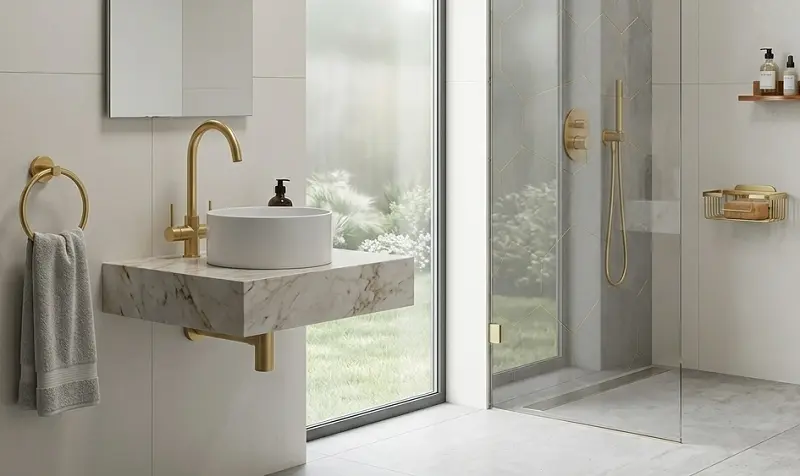
Furniture Hardware Durability: Zinc Alloy vs. Aluminum Comparison
Why Durability Matters More Than Unit Price in B2B Furniture Hardware
When I sit down with procurement teams to discuss their supply chain strategies, the conversation almost always starts with unit price. It makes sense—when you are ordering hundreds of thousands of pulls, knobs, or hinges, saving a few cents per piece looks fantastic on a spreadsheet. However, as experienced B2B buyers know, unit price is just the tip of the iceberg. If the hardware fails, tarnishes, or snaps under pressure, those upfront savings are instantly wiped out by the hidden costs of poor durability.
In the wholesale furniture hardwaremarket, deciding between Zinc Alloy and aluminum is one of the most common material dilemmas. Both metals offer distinct advantages, but choosing the wrong one for your specific application can lead to a cascade of supply chain headaches. Let's dive into why prioritizing durability over the lowest possible unit cost is the smartest move you can make for your brand's bottom line.
Durability risks for distributors, importers, and OEM buyers
For distributors and OEM buyers, hardware durability isn't just a quality control metric; it is a shield for your brand reputation. When a consumer buys a premium cabinet, they interact with the handle every single day. If that handle pits, scratches, or breaks within six months, they don't blame the hardware manufacturer—they blame your brand. For importers, the risks are compounded. A batch of brittle hardware means sitting on dead stock, dealing with angry retail partners, and facing the logistical nightmare of international returns.
Impact on claims, reorders, and channel margins
Nothing eats into channel margins faster than warranty claims. Processing a single claim often costs exponentially more than the original piece of hardware when you factor in customer service time, replacement shipping, and lost goodwill. Furthermore, B2B buyers rely on predictable, high-volume reorders. If a retailer experiences a high defect rate with your hardware, they will simply pivot to a competitor for their next container order, destroying your long-term revenue stream.
How to frame zinc alloy vs aluminum for sourcing decisions
To make the right sourcing decision, I always tell buyers to frame the zinc vs. aluminum debate around the product's end-use and lifecycle expectations. Are you prioritizing a heavy, premium feel with intricate designs, or do you need lightweight, cost-effective profiles for modern, minimalist furniture? By aligning the material's inherent strengths with your target market's expectations, you stop chasing the lowest price and start sourcing for maximum value.
How to Define Durability in Zinc Alloy vs Aluminum Hardware
Durability in Furniture Hardware is rarely just about raw tensile strength. Most Furniture Hardware fails aesthetically long before it fails structurally. When sourcingCorrosion-resistant Hardware, I define durability as a combination of structural integrity, wear resistance, and the ability to maintain a flawless finish over years of daily human contact.
Zinc Alloy and aluminum handle these environmental stressors very differently. Zinc is incredibly dense and casts beautifully, but it relies heavily on the quality of its topcoat or plating to resist corrosion. Aluminum naturally forms a protective oxide layer, making it highly resistant to rust, but it can be more prone to scratching depending on the alloy grade and surface treatment. Understanding these nuances is crucial for writing accurate RFQs.
Common hardware parts made from each material
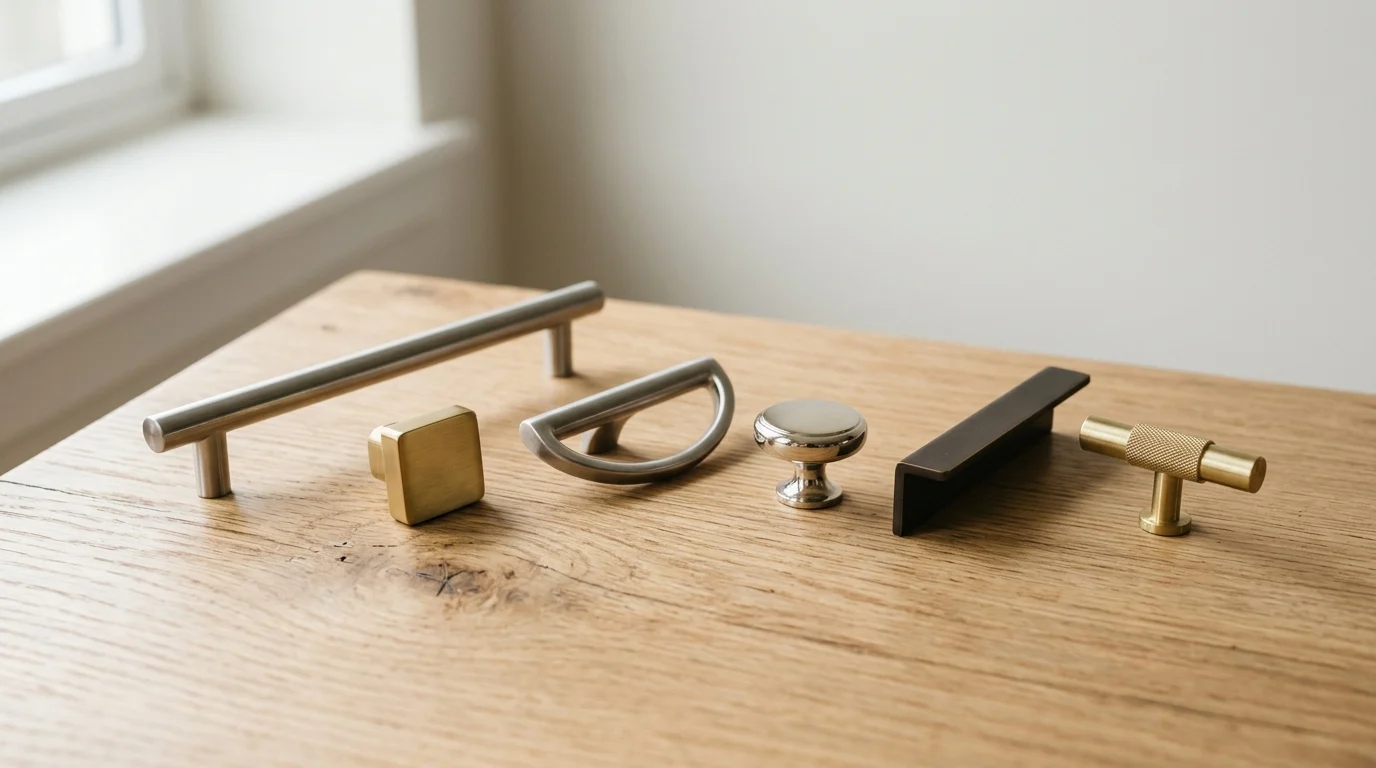
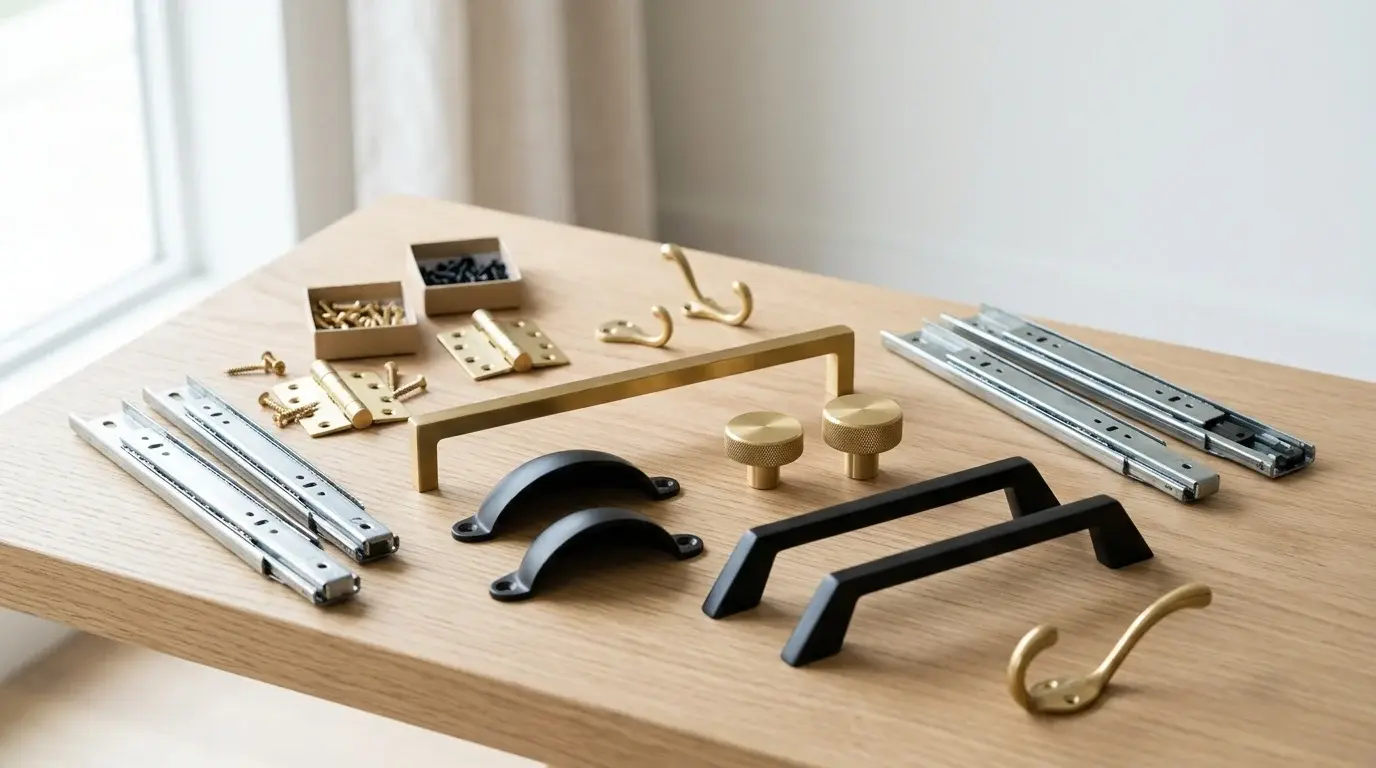
Zinc alloy is the undisputed king of decorative hardware. You will commonly see it used for intricate Cabinet Handles, heavy drawer knobs, decorative furniture legs, and complex internal locking mechanisms. Aluminum, on the other hand, dominates the structural and linear space. It is the go-to material for long wardrobe extrusions, sliding door tracks, modern edge-pull handles, and minimalist table frames.
Strength, wear, corrosion, and finish retention
Zinc Alloy (like the common Zamak 3) offers excellent impact strength and a heavy, premium hand-feel. It holds electroplated finishes incredibly well, meaning a polished chrome or brushed brass zinc handle will retain its look for years if plated correctly. Aluminum is lighter and has a higher strength-to-weight ratio. While it doesn't take traditional electroplating as easily as zinc, anodized aluminum provides exceptional wear resistance and won't chip or peel, making it highly durable against daily friction.
Key test data and specifications to request
Never take a supplier's word for durability; demand the test data. For both materials, I highly recommend requesting Salt Spray Test (SST) reports—aim for at least 48 to 96 hours depending on your market's humidity levels. For moving parts, ask for cycle testing data (e.g., 50,000 open/close cycles). For finishes, request cross-cut adhesion test results to ensure the plating or painting won't flake off upon impact.
Zinc Alloy vs Aluminum Performance Comparison
When comparing these two metals side-by-side, it is important to remember that neither is objectively "better" in a vacuum. The right choice depends entirely on the specific mechanical and aesthetic requirements of your furniture line.
| Feature / Metric | Zinc Alloy (e.g., Zamak 3) | Aluminum (e.g., 6063 / A380) |
|---|---|---|
| Weight / Feel | Heavy, solid, premium feel | Lightweight, modern feel |
| Tensile Strength | High (approx. 280 MPa) | Moderate to High (varies by alloy) |
| Tooling Cost | Generally lower | Higher for die-casting, very low for extrusion |
| Casting Detail | Excellent for complex, thin walls | Good, but less suited for ultra-fine details |
| Corrosion Resistance | Moderate (relies on plating) | Excellent (naturally resists rust) |
| Best Finishes | Electroplating (Chrome, Brass, Nickel) | Anodizing, Powder Coating |
Load, impact, dimensional stability, and casting detail
Zinc Alloys offer superior dimensional stability and can be cast to much tighter tolerances than aluminum. If your hardware requires intricate details, sharp corners, or complex internal threads,Zinc Alloy Castings are usually the better choice. Zinc also absorbs impact well. Aluminum is highly resilient under static loads, making it ideal for structural frames, but it can dent under sharp impact more easily than a dense zinc casting.
Surface finishing, plating, coating, and appearance consistency
This is where the two materials diverge sharply. Zinc is incredibly friendly to electroplating, allowing you to achieve mirror-like chromes, deep brushed brasses, and consistent antique finishes. Aluminum is trickier to electroplate reliably, but it excels with anodizing. Anodized aluminum provides a sleek, matte, or softly brushed appearance that is deeply integrated into the metal, offering unmatched color consistency for modern, industrial designs.
Comparison points: weight, hardness, corrosion, tooling, scrap, and service life
Zinc is heavy, which consumers often equate with luxury, but this increases freight costs. It has lower tooling costs for die-casting molds and a longer mold life than aluminum die-casting. Aluminum wins on weight and natural corrosion resistance. While aluminum die-casting molds wear out faster (increasing long-term tooling amortization), aluminum extrusions require incredibly cheap tooling. Both offer a long service life, provided the surface treatments are executed to high standards.
Sourcing Factors to Check Before Choosing a Material
Sourcing isn't just about picking the best metal; it is about matching your material choice with your purchasing power, timeline, and the specific capabilities of your factory partners.
MOQ, tooling cost, lead time, and production method
If you are developing a custom profile, tooling costs and MOQs will drive your decision. Aluminum extrusion is incredibly cheap to tool (often under $1,000 USD) with low MOQs, making it great for custom linear pulls. Zinc die-casting tooling is more expensive (typically $1,500 - $4,000 depending on cavities) but cheaper than aluminum die-casting tooling. Lead times for zinc are generally shorter because the casting process is faster and easier on the molds.
Supplier questions on alloy grade, process control, and defects
When auditing a supplier, ask specific questions about their raw materials. For zinc, insist on high-purity Zamak 3 or 5; impurities like lead or tin can cause intergranular corrosion, leading to the hardware literally crumbling over time. For aluminum, ask if they use primary ingots or recycled scrap, as high scrap content can ruin the consistency of an anodized finish. Always ask to see their process control plan for temperature regulation during casting.
Packaging standards and export readiness
Heavy zinc hardware requires robust packaging. If zinc handles are bulk-packed without individual polybags or foam dividers, they will scratch each other during transit, ruining the expensive electroplated finish. Aluminum, particularly long extruded handles, requires rigid carton tubing or wooden crates to prevent bending and warping during ocean freight. Ensure your supplier quotes pricing that includes export-ready, drop-test-certified packaging.
Quality and Compliance Risks in Material Selection
Building a solid QA and compliance framework is how you protect your investment. Even with the right material and a good factory, shifts in temperature, plating bath chemistry, or machine calibration can result in a batch of rejects.
Inspection points for plating defects, porosity, breakage, and finish variation
When inspecting Die-cast Furniture Parts, look closely for blistering or "pimples" on zinc hardware—this indicates trapped gas (porosity) during casting, which eventually causes the plating to peel. For aluminum, check for color variations in anodized batches, as slight changes in the acid bath can cause mismatched handles. Always perform a drop test and torque test on threaded holes to ensure the metal hasn't become brittle.
Compliance documents needed for different markets
If you are shipping to Europe, your hardware finishes must comply with REACH and RoHS directives, meaning you must ensure there is no hexavalent chromium used in the plating process. In the US, California's Proposition 65 requires strict monitoring of lead and cadmium levels, which can sometimes sneak into low-grade Zinc Alloys. Always demand updated, third-party lab testing certificates from your suppliers.
How AQL, salt spray, cycle tests, and traceability support procurement
Implement a strict Acceptable Quality Limit (AQL) standard—typically AQL 1.5 for major defects and 4.0 for minor defects—and hire third-party inspectors before shipment. Tie your purchase orders to specific performance metrics, like passing a 72-hour salt spray test. Finally, insist on batch traceability. If a handle fails in the field six months later, you need to know exactly which production run it came from to isolate the issue.
Logistics, Landed Cost, and Margin Planning
The price you negotiate at the factory gate is never the price you actually pay. Landed cost—which includes ocean freight, duties, domestic trucking, and warehousing—must be factored into your material selection. In the era of fluctuating shipping rates, the physical properties of your hardware can significantly impact your logistics budget.
How material weight affects freight and pallet density
Zinc is roughly 2.5 times heavier than aluminum. If you are shipping dense, solid zinc knobs, you will likely hit the weight limit of a shipping container long before you fill its volume. This means you are paying for empty air. Aluminum, being much lighter, allows you to maximize the cubic volume of a container without maxing out the weight limits, effectively lowering your per-unit freight cost significantly.
Packaging and mixed-SKU strategies by material
To optimize freight, consider a mixed-SKU container strategy. Pair heavy zinc hardware orders with lightweight, high-volume items (like aluminum wardrobe tubes or plastic fittings) to balance the weight-to-volume ratio of the container. Additionally, work with your supplier to optimize packaging dimensions. Reducing the size of the inner boxes by just a few millimeters can sometimes allow you to fit an extra tier of cartons onto a pallet.
Balancing price position, warranty exposure, and resale margin
Ultimately, margin planning requires balancing the landed cost against your brand's price position. If you sell premium, high-ticket furniture, the extra freight cost of heavy, electroplated zinc hardware is easily absorbed by the higher retail price and the reduction in warranty claims. If you are selling flat-pack, budget-friendly furniture, lightweight aluminum hardware keeps landed costs low and margins healthy, even if the perceived weight is lower.
How Buyers Should Choose by Application
There is no universal "best" material in B2B Furniture Hardware; there is only the best material for your specific application. The secret to smart procurement is matching the physical and aesthetic properties of the metal to the functional demands of the furniture piece.
Best-fit material for handles, knobs, legs, brackets, and fittings
For small decorative items like cabinet knobs, cup pulls, and ornate sofa legs, zinc alloy is the clear winner due to its casting detail and premium weight. For long, continuous edge pulls on modern kitchen cabinets, aluminum extrusion is superior because it won't warp over long lengths. When sourcing a hidden Structural Fitting or a heavy-duty bracket, aluminum die-casting offers the best blend of strength and weight reduction.
Decision guide: performance, finish, budget, MOQ, and channel
- Finish required: Need shiny chrome or brass? Choose zinc. Need matte black or brushed silver? Choose aluminum.
- Shape: Complex 3D curves? Choose zinc. Long, straight lines? Choose aluminum extrusion.
- Budget/MOQ: Low budget for custom molds? Choose aluminum extrusion.
- Channel: High-end luxury retail? The heavy feel of zinc usually wins.
When a dual-material sourcing strategy makes sense
Sometimes, the best strategy is to use both. A common approach in premium office furniture is to use aluminum extrusions for the main structural frames and long drawer pulls, while using zinc die-casting for the corner joints, end caps, and locking mechanisms. This dual-material approach optimizes both the bill of materials and the overall product performance.
FAQ and Key Takeaways
Is zinc alloy or aluminum better for premium durability?
For premium feel and intricate decorative durability, zinc alloy is generally better because it takes high-end electroplating beautifully. However, for sheer resistance to corrosion, especially in minimalist designs, anodized aluminum offers incredible, long-lasting durability without the risk of plating peel.
Which material is more cost-effective for bulk imports?
Aluminum is typically more cost-effective for bulk imports due to its lighter weight, which drastically reduces ocean freight costs. Additionally, if your design can be extruded rather than die-cast, aluminum tooling costs are a fraction of the price of zinc molds.
Procurement summary for selecting the right material
To summarize: choose zinc alloy when your priority is a heavy, luxury feel, complex 3D shapes, and brilliant electroplated finishes like chrome or gold. Choose aluminum when you need long linear profiles, lightweight shipping, excellent natural corrosion resistance, and sleek anodized finishes. Always secure your supply chain by demanding strict AQL inspections, verifying alloy purity, and calculating your true landed cost before issuing the final PO.
Related Reading: Zinc Alloy Castings
Key Takeaways
- Wholesale sourcing and supply-chain implications for Furniture Hardware
- Specifications, compliance, and commercial terms buyers should validate
- Actionable recommendations for distributors and procurement teams