
Basin Faucets Explained What Are Your Options?
Explore the diverse world of Basin Faucets. Each offers unique aesthetics, functionalities, and installation methods. Differentbasin faucet types cater to various bathroom designs and user preferences. An Eco-Friendly Basin Faucetprovides sustainable options for modern spaces. Discover essential factors for selecting the perfect Basin Faucet for your home.
Key Takeaways
- Single-hole faucets save space. They are good for small bathrooms.
- Centerset faucets are common. They fit standard sinks.
- Widespread faucets offer flexible spacing. They look elegant in large bathrooms.
- Wall-mounted faucets free up counter space. They work well with vessel sinks.
- Vessel faucets are tall. They fit sinks that sit on top of the counter.
- Bridge faucets have a vintage look. They suit traditional bathroom styles.
- Touchless faucets improve hygiene. They use sensors to turn water on and off.
- Choose a faucet that fits your sink holes. Consider the faucet's finish and water efficiency.
Understanding Different Basin Faucet Configurations
Single-Hole Basin Faucets
Integrated Design and Mounting
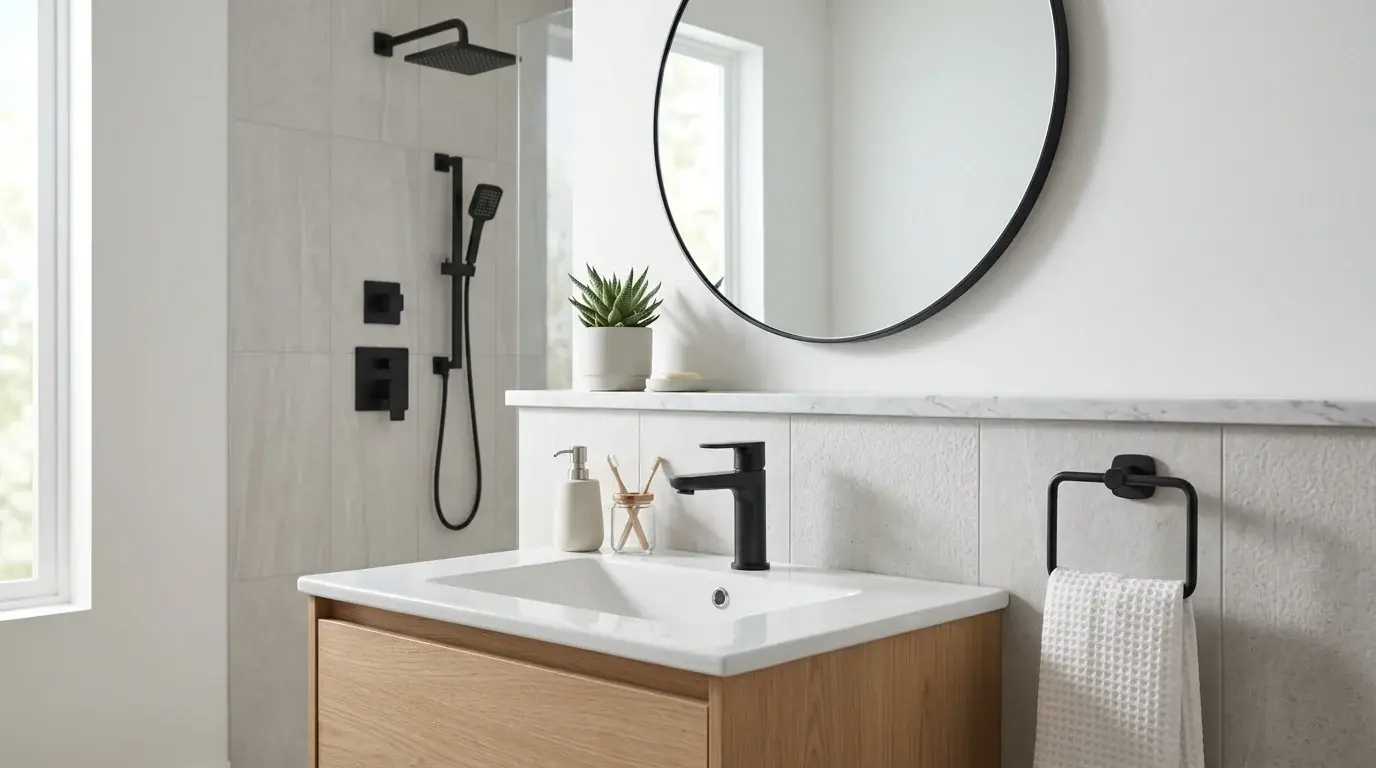
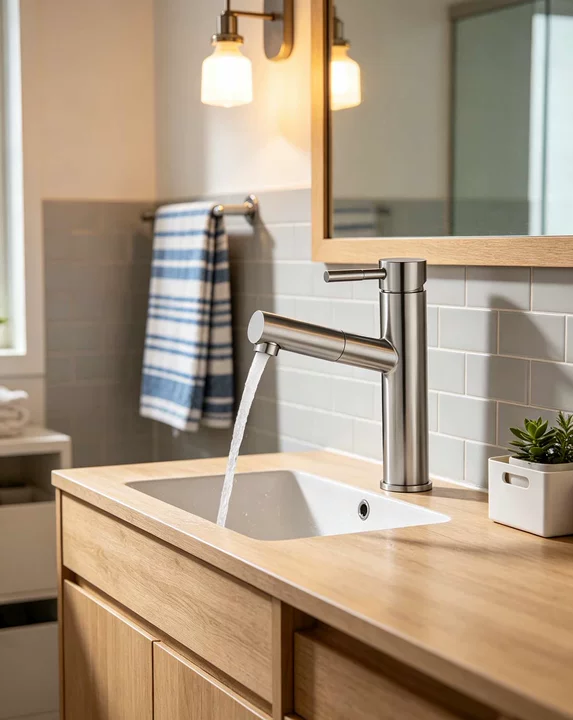
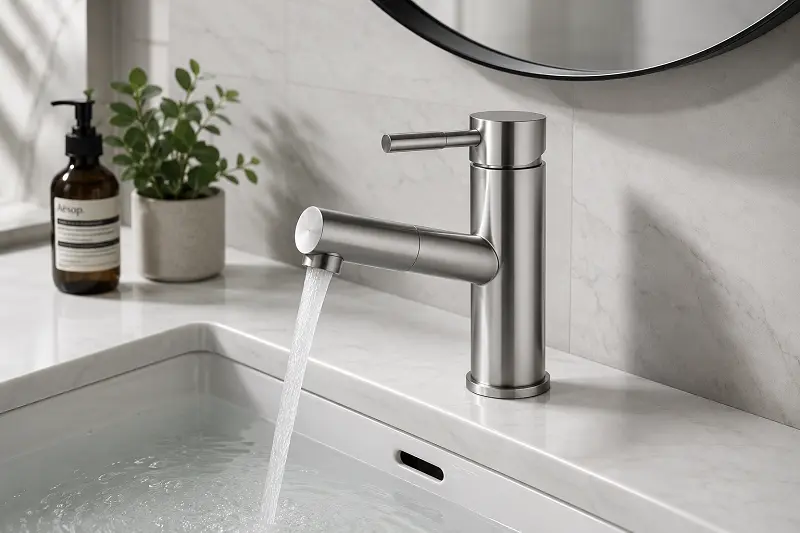
Single-hole Basin Faucets feature a compact design. They combine the spout and handles into one unit. This unit mounts through a single hole in the sink or countertop. This configuration creates a clean and minimalist look.
Advantages and Disadvantages
Single-hole faucets offer a sleek aesthetic. They are easy to clean due to fewer crevices. However, they provide less design flexibility compared to other types. Installing a single-hole faucet requires specific tools and steps. Installers need an adjustable wrench, basin wrench, thread seal tape, and plumber's putty. They must also clear the area under the sink and turn off the main water supply. The installation process involves connecting flexible water feed tubes, threading the faucet through the mounting hole, and securing it from underneath. Installers then hand-tighten water feed tubes to the main supply. They check all connections for leaks after installation. Single-hole faucets can fit multi-hole sinks by using a deck plate to cover extra holes.
Ideal Bathroom Settings
These faucets are perfect for modern and minimalist bathrooms. They suit smaller sinks or powder rooms where space is at a premium. Their integrated design complements contemporary decor.
Centerset Basin Faucets
Standardized Design and Installation
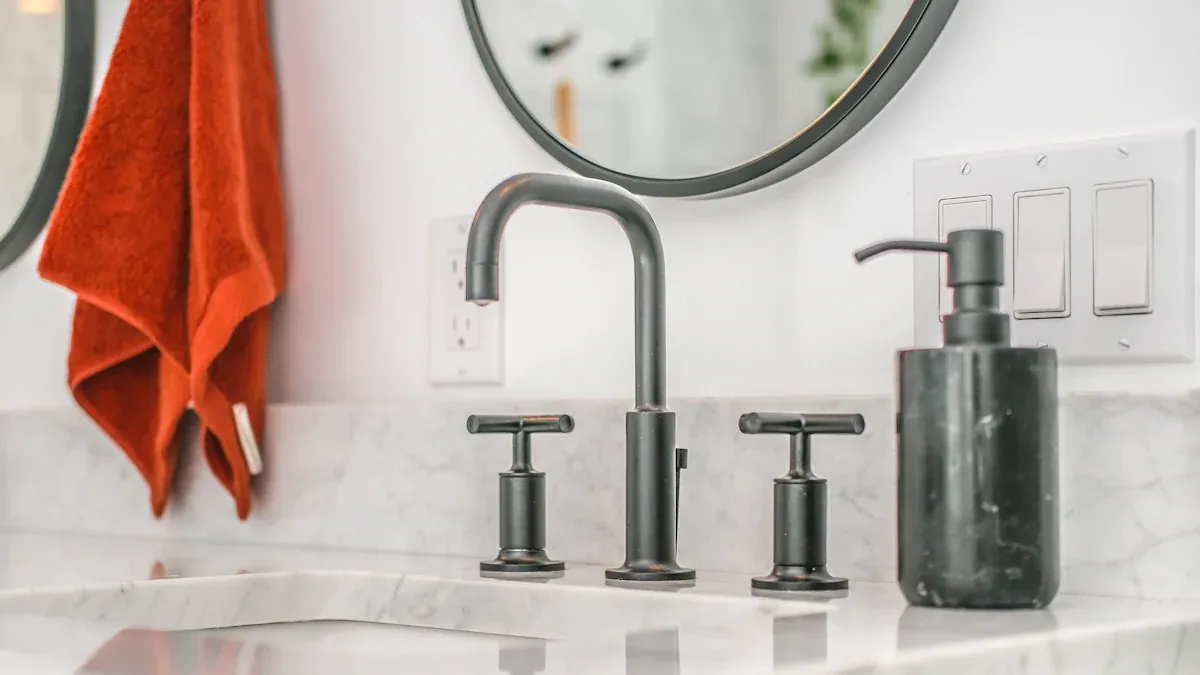
Centerset Basin Faucets are a common choice. They feature the spout and two handles mounted on a single base plate. This design typically requiresthree mounting holes. The mounting holes are spaced four inches apart. The center-to-center measurement for these faucets is about four inches. The standard faucet hole diameter is approximately 1.25 to 1.5 inches.
Benefits and Limitations
Centerset faucets are widely available. They offer a straightforward installation process. However, they have significant limitations in design flexibility. Their fixed handle placement restricts customization. This fixed design means fewer options for finish, style, and handle choices. This can hinder achieving a specific aesthetic. Centerset faucets can also appear inexpensive or simple.
Best Applications
Centerset faucets are ideal for standard bathroom sinks. They fit well in smaller vanities or guest bathrooms. Their standardized design makes them a reliable and practical choice for many homes.
Widespread Basin Faucets
Flexible Spacing and Components
Widespread Basin Faucets consist of three separate components: a spout, a hot water handle, and a cold water handle. These components install independently. This allows for flexible spacing between them. A widespread faucet typically has a distance between handles of8 to 16 inches. Some models offer adjustable configurations. Common widespread distances include 8 inches, 10 inches, or 12 inches.
Pros and Cons
Widespread faucets offer sophisticated design options. They add elegance and a high-end look to a bathroom. Their customizable layout accommodates different sink and countertop sizes. They provide enhanced temperature control with separate hot and cold handles. This reduces temperature fluctuations. However, their installation can be more complex due to multiple components. They also often come with a higher price point.
Suitable for Larger Basins
Widespread faucets are perfect for larger bathrooms. They complement double vanities or spacious sinks. Their luxurious aesthetic makes a bold statement. They are a popular choice for high-end remodels. Their flexible installation and sophisticated style make them suitable for various bathroom aesthetics.
Specialized Basin Faucet Types for Unique Needs
Wall-Mounted Basin Faucets
Space-Saving and Aesthetic Appeal
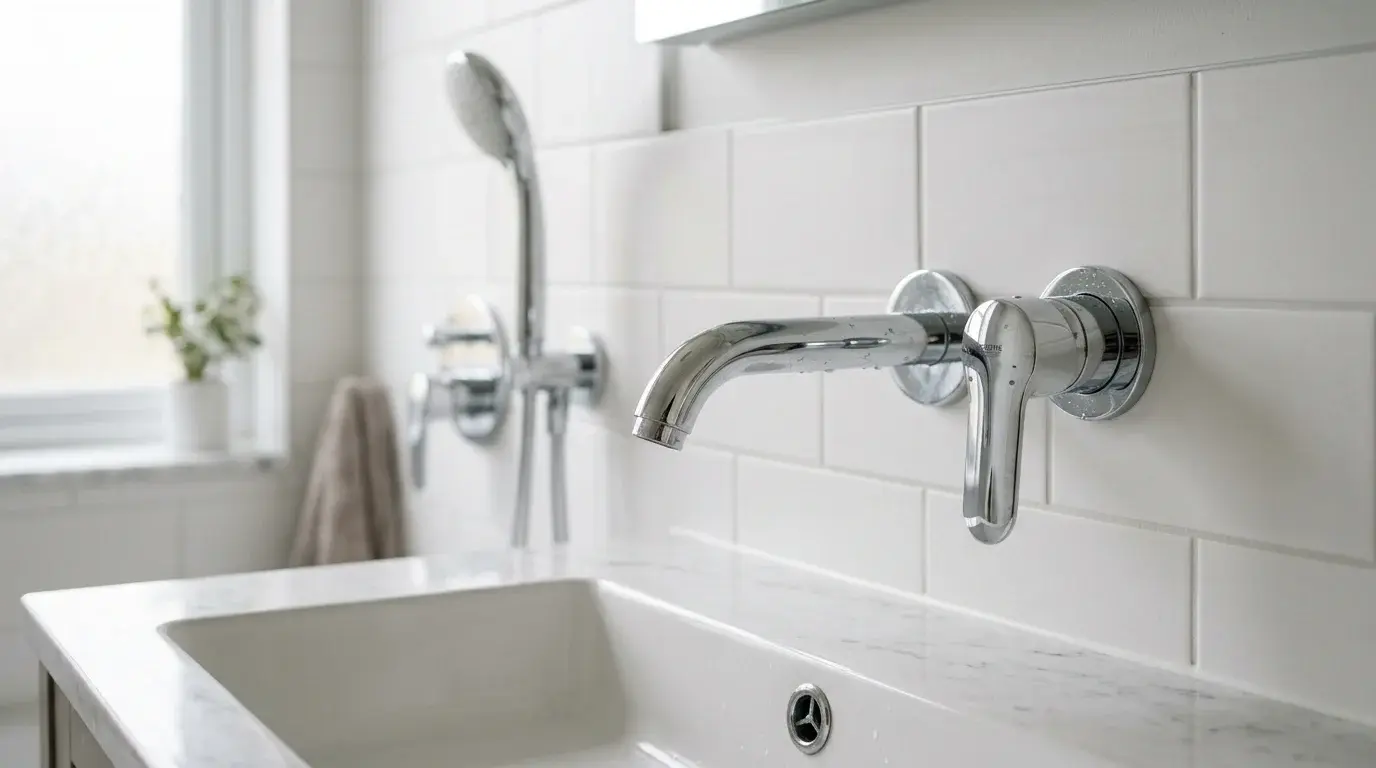
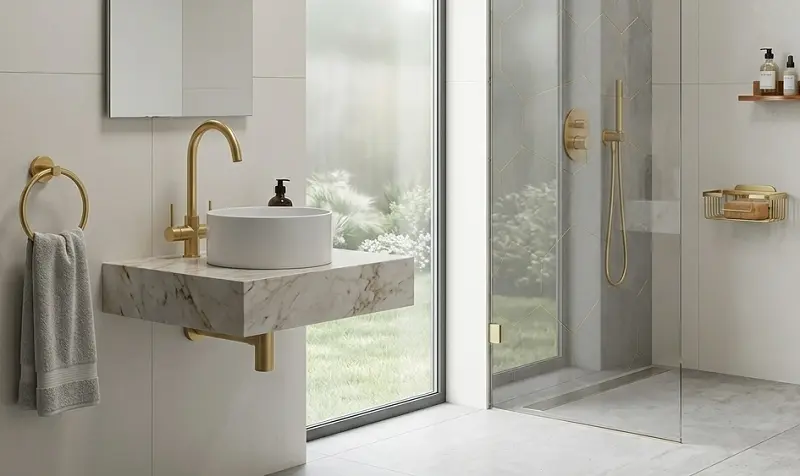
Wall-mounted faucets offer a sleek, modern look. They simplify the bathroom's appearance, reducing clutter on the vanity. This creates an open, intentional, and visually calm space, ideal for modern design. By installing on the wall, these faucets free up countertop space. This benefits smaller bathrooms or powder rooms. They complement floating vanities, enhancing a minimalist and open feel. This contributes to both aesthetics and functionality. Finishes like matte black or brushed brass add a high-end edge. These finishes create contrast and personality, especially in white or gray settings. Mounting faucets on textured feature walls, such as tile, concrete, or marble, draws attention to the fixture. This elevates the overall design. The combination of a wall faucet and floating vanity creates a sense of spaciousness and a luxurious hotel-like ambiance. In master bathrooms, they pair well with vessel sinks and stone surfaces to create a calm, luxurious retreat.
Installation Considerations
Wall-mount faucets require significant planning and spacing estimation. The plumbing comes through the wall. Installers place hardware early in construction while the wall is exposed. Because the plumbing for wall-mount faucets builds directly into the wall, maintenance, repair, or replacement can be time-consuming and expensive. Installers must check the wall and plumbing. They use a stud finder for secure mounting. They add blocking or a backer board if the wall is thin, carefully avoiding damage to existing pipes. Adherence to local regulations regarding pipe materials, valve placement, or insulation is crucial. Contacting the building department confirms requirements. Installers use a stud finder to locate wall studs. They mark the faucet height 3-6 inches above the sink rim, adjusting for user needs or ADA compliance. They center the faucet over the sink, ensuring 7 inches of clearance for handwashing. If the wall is not open, they cut an access hole with a drywall saw. They add framing or blocking between studs to support the faucet. They attach shut-off valves to the hot and cold water lines. Not all sinks or countertops are compatible with wall-mounted faucets. The wall must support the faucet's weight. The plumbing needs correct positioning within the wall. Retrofitting an existing space for a wall-mounted faucet can be challenging. Installing a wall-mounted faucet on an exterior-facing wall in cold climates requires building out the wall a few extra inches. This process, known as 'furring out the wall,' creates sufficient space for encasing pipes with two to three inches of high-density spray foam insulation. This prevents pipes from freezing. If a stone slab backsplash is present, precise drilling for faucet holes is necessary. A skilled contractor can coordinate this. The fixture's support comes from the plumbing pipes, not the wall itself. A stable, waterproof backer board for tiling is generally sufficient. This applies regardless of the backsplash material. Professional installation is recommended due to the precise measurements required for pipe placement. The plumbing must be accurately positioned to center the tap over the sink, as adjustments are minimal once installed. Subsequently, the cabinetmaker uses these plumbing rough measurements to correctly place the sink cabinet. For tiled backsplashes, aligning grout lines perfectly with the wall-mounted tap is crucial for aesthetic appeal.
Perfect for Vessel Sinks
Wall-mounted faucets are ideal for vessel sinks. Their design provides the necessary height and reach over the tall rim of an above-counter sink. This combination creates a striking visual effect. It also ensures comfortable use without splashing.
Vessel Basin Faucets
Taller Design for Above-Counter Sinks
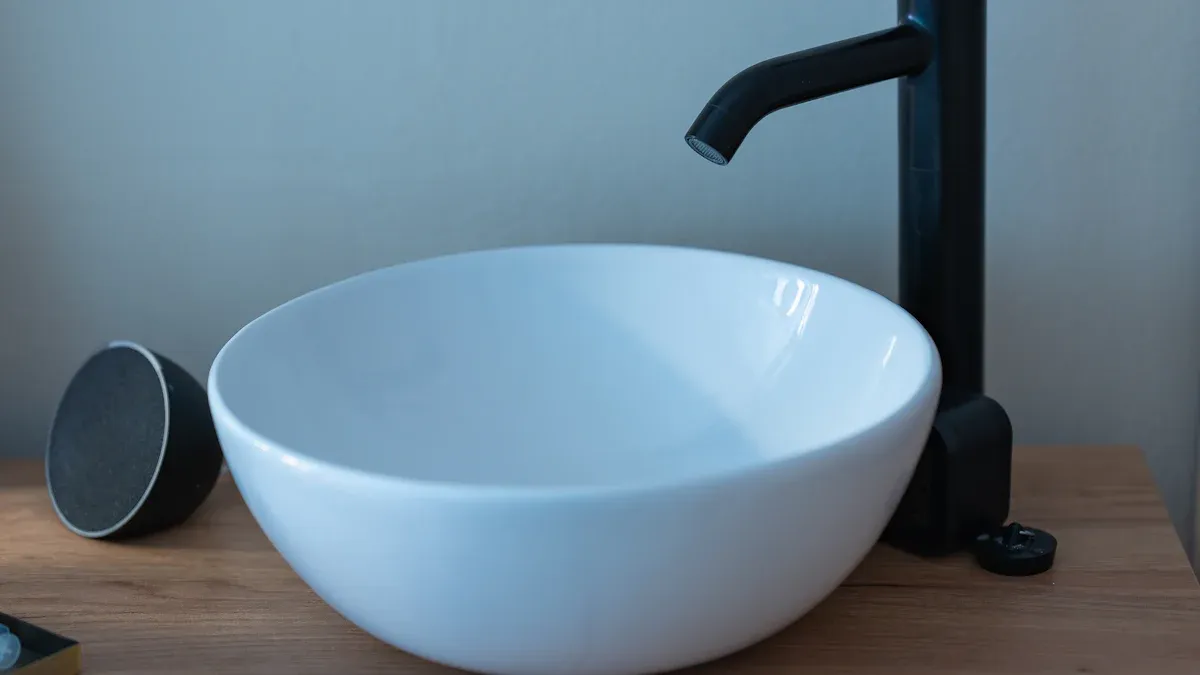
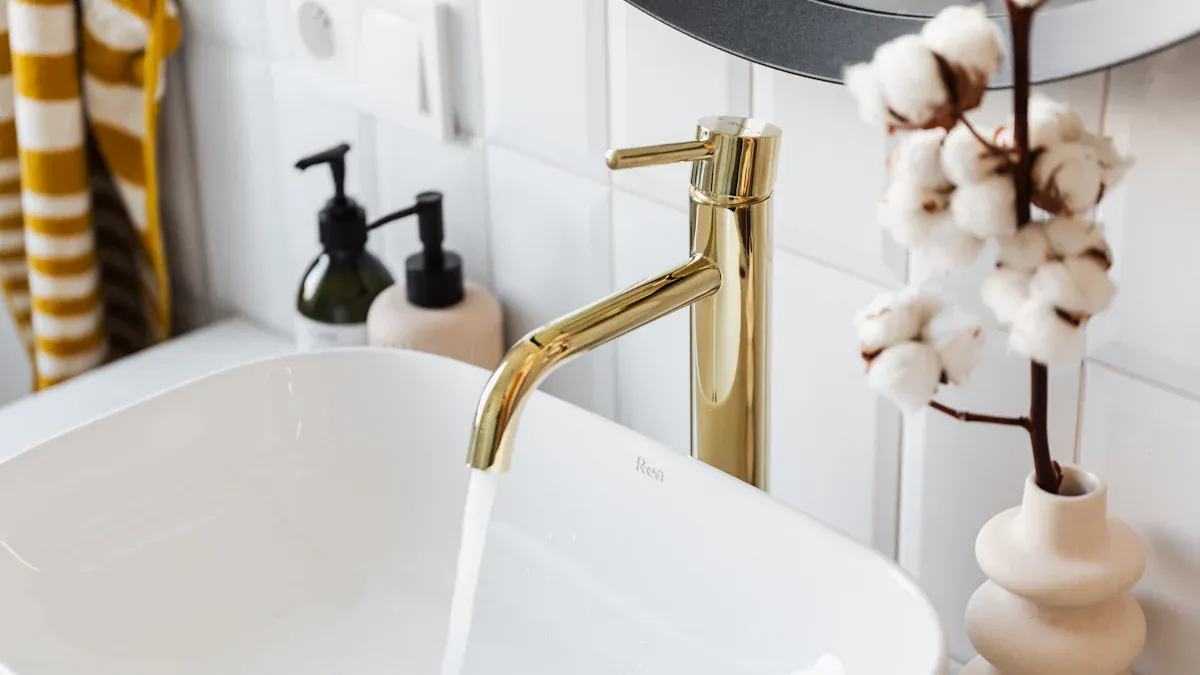
Vessel faucets feature a distinctly taller design. They specifically accommodate above-counter sinks, known as vessel sinks. Their elevated spout ensures water flows into the basin without obstruction.
Style and Functionality
These faucets are often statement pieces. They complement the unique style of vessel sinks. Their height provides both aesthetic appeal and practical functionality. They ensure adequate clearance and water delivery for the elevated sink.
Specific Use Cases
Vessel faucets are perfect for modern and contemporary bathrooms. They suit designs where the sink itself is a focal point. They are common in powder rooms or master bathrooms aiming for a luxurious, spa-like feel.
Distinctive Basin Faucet Styles
Bridge Basin Faucets
Vintage Aesthetic and Construction
Bridge basin faucet designsoffer a timeless, vintage aesthetic. They feature exposed hot and cold water lines that connect two handles to a central spout, forming a distinctive "bridge" shape. This construction evokes a sense of classic craftsmanship. Bridge Basin Faucet designs trace their historical origins to the 'Belle Époque' era. This period marked the emergence of modern industrial design. Collections like AXOR Montreux reinterpret early industrial faucets from this time, including bridge faucets. This reflects extensive research into early 20th-century industrial design.
Unique Design Elements
These faucets stand out with their unique construction. The visible piping and dual-handle operation provide a charming, old-world appeal. Users control water temperature and flow with separate hot and cold handles. This design often includes intricate detailing on the handles and spout, enhancing its traditional character.
Ideal for Traditional Decors
Bridge faucets are perfect for traditional, farmhouse, or rustic bathroom decors. Their classic lines and robust appearance complement vintage-inspired vanities and sinks. They serve as a focal point, adding elegance and historical charm to the space.
Other Notable Basin Faucet Styles
Waterfall Basin Faucets
Waterfall Basin Faucets create a unique visual and auditory experience. They deliver water in asmooth, cascading stream, resembling a mini waterfall. This creates a calming, spa-like effect. Their design features a wider, open structure compared to the tight, focused jet of regular faucets. Waterfall faucets distinguish themselves from standard faucets by delivering a wide sheet of water through an open spout design. This contrasts with the concentrated stream of standard faucets, resulting in a different feel, look, and purpose. These faucets often feature:
- Open-spout design: This creates a dramatic, visible cascade.
- Modern aesthetic: They serve as a luxurious, contemporary centerpiece for the bathroom. They come in various configurations, including single-hole, widespread, wall-mounted, and vessel types.
Touchless Basin Faucets
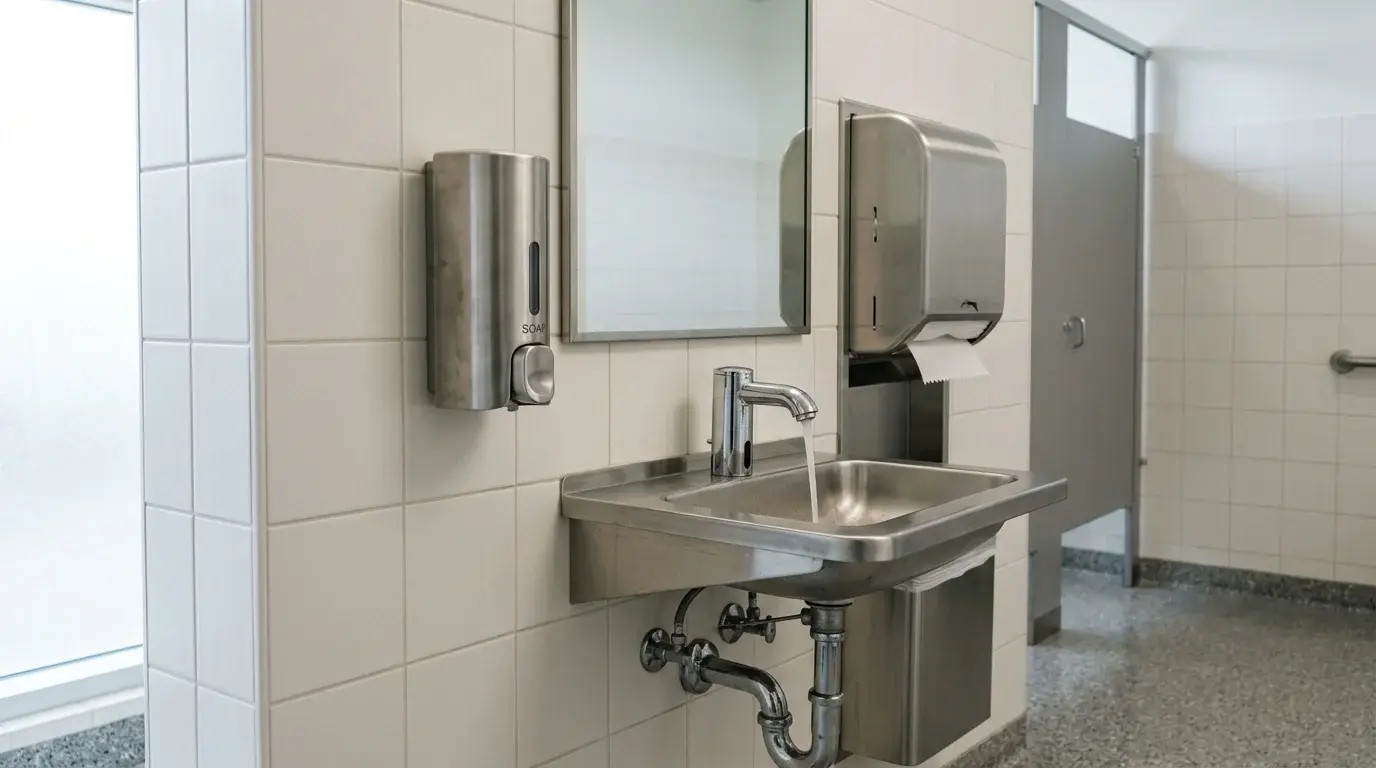
Touchless Basin Faucets represent modern convenience and hygiene. These faucets operate via a sensor, activating water flow when users place their hands beneath the spout. This eliminates the need to touch handles. Touchless Basin Faucets offer significant functional advantages in terms of hygiene. A2022 report from the American Society of Interior Designers indicates that 70% of homeowners prioritize hygiene in their bathrooms. This makes touchless faucets an increasingly popular choice. These faucets reduce germ transmission. They also cater to individuals with mobility challenges, ensuring a seamless experience for everyone. A recent study by the Water Quality & Health Council shows touchless faucets can reduce germ transmission by up to 95%. This significantly enhances user safety in both residential and public restrooms. TOTO TOUCHLESS faucets minimize direct contact with contaminated surfaces in high-traffic public restrooms. This gives users peace of mind and confidence in maintaining good hand hygiene.
Key Factors When Choosing Your Basin Faucet
Selecting the right basin faucet involves more than just aesthetic appeal. It requires careful consideration of compatibility, style, and functionality to ensure a harmonious and efficient bathroom space.
Compatibility with Sink and Countertop
Number of Holes and Spacing
The existing holes in a sink or countertop dictate the type of faucet one can install. Most sinks offer three primary faucet hole configurations: single-hole, 4-inch centerset (three-hole), or widespread (three-hole). Single-hole sinks are designed exclusively for single-hole faucets. Three-hole sinks can accommodate widespread faucets with separate hot and cold controls, narrower centerset faucets, or bridge faucets. These three-hole sinks also allow for the installation of a single temperature handle, a soap dispenser, or a spray wand. An escutcheon plate can be used with a one-hole faucet on a three-hole sink to conceal unused holes, offering flexibility.
Sink Type (e.g., vessel, undermount)
The type of sink significantly influences faucet selection. Vessel sinks, which sit above the counter, often require taller faucets or wall-mounted options to provide adequate clearance and reach. Undermount sinks, installed beneath the countertop, offer more flexibility for faucet types, but the spout reach remains a critical factor. Ensuring the faucet's base fits the sink's drilling and the spout extends appropriately into the basin prevents splashing and enhances usability.
Desired Aesthetic and Bathroom Style
Modern, Traditional, Minimalist, Farmhouse
The faucet serves as a focal point, defining the bathroom's overall style. Modern basin faucets feature innovative designs, cutting-edge technology, and high-end materials. They range from sleek, minimalist styles to bold, statement-making designs. Sleek modern picks often include matte black minimalism and luxurious brushed gold. Minimalist trough and channel-style faucets offer a sleek, architectural look with clean lines, geometric shapes, and simple materials. These fixtures often act as sculptural pieces, with minimal, hidden, or seamlessly blended controls for a streamlined appearance and purity. Collections like Aleo™ & Aleo+™ feature clean geometry and stark lines suitable for contemporary washrooms, while the ModernLife™ Collection offers exceptionally sleek profiles with a distinctive floating handle for refined elegance. Traditional or farmhouse styles often benefit from bridge faucets or those with classic, ornate details.
Finish Options (e.g., chrome, brushed gold, obsidian black)
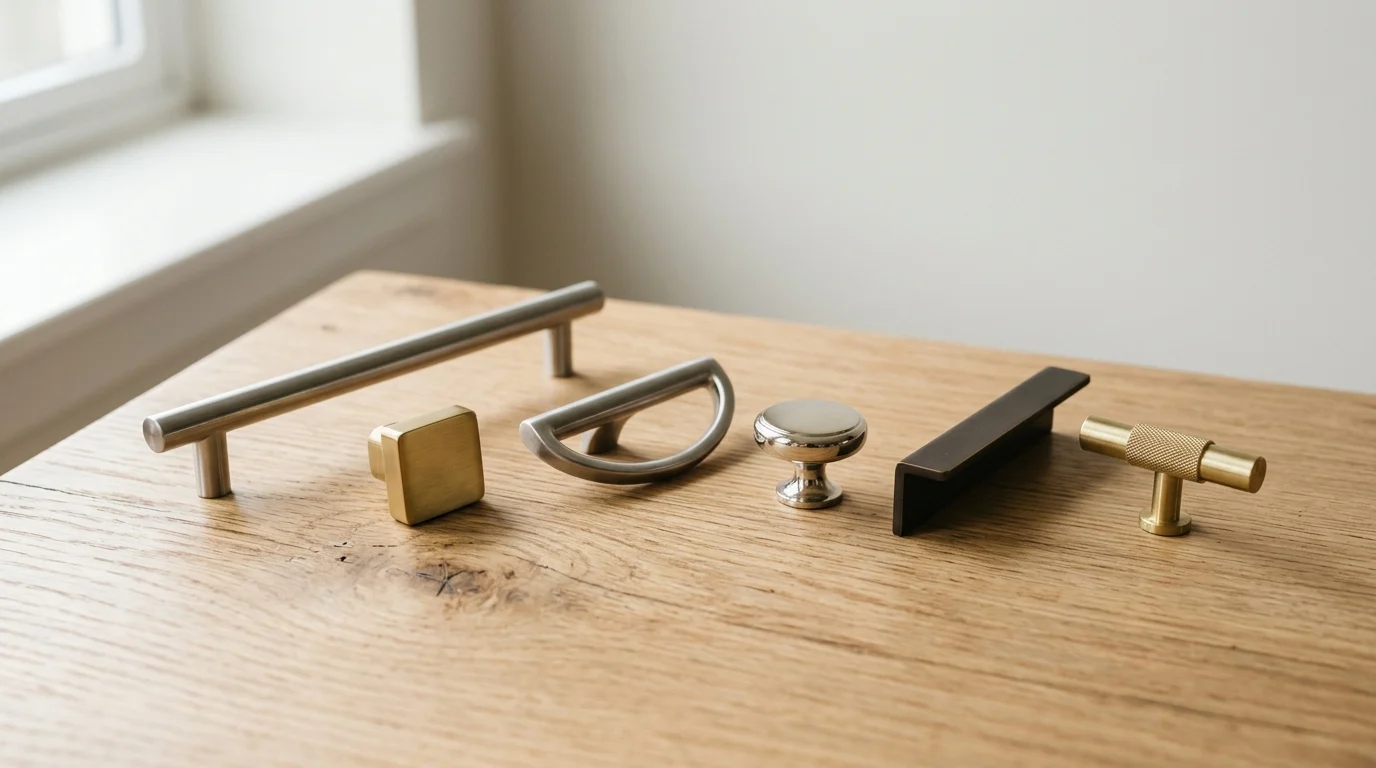
The finish of a faucet dramatically impacts the bathroom's aesthetic. Polished chrome offers a bright, reflective, sleek, and modern look, and it is easy to clean. However, it may show water spots. Stainless steel provides a clean, industrial, and modern touch, proving durable and corrosion-resistant, though prone to scratching. Matte black is a sleek, modern choice that makes a bold statement, suitable for contemporary and transitional bathrooms, and it hides water spots and fingerprints. Brushed nickel offers a classic choice with a soft, muted sheen, durable, resistant to tarnishing, and low-maintenance, popular in modern luxury bathrooms. Gold and brass are back in style with subtler versions like muted champagne or brushed warm gold, adding a touch of luxury. Emerging options like graphite and titanium offer refined alternatives to matte black, described as classier and less stark, with a slightly more reflective dark and modern appearance. Two-tone faucets, combining a dominant base with a warm accent, create a custom, design-forward look.
Functionality and User Experience
Water Temperature and Flow Control
Effective water temperature and flow control are essential for daily use. Single-lever faucets offer convenient one-hand operation for both temperature and flow, while dual-handle faucets provide precise control over hot and cold water independently. The internal ceramic cartridge ensures smooth operation and prevents leaks over the long term.
Water Efficiency and Splash Reduction
Water efficiency is a growing concern for many homeowners. The EPA's WaterSense program sets standards for water-efficient faucets. WaterSense labeled bathroom sink faucets and accessories use a maximum of 1.5 gallons per minute (gpm), reducing water flow by 30 percent or more from the standard 2.2 gpm. As of 2020, bathroom faucets sold in stores must use 1.2 gpm or less. When selecting a new bathroom faucet, look for a flow rate of 1.2 gpm or less.
Minimizing splashing enhances user comfort and keeps the bathroom cleaner. A faucet that is too tall for a shallow sink risks splashing. Conversely, a low-profile faucet on a deep vessel bowl can make washing awkward. Matching faucet arc height with sink depth is crucial for splash minimization and usability. Optimized spout structures, such as arc-shaped or adjustable spouts, bring water flow closer to the container's edge, reducing impact force from vertical drops. Water flow control technology, including sophisticated valve systems and air injection, creates a gentler, bubbly flow that reduces impact. The golden rule of splash control ensures the water stream is directed at or very near the sink drain to reduce impact energy and contain flow.
Spout Height and Reach
Spout reach is defined as the horizontal distance from the faucet’s base to the point where the water stream lands. This measurement is crucial for ensuring the water flows into the center of the sink basin, preventing splashing and improving usability. For bathroom vessel sinks, extra reach is often necessary to ensure water flows into the middle of the basin rather than hitting the back wall.
| Sink Depth Category | Depth Range (inches) | Recommended Spout Reach (inches) | Faucet Type Recommendations |
|---|---|---|---|
| Shallow Sinks | 6–7 | 6–8 | Short-spout, single-handle pull-down (avoid high-arc) |
| Standard Sinks | 8–10 | 5–7 (to cover sink's center) | Medium-arc, pull-down |
| Deep Sinks | 10–12 | 7 (for 10-inch sink) | High-arc, pull-out sprayers, wall-mounted |
| Double-Bowl Sinks | N/A | N/A | Swiveling faucet |
| Farmhouse Sinks | N/A | N/A | High-arc, wall-mounted |
A faucet's spout height and reach must align with the sink's dimensions to ensure comfortable and splash-free use.
Installation and Maintenance of Basin Faucets
Installation Complexity by Faucet Type
DIY vs. Professional Installation
Homeowners often consider installing Basin Faucets themselves. Simple faucet types, like single-hole or centerset models, allow for DIY installation. These installations typically require basic tools and plumbing knowledge. However, more complex faucets, such as widespread or wall-mounted designs, often benefit from professional installation. Wall-mounted faucets, for instance, require precise in-wall plumbing adjustments. Incorrect installation can lead to leaks or damage. Professionals ensure proper alignment and secure connections.
Plumbing Requirements
Each faucet type has specific plumbing requirements. Single-hole and centerset faucets connect directly to existing supply lines under the sink. Widespread faucets require separate connections for each handle and the spout. Wall-mounted faucets demand careful planning. Plumbers must route water lines within the wall. This ensures the spout and handles align correctly with the basin. Proper rough-in plumbing is crucial for these installations. It prevents future issues and ensures optimal performance.
Longevity and Material Quality
High-Quality Brass or Stainless Steel
The material of a Basin Faucet significantly impacts its lifespan. High-quality brass and stainless steel are common choices. They offer excellent durability.Brass faucets are known for their longevity. They resist corrosion when in contact with water, extending their life expectancy. Stainless steel faucets are highly resistant to rust and stains, even with moisture exposure. They are also non-porous, which prevents bacterial growth.
| Feature | Stainless Steel Faucet | Brass Faucet |
|---|---|---|
| Corrosion Resistance | ★★★★★ | ★★★★☆ |
| Safety (Lead-Free) | Always lead-free | May vary; use certified |
| Weight & Feel | Lightweight | Heavier, premium feel |
| Maintenance | Easy to clean | Requires occasional care |
Stainless steel faucets offer excellent corrosion resistance, even in hard water conditions. They are inherently lead-free. Brass faucets also provide long-term durability and natural resistance to bacteria. They tolerate heat well. While some brass faucets may contain lead, certified lead-free options are available. All-brass bodies are noted for lasting the longest. They are less likely to leak or corrode, especially when manufacturers use dezincification resistant (DZR) brass. This material remains unaffected by water acidity or chemicals.
Ceramic Cartridges for Durability
Ceramic cartridges are essential components within modern faucets. They provide precise control over water flow and temperature. Unlike traditional faucets, ceramic disc faucets are less prone to leaks. Their hard, smooth ceramic surfaces create a watertight seal. This design ensures efficient operation over extended periods. It also reduces wear and tear. Faucet ceramic cartridges offer superior water control and efficiency due to their precise engineering. They allow for effortless adjustment of water flow and temperature. Their smooth operation eliminates annoying drips and leaks. This conserves water and reduces utility bills. The tight seal and precise control mechanisms of ceramic cartridges prevent unwanted water leakage. They significantly reduce drip occurrences compared to older technologies. This contributes to sustainability and longevity. Ceramics resist wear, tear, and chemical degradation. This ensures a longer lifespan and fewer repairs. A ceramic cartridge controls water flow and temperature using two ceramic discs. One disc remains fixed while the other moves with the handle. Water flows when the holes on the discs align. It stops when they close. The precisely polished surface of these discs ensures water cannot pass through when shut. This provides long-lasting leak prevention. It also requires less maintenance than older rubber washer systems.
Cleaning and Care for Your Basin Faucet
Maintaining Finish and Preventing Limescale
Proper cleaning maintains a faucet's finish and prevents limescale buildup. For LifeShine®Finishes PVD (including Brushed Gold), use a damp cloth and mild liquid dishwashing soap. Rinse and dry the faucet afterward. Most common household cleaners are acceptable if rinsed thoroughly. Avoid harsh cleansers or abrasive pads. For Non-LifeShine®Finishes Powder Coat (including Matte Black), use a damp cloth and mild liquid dishwashing soap. Rinse and dry the faucet. Avoid cleaners containing abrasives, organic solvents, or other harsh cleansers. For removing dried water spots on both types of finishes, a 50/50 blend of household vinegar and water works well. Rinse and dry the faucet after application.
Preventing limescale buildup is crucial for faucet longevity and appearance. Installing a water softener addresses hard water at its source. This protects plumbing and maintains fixture appearance. Regularly polishing fixtures also contributes to long-term prevention. For external buildup, clean the inside of faucets weekly. For internal pipe buildup, professional plumbing or water softening devices are necessary. A baking soda solution (one part baking soda with two parts vinegar) poured down drains can help. Leave it for 20 minutes before flushing with hot water. Pouring vinegar down the drain can also dissolve limescale. Vinegar is a gentle acid.
This guide provided a comprehensive overview of diverse basin faucet options. It empowers individuals to make informed decisions. They can balance functionality, installation, and aesthetic appeal effectively. Selecting the right basin faucet significantly enhances both the utility and visual appeal of any bathroom space. Consider these factors for a successful choice.
FAQ
Which faucet type suits a small bathroom best?
Single-hole basin faucets are ideal for small bathrooms. Their compact design combines the spout and handles into one unit. This creates a clean, minimalist look. They also free up valuable counter space.
Is DIY installation recommended for all faucet types?
Simple faucet types, like single-hole or centerset models, allow for DIY installation. More complex faucets, such as widespread or wall-mounted designs, often benefit from professional installation. Professionals ensure proper alignment and secure connections.
What faucet finish offers the best durability?
High-quality brass and stainless steel finishes offer excellent durability. Polished chrome is also very durable and easy to clean. Brushed nickel resists tarnishing well. These materials ensure long-lasting performance and appearance.
What are the main benefits of touchless faucets?
Touchless basin faucets offer modern convenience and hygiene. They activate water flow via a sensor, eliminating the need to touch handles. This reduces germ transmission. They also conserve water by flowing only when needed.
How should one clean a basin faucet to prevent limescale?
Regular cleaning maintains a faucet's finish and prevents limescale. Use a damp cloth and mild liquid dishwashing soap. Rinse and dry the faucet afterward. A 50/50 blend of household vinegar and water removes dried water spots effectively.
What is the purpose of a ceramic cartridge in a faucet?
Ceramic cartridges are essential components within modern faucets. They provide precise control over water flow and temperature. Their hard, smooth surfaces create a watertight seal. This design ensures efficient operation and prevents leaks over extended periods.
How do centerset and widespread faucets differ?
Centerset faucets feature the spout and two handles on a single base plate, typically with fixed 4-inch spacing. Widespread faucets consist of three separate components: a spout, a hot handle, and a cold handle. This allows for flexible spacing between 8 and 16 inches.