request to quote
Leave Your Message

China Top Shower Hinge Manufacturers for Global Buyers

Choosing the right China Top Shower Hinge Manufacturers for Global Buyers requires more than comparing online prices. A reliable Shower Hinge supplier should demonstrate practical manufacturing experience, stable quality control, and clear communication. Buyers need hinges that support glass doors safely, align smoothly, and resist moisture in demanding bathroom environments. Small details matter. Think clean machining, accurate drilling, firm closing action, and consistent surface finishing.

This guide examines manufacturers through evidence rather than attractive product photos. It considers stainless steel grades, load capacity, glass compatibility, polishing quality, packaging, and production flexibility. Factory audits, sample testing, inspection reports, and responsive engineering support can reveal important differences. Experienced suppliers should explain tolerances, installation requirements, and maintenance expectations without hiding technical limitations. Certifications may support confidence, but buyers should verify their scope and validity.

No supplier is perfect. Some catalogs appear impressive but provide limited testing data. Others offer excellent hardware yet communicate slowly during customization. That gap deserves attention. Global buyers should review samples, confirm drawings, test hinge movement, and clarify warranty terms before placing large orders. Freight schedules and replacement-part support also influence the real purchasing cost. A carefully evaluated Shower Hinge manufacturer can reduce installation problems and improve long-term customer satisfaction. Still, every claim should be checked against current factory evidence. Practical judgment remains essential.
China Top Shower Hinge Manufacturers for Global Buyers

What Defines a Top Shower Hinge Manufacturer in China

A top shower hinge manufacturer in China is defined by controlled performance, not a polished catalogue. Grand View Research’s 2024 bathroom fittings analysis projects roughly 6% annual market growth through 2030. That pressure increases competition, but it also exposes weak quality systems. Experienced manufacturers specify stainless steel grades clearly, control casting tolerances, and test every hinge for alignment, load, and repeated opening. A reliable factory should provide traceable material certificates and documented inspection records. Ask for them.

Small details matter. The hinge should open smoothly without grinding, hold the glass securely, and resist corrosion in humid bathrooms. Testing may include salt-spray evaluation, torque checks, and cycle testing under defined loads. Glass compatibility also requires attention to drilling position, thickness, and safety requirements such as EN 12150 or ANSI Z97.1, where applicable. ISO 9001 certification can support process control, but it does not prove product quality alone. That distinction is often overlooked.

Global buyers should inspect production samples, not only photographs. Factory audits can verify calibration, incoming inspection, polishing consistency, and packaging protection. According to UN Comtrade trade data, China remains a major global supplier of metal sanitary hardware, making supplier selection especially important. A top manufacturer explains tolerances honestly and reports failures instead of hiding them. That is uncommon, but valuable. Even strong factories need improvement; hinge testing can miss real bathroom conditions when water chemistry and installation errors vary. Credible suppliers acknowledge this uncertainty and help buyers manage it.

Key Types and Materials Used in Chinese Shower Hinges

China Top Shower Hinge Manufacturers for Global Buyers

Key Types and Materials Used in Chinese Shower Hinges

Chinese shower hinge manufacturers commonly produce glass-to-glass, wall-to-glass, and glass-to-wall models. Glass-to-glass hinges often support 90°, 135°, or 180° layouts. Pivot hinges suit frameless doors with wider movement requirements. According to Fortune Business Insights, the global shower enclosure market was valued at approximately USD 3.7 billion in 2023. Its projected growth reflects rising demand for durable, minimalist bathroom hardware. Fit matters. A hinge must match glass thickness, drilling position, door weight, and opening angle.

Material selection strongly affects service life. Grade 304 stainless steel offers good corrosion resistance for ordinary indoor bathrooms. Grade 316 stainless steel performs better in coastal areas because its molybdenum content improves resistance to chlorides. Brass provides useful strength and machining flexibility, while zinc alloy can reduce cost for lighter applications. The World Stainless Association identifies corrosion resistance and long service life as major advantages of stainless steel in construction products. These properties matter where steam, water, and cleaning chemicals meet daily.

Professional buyers should inspect load testing, salt-spray results, surface treatment, and sealing quality. PVD, brushed, polished, and matte finishes require consistent process control. In practice, specifications are not always clean. A lower-cost hinge may appear acceptable but develop loose screws or finish damage earlier. That risk deserves attention. Sample testing, installation checks, and documented tolerances provide more reliable purchasing decisions than catalog photos alone.

How China’s Leading Shower Hinge Manufacturers Control Quality

China’s leading shower hinge manufacturers control quality through repeated checks, not one final inspection. Experienced teams review stainless steel grades, casting surfaces, drilling accuracy, and polishing consistency before assembly. They often verify 304 or 316 stainless steel with material certificates and supplier records. Small mistakes can cause large installation problems.

At the factory, technicians measure hinge bodies with calibrated gauges. They check hole positions, glass clearance, closing angles, and screw alignment. Each production batch may undergo load testing, cycle testing, and salt-spray evaluation. Inspectors also examine silicone pads and protective washers. These parts prevent direct glass contact and reduce stress during use. Quality records normally include batch numbers, inspection results, and operator details. That traceability makes corrective action faster.

Reliable manufacturers also test finished hinges under realistic conditions. A technician may install a hinge on a glass panel, apply repeated opening force, and inspect movement afterward. Packaging receives attention too. Foam inserts, separated hardware, and moisture-resistant cartons help prevent damage during long-distance shipping. Still, no production system is perfect. Polishing marks can appear, and a calibration delay may affect measurements. Strong factories admit these weaknesses, isolate questionable batches, and adjust the process. This practical honesty is often more valuable than impressive claims. Bulk buyers should request inspection reports, sample approvals, and clear tolerance data before placing large orders.

China Top Shower Hinge Manufacturers for Global Buyers - How China’s Leading Shower Hinge Manufacturers Control Quality

Quality-Control Dimension Common Industry Requirement Typical Verification Method Buyer Evidence to Request Why It Matters for Global Buyers
Base Material Stainless steel grades such as AISI 304 or AISI 316 are commonly selected for shower hardware. AISI 316 provides higher molybdenum content and improved resistance in chloride-rich environments. Material composition testing using a portable X-ray fluorescence analyzer or laboratory report. Material declaration, heat number, mill certificate, or third-party material test report. Helps reduce corrosion risk and prevents substitution with lower-grade alloys.
Glass Compatibility Hinge geometry should match the specified tempered-glass thickness, commonly 8 mm, 10 mm, or 12 mm, depending on the enclosure design. Dimensional inspection of glass cut-outs, screw spacing, gasket compression, and hinge alignment. Approved technical drawing, tolerance sheet, installation template, and first-article inspection report. Prevents glass stress, installation failure, leakage, and field rework.
Load and Cycle Testing The hinge should be tested against the door mass, panel size, mounting configuration, and intended opening angle defined by the buyer. Static-load testing followed by repeated opening-and-closing cycles under controlled conditions. Test procedure, applied load, cycle count, acceptance criteria, and signed test record. Demonstrates durability rather than relying only on visual inspection or nominal load ratings.
Corrosion Resistance Corrosion performance depends on the base metal, surface finish, cleaning chemicals, humidity, and installation environment. Neutral salt-spray testing may be conducted according to ISO 9227 or ASTM B117 when specified by the customer. Laboratory report stating test method, exposure duration, specimen condition, and rating criteria. Allows buyers to compare finishes using a defined method instead of unsupported corrosion claims.
Surface Finish Common finishes include polished, brushed, satin, matte, and plated or coated decorative surfaces. Visual inspection under controlled lighting, color comparison, coating-thickness measurement where applicable, and adhesion testing for coatings. Approved finish sample, surface standard, inspection checklist, and coating test report when relevant. Maintains appearance consistency across production batches and replacement orders.
Dimensional Accuracy Critical dimensions should be controlled according to the approved drawing, including hole spacing, body thickness, pivot position, and mounting-face flatness. Calipers, micrometers, gauges, coordinate-measuring equipment, or dedicated inspection fixtures. Inspection report listing actual measurements, tolerances, sample size, and nonconformance actions. Reduces installation problems and improves interchangeability between production batches.
Seals and Gaskets Gaskets should be compatible with the specified glass thickness and resistant to water, household cleaners, and normal bathroom temperature changes. Material identification, dimensional checks, compression inspection, and water-leakage testing of an assembled unit. Gasket material specification, hardness range where relevant, assembly instructions, and leak-test record. Supports reliable sealing and helps prevent glass-to-metal contact.
Process Control A documented quality-management system should control incoming materials, machining, polishing, assembly, final inspection, and nonconforming products. Process audits, batch traceability reviews, work-instruction checks, and corrective-action verification. Quality manual, process flow chart, inspection plan, corrective-action records, and certification scope if certified. Shows whether quality is controlled throughout production instead of only at final shipment.
Sampling Inspection Sampling plans should define lot size, inspection level, acceptable quality limit, and criteria for critical, major, and minor defects. Statistical sampling based on an agreed plan, such as ISO 2859-1, rather than an unspecified visual check. Pre-shipment inspection report, defect classification, sample quantity, and photographs of findings. Creates a measurable acceptance standard for international orders.
Packaging and Traceability Each hinge and accessory set should be protected against scratching, impact, moisture, and mixing of components during transport. Packaging inspection, carton-drop evaluation when required, barcode or lot-code review, and quantity reconciliation. Packing specification, carton markings, lot identification, packing list, and photographs before shipment. Improves receiving efficiency and supports investigation of quality issues after delivery.
Documentation and Compliance Technical files should identify materials, dimensions, installation requirements, intended use, and applicable destination-market requirements. Document review against the purchase specification and the regulations or standards required in the target market. Technical drawings, declarations, test reports, installation instructions, warranty terms, and revision history. Reduces compliance gaps and clarifies responsibilities for installation and maintenance.

Note: Test methods, acceptance limits, glass thickness, load ratings, cycle counts, and corrosion-test durations should be agreed in writing before production because requirements vary by product design and destination market.

Customization, Certifications, and Export Services for Global Buyers

China’s top shower hinge manufacturers support global buyers with practical customization, tested materials, and export-ready services. Experienced teams can adjust hinge size, glass thickness, opening angle, mounting holes, and surface finishes. Brushed stainless steel, polished chrome, matte black, and custom colors are common options. CAD drawings and physical samples help confirm fit before mass production.

Material selection deserves careful attention. Stainless steel grades, seal quality, screw strength, and load performance affect safety and service life. Reliable manufacturers provide material certificates, inspection records, and test reports for corrosion resistance and opening cycles. They may also support ISO-based quality systems and market-specific compliance documents. Certification details should be checked for the destination country, not accepted blindly.

No factory gets every detail right.

A useful supplier explains tolerances, sampling limits, and possible production risks clearly. Some finishes may vary slightly between batches. That small difference can matter in a large hotel project. Export services usually include carton design, protective packaging, product labeling, customs documents, and shipment coordination. Buyers should confirm HS codes, Incoterms, lead times, and pre-shipment inspection procedures in writing. Clear communication reduces costly surprises, although it cannot remove every risk. Firms with responsive engineering and after-sales teams are better prepared to handle replacement parts, installation questions, and design changes across international orders.

China Top Shower Hinge Manufacturers for Global Buyers

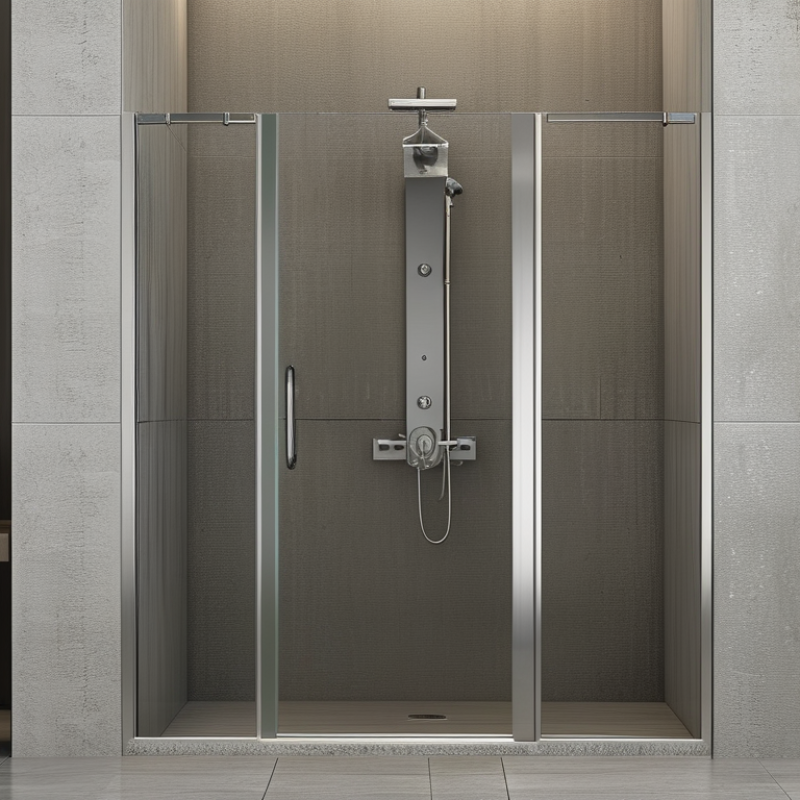
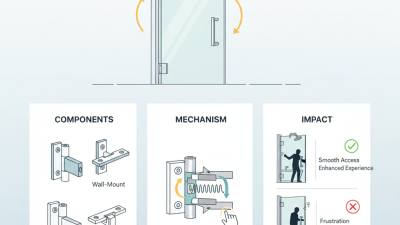
Common shower-hinge configuration references for international sourcing, including glass thickness compatibility and opening-angle options. Final specifications, certifications, customization, and export documents should be confirmed with the supplier.

How to Select the Right Chinese Shower Hinge Supplier

Selecting the right Chinese shower hinge supplier requires more than comparing prices. Start with material and engineering evidence. Ask whether the hinge uses 304 or 316 stainless steel, and confirm the grade through test reports. Check compatibility with your glass thickness, drilling pattern, and door weight. A precise drawing can prevent expensive installation failures.

Tips: Request two or three samples. Test them with repeated opening cycles, water exposure, and real glass panels. Inspect screw threads, gasket fit, surface finish, and closing alignment. Ask how the supplier controls casting, polishing, and assembly tolerances. Factory photos help, but a live video inspection is stronger evidence. An independent inspection can also verify packaging and shipment quantities.

Reliable suppliers explain lead times, minimum orders, warranty handling, and replacement procedures clearly. Review their export experience, quality records, and communication speed. Do not accept a generic certificate without checking its scope and date. Sample approval should include written standards for finish, torque, and allowable scratches. No checklist is perfect. I have seen attractive samples fail during repeated use, usually because production controls were weaker. For that reason, discuss corrective actions before placing a large order. A capable supplier should welcome technical questions, admit limitations, and provide practical solutions.