- Home
- Products
- About Us
- Solutions
- Our Service
- Contact Us
Leave Your Message
Choosing China’s top Floor Drain suppliers requires more than comparing catalog prices. Global buyers need dependable drainage, consistent dimensions, and evidence of controlled production. A polished sample means little if the next shipment shows uneven grates, weak welds, or inaccurate outlet sizes.
Richard Trethewey, a veteran plumbing and heating expert, offers a useful principle: “Water always finds the weakest path.” This idea matters when evaluating stainless steel Floor Drain manufacturers. Buyers should inspect material grades, surface finishing, odor seals, removable baskets, and flow performance. Factory audits can reveal whether quality checks happen regularly or only before an important visit. Ask for production records, inspection reports, packaging photos, and practical installation drawings.
Look closely at the details.
A reliable supplier should explain how its drains perform in bathrooms, commercial kitchens, balconies, basements, and industrial areas. It should also clarify load ratings, corrosion resistance, outlet options, and customization limits. Certifications may support credibility, but certificates alone cannot replace physical testing and supplier experience. Request samples from current production, not specially prepared showroom pieces.
Cost still matters. However, the cheapest Floor Drain may create expensive rework, leakage complaints, or delayed projects. China offers broad manufacturing capacity, yet quality varies sharply between factories. Some suppliers communicate well before payment, then respond slowly after shipment. That risk deserves attention.
This guide compares supplier capability, product design, quality control, export experience, and buyer support. It also recognizes an uncomfortable truth: no supplier is perfect. Even a strong factory can miss a detail. Careful verification remains the buyer’s responsibility.
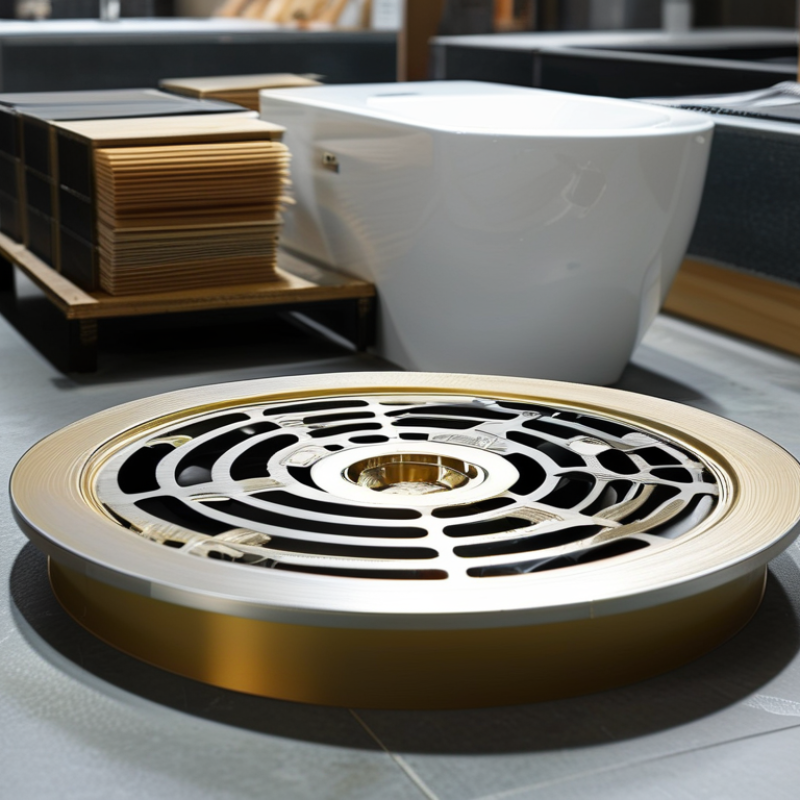
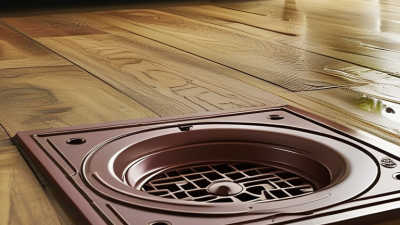
China’s floor drain manufacturing industry combines metalworking, plastic molding, and assembly within a broad supply chain. Factories commonly use stainless steel, brass, ABS, or mixed materials. Material choice affects corrosion resistance, cleaning, cost, and perceived quality. Stainless steel 304 suits many indoor installations, while 316 offers stronger resistance in coastal or chemical environments. Manufacturing can include stamping, casting, CNC machining, welding, polishing, and passivation. The finish matters. A mirror surface looks attractive, but hidden burrs can disturb drainage or injure installers. Some facilities also produce custom grates, deep-seal cores, and adjustable outlet systems for different construction needs.
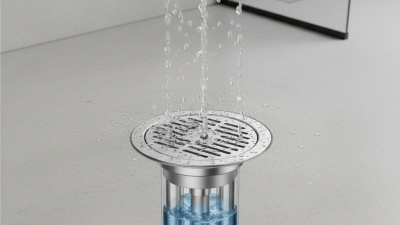
Reliable global buyers should review drawings, tolerances, outlet dimensions, and sealing details before discussing price. A factory’s sample room proves little. Ask for production samples, material certificates, coating reports, and flow-test records linked to batch numbers. During inspection, pour measured water through several units and check leakage, odor-seal movement, grate fit, and weld consistency. Packaging deserves attention too; loose grates may arrive scratched after a long sea journey. Factories with clear process controls usually welcome independent inspection and corrective-action records. Yet no supplier is perfect. A missed tolerance, unclear drawing, or rushed tooling change can create expensive rework. Even experienced buyers sometimes underestimate installation conditions, especially floor slope and pipe compatibility.
| Evaluation Dimension | Typical Industry Data or Specification | Common Options for Global Projects | Buyer Verification Point |
|---|---|---|---|
| Main product categories | Point floor drains, linear shower drains, balcony drains, laundry drains, roof drains, and industrial trench-drain components. | Residential bathrooms, commercial washrooms, wet rooms, balconies, kitchens, plant rooms, and exterior drainage areas. | Match the drain type to the installation location, expected load, waterproofing system, and local plumbing regulations. |
| Common body and grate materials | 304 stainless steel, 316 stainless steel, brass, cast iron, ABS, and PP are commonly used material choices. | 304 stainless steel for general indoor use; 316 stainless steel for higher chloride or coastal exposure; polymer bodies for lightweight residential applications. | Request material certificates, grade identification, wall-thickness details, and corrosion-resistance test documentation where required. |
| Stainless-steel grade reference | 304 stainless steel generally contains approximately 18% chromium and 8% nickel; 316 stainless steel includes molybdenum and typically offers improved resistance to chlorides. | 304 for standard residential and commercial interiors; 316 for coastal, marine, pool, or chemically exposed environments. | Confirm the grade through a mill test certificate or an independent material analysis rather than relying only on surface appearance. |
| Typical outlet diameters | 50 mm, 75 mm, and 110 mm are common nominal outlet sizes in many plumbing markets. | 50 mm for many bathroom applications; 75 mm or 110 mm where higher drainage capacity or local pipe standards require larger connections. | Check compatibility with the destination country’s pipe outside diameter, connection method, and plumbing fitting system. |
| Common top dimensions | Point-drain tops frequently use square sizes around 100 × 100 mm, 150 × 150 mm, and 200 × 200 mm; linear drains are commonly specified by length and width. | Custom top sizes, tile-insert covers, removable grates, and adjustable frames are widely used for project-specific designs. | Approve a dimensioned drawing showing grate size, frame size, outlet position, installation depth, and waterproofing flange details. |
| Surface finishes | Common finishes include brushed, satin, polished, electroplated, powder-coated, and PVD-coated surfaces. | Brushed or satin finishes for mainstream projects; PVD or coated finishes for decorative bathroom ranges. | Confirm color code, gloss level, coating process, adhesion performance, and resistance to cleaning chemicals. |
| Odor and pest control | Water traps, membrane traps, mechanical trap cartridges, and removable debris baskets are common design solutions. | Water traps for conventional wet areas; membrane or mechanical systems where evaporation or limited installation depth is a concern. | Review trap-seal depth, evaporation behavior, cleaning access, flow performance, and replacement-part availability. |
| Waterproofing integration | Reliable designs may include clamping rings, bonding flanges, adjustable collars, or factory-fitted waterproofing membranes. | Drain assemblies designed for sheet membranes, liquid-applied membranes, tiled shower floors, or concrete deck systems. | Verify membrane compatibility, flange width, sealing method, movement tolerance, and installation sequence. |
| Load and application class | Pedestrian bathroom drains and vehicle-area drains require different structural designs and load classifications. | Light-duty products for foot traffic; reinforced products for commercial kitchens, plant rooms, garages, or trafficable external areas. | Request the tested load rating and the applicable classification standard; do not select solely by grate thickness. |
| Relevant technical standards | EN 1253 is widely referenced for gullies and floor drains in building drainage; China’s GB/T 27710-2020 covers floor drains in the Chinese national standard system. | Projects may additionally require local plumbing, accessibility, fire, sanitation, or construction standards. | Confirm the exact edition, product scope, test method, and certification authority required in the destination market. |
| Manufacturing processes | Typical processes include stamping, deep drawing, casting, CNC machining, injection molding, welding, grinding, polishing, coating, and assembly. | Stamped stainless-steel grates for volume production; cast or machined components for complex geometry or heavier-duty applications. | Audit tooling control, welding quality, dimensional inspection, leak testing, surface inspection, and traceability procedures. |
| Drainage performance | Flow rate depends on outlet diameter, trap design, grate open area, water head, installation slope, and test method. | High-open-area grates and larger outlets are generally selected for showers, commercial washrooms, kitchens, and heavy rainfall areas. | Compare laboratory flow data using the same test conditions and verify that the result meets the project drainage calculation. |
| Quality-control documents | Common documents include approved drawings, material certificates, inspection reports, leak-test records, coating reports, and packing lists. | First-article inspection for new designs; pre-shipment inspection for repeat orders; batch traceability for regulated projects. | Define document requirements before production and retain signed samples, inspection criteria, and approved reference units. |
| Packaging and logistics | Products are commonly packed with protective film, individual cartons, inner partitions, and export cartons or pallets. | Retail-ready packaging, bulk cartons, neutral packaging, and customized carton labels can be specified for different distribution channels. | Check carton strength, moisture protection, barcode requirements, pallet dimensions, gross weight, and shipping marks. |
| Supplier-selection criteria | Core evaluation areas include product compliance, engineering capability, tooling ownership, process control, quality records, communication, and export experience. | Use a weighted scorecard rather than selecting only by unit price. | Compare identical specifications, approve samples, conduct factory or third-party inspections, and document corrective-action procedures. |