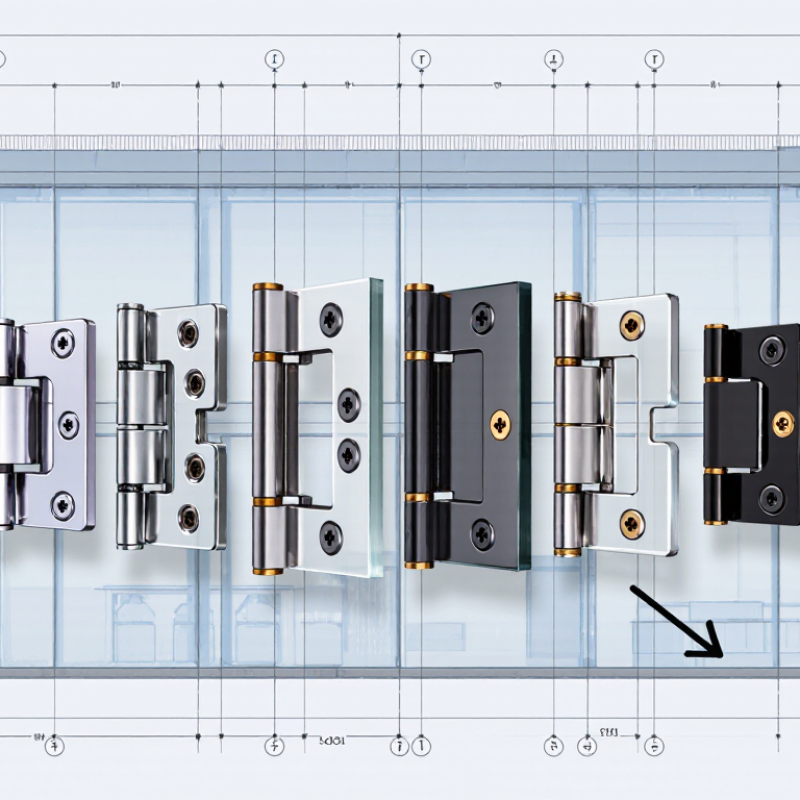
Choosing a Glass Hinge manufacturer is a practical decision with visible consequences: a misaligned door can scrape, sag, or place uneven pressure on glass. For global buyers, product comparisons should go beyond price. Glass thickness, door weight, opening angle, adjustment range, finish, and installation method all affect fit. Ask suppliers for load ratings, cycle-test evidence, material specifications, and clear installation instructions. Details matter.
The building context is substantial. UNEP and the Global Alliance for Buildings and Construction reported that buildings and construction represented 34% of global energy demand and 37% of energy- and process-related carbon dioxide emissions in 2022. These figures describe the wider sector, not hinge sales. Still, they help explain why façade and interior hardware must work reliably within increasingly considered building designs. A hinge does not determine a building’s energy performance, but its durability can influence maintenance and replacement needs.
This guide compares ten manufacturers for buyers assessing product range, engineering information, customization, quality controls, and export support. Public market reports rarely isolate glass hinges as a separate category, so precise global market-share claims can be difficult to verify. That limitation matters. Treat each manufacturer’s published specifications as a starting point, then confirm compatibility with the glass, frame, and intended use. A polished catalog is useful; tested details are better.
Glass hinges are commonly grouped as pivot, clamp, and patch fittings. Pivot hinges carry the door at top and bottom; clamp hinges grip its edge. Stainless steel resists corrosion, while zinc-alloy bodies can suit lighter-duty interiors. Finishes matter, but so do pin strength and screw retention. Small details matter.
The 8–12 mm range refers to nominal glass thickness, not a universal fit. ASTM C1048-21 covers heat-strengthened and fully tempered flat glass, while EN 12150-1 sets requirements for thermally toughened safety glass. Neither standard rates a hinge for every door size or load. Check the fitting’s stated glass range, maximum door weight, and required cut-outs before ordering. A 12 mm panel is heavier than an 8 mm panel of the same dimensions, so hinge capacity and mounting conditions deserve extra attention. Still, thickness alone is an imperfect shortcut: panel width, height, edge quality, and opening frequency also affect performance. Measure the glass at several points; small production variations can make a tight clamp sit poorly.
When comparing glass hinge manufacturers, start with the stated load rating, not appearance alone. Check whether the figure applies to one hinge or a complete set, and whether it assumes a specific glass thickness. A heavy door can sag if its weight is concentrated on too few hinges. Ask for test details and recommended hinge spacing. Small details matter.
Opening angle affects clearance, access, and nearby walls. A hinge rated for a wide swing may still be unsuitable if a handle hits a cabinet or partition. Measure the door’s path with the handle included. I have seen this overlooked. It is easy to miss.
Corrosion resistance matters in bathrooms, coastal buildings, and other damp spaces. Look for clear material descriptions and test information, rather than relying on a polished finish as proof. Also confirm fit: glass thickness, cutout dimensions, mounting style, and adjustment range should match the panel and frame. A precise drawing helps prevent costly drilling errors. Sometimes supplier drawings are incomplete, so request confirmation before production. Check that installation instructions specify tightening guidance; overtightening can stress glass, while loose fittings may shift over time.
Evaluating the top 10 glass hinge manufacturers requires more than comparing catalog prices. Check whether each manufacturer publishes clear drawings, glass thickness ranges, load limits, and installation tolerances. Reliable suppliers provide samples before large orders. Test the hinge on the actual glass type and door weight. Small alignment errors can become costly on site.
Look for evidence of production experience. Ask about cycle testing, salt-spray resistance, surface treatments, and quality checks between batches. Independent laboratory reports are useful, but traceable inspection records are stronger. Confirm material grades, screw compatibility, packaging methods, and replacement-part availability. A serious manufacturer should explain lead times without vague promises. Communication matters.
Do not rank suppliers by appearance alone. A polished website can hide weak engineering support. Request references from comparable projects and review feedback about damaged deliveries or delayed claims. No scorecard is perfect. Cost, performance, and service may conflict. I would leave room for technical risk, especially when samples perform well but factory consistency remains unproven. Clear warranty terms and documented compliance for the destination market add practical confidence.
A useful comparison of glass hinge manufacturers starts with the products they actually support. Look for portfolios covering shower enclosures, display cases, and interior glass doors, with clear specifications for glass thickness, load capacity, opening angle, and mounting style. A hinge shown in a catalog is not automatically suitable for a heavy, frequently used door. Check whether installation templates and replacement parts are available. Details matter.
Customization can include finish, dimensions, closing speed, or hole placement. Ask how changes affect tooling, minimum order quantities, and lead times. Ask for proof. Request current test reports and certificates, then confirm that their scope matches your product and destination market; a certificate alone does not establish suitability for every application. Manufacturers with export experience may offer multilingual documentation, protective packaging, and regional service contacts. These are practical indicators, not guarantees. A polished catalog can still leave gaps in after-sales support, and some suppliers provide limited evidence for customized models. Compare written specifications, sample quality, and response times before making a decision.
| Supplier Profile | Typical Product Portfolio | Customization Considerations | Certification and Documentation to Verify | Typical Market Reach | Best Fit for Buyers |
|---|---|---|---|---|---|
| Architectural glass-hardware specialists | Glass-to-glass and glass-to-wall hinges, patches, clamps, and related door hardware. | Finish, handing, fixing details, and compatible door configurations may be configurable; confirm limits by model. | Request applicable hinge or hardware test reports, material declarations, installation instructions, and quality-management documentation. Confirm that documents cover the exact model. | Often serve architectural projects through export sales, distributors, or project channels; coverage is supplier-specific. | Commercial interiors and projects requiring coordinated glass-door hardware. |
| Shower-enclosure hardware specialists | Shower-door hinges, clips, brackets, handles, and supporting enclosure hardware. | Check compatibility with the glass configuration, opening direction, finish, and intended installation environment. | Verify product-specific load, cycle, corrosion, and installation evidence where relevant; do not treat a company quality certificate as product approval. | Commonly sell through bathroom-product distributors, fabricators, and regional importers. | Bathroom brands, enclosure fabricators, and replacement-hardware buyers. |
| Frameless-door hardware manufacturers | Hinges and complementary fittings for frameless glass doors, sometimes including pivots and locks. | Confirm door layout, mounting method, clearances, and the manufacturer’s stated glass and door limits. | Ask for relevant test reports and technical data for the specified hinge; check whether local building or safety requirements apply to the project. | May supply residential and commercial projects through direct or distributor networks. | Buyers sourcing a matched set of frameless-door fittings. |
| Glass-to-glass hinge producers | Hinges designed to connect glass panels, with models varying by panel arrangement and application. | Specify panel geometry, opening angle, fixing method, finish, and installation conditions before requesting a quotation. | Request model-specific drawings, installation guidance, and applicable performance documentation; confirm test conditions and rated configuration. | Distribution reach depends on the product range and local project or trade partners. | Partitions, enclosures, and other designs connecting glass panels. |
| Glass-to-wall hinge producers | Hinges and mounting hardware for attaching a glass door to a wall or suitable support. | Confirm substrate, anchoring requirements, door handing, and whether the wall-side hardware suits the installation. | Check fixing instructions, substrate assumptions, product test evidence, and any required local approvals. | Often reach buyers through architectural-hardware distributors and installation contractors. | Projects with a defined wall-mounted glass-door layout. |
| Stainless-steel hardware manufacturers | Glass hinges and fittings offered in stainless-steel grades or finishes, depending on the product line. | Specify the required material grade and finish; appearance alone does not establish the alloy or corrosion performance. | Request material-grade declarations and, where needed, corrosion-test reports for the relevant model and finish. | May serve multiple export markets; confirm destination-specific availability and documentation. | Buyers prioritizing material traceability or exposure to humid environments. |
| Brass and decorative-finish hardware manufacturers | Decorative glass hinges and coordinated fittings in a range of surface finishes, varying by supplier. | Confirm finish samples, color tolerances, plating or coating details, and repeat-order consistency. | Request material and finish specifications, care instructions, and relevant durability evidence for the selected finish. | Often supply design-led residential and hospitality channels through showrooms or distributors. | Projects where finish coordination and visual consistency are key requirements. |
| OEM and private-label hardware manufacturers | Hinges made to a buyer’s specification or sold under the buyer’s label; available capabilities vary. | Discuss drawings, tooling, minimum order quantities, packaging, labeling, inspection criteria, and ownership of custom tooling. | Agree on product specifications, inspection plans, traceability, and which party is responsible for destination-market compliance. | Can support cross-border sourcing, subject to production capacity, export experience, and buyer qualification. | Importers and brands seeking controlled specifications or private-label supply. |
| Project-focused hardware suppliers | Hinges supplied as part of broader door-hardware packages or project schedules. | Coordinate model selection with door schedules, installation details, finish schedules, and project-specific submittals. | Request project submittals, technical drawings, installation documents, and evidence required by the project specification. | Reach is commonly organized around project sales, contractors, and specialist distributors. | Contractors and specifiers managing multi-item commercial projects. |
| Regional distributors with manufacturer partnerships | Locally stocked glass hinges and related fittings from one or more manufacturing sources. | Confirm whether customization is factory-supported or limited to stocked options; check lead times for non-stock items. | Verify original product documentation, local-language instructions, warranty terms, and the identity of the responsible manufacturer. | Can provide local availability and service within their own distribution territory; international coverage varies. | Buyers prioritizing local stock, technical support, and simpler replenishment. |

When comparing glass hinge manufacturers, ask for inspection records tied to your exact hinge model. Check opening-cycle tests, corrosion results, load ratings, and glass-thickness tolerances. A polished sample is not enough; production batches can vary. The World Bank’s 2023 Logistics Performance Index reports an average 44-day journey from exporter’s warehouse to importer’s warehouse across measured international shipments. Build that variability into your schedule, and request written lead-time ranges for samples, production, and replacement parts.
Quality control should include clear acceptance limits, such as permitted play at the hinge and finish defects visible under normal lighting. Ask who pays for third-party inspection and how rejected batches are handled. Warranty terms should state coverage, exclusions, claim evidence, and response times. After-sales support matters when a door sags months later; confirm whether the supplier can identify batches and provide matching parts. I would not rely on verbal promises. Put the details in the purchase specification, even if that feels overly cautious.
Tips: Request a dated inspection report, a spare-parts list, and a named service contact before ordering. Test a sample on the actual glass thickness and door weight. Keep a small record of defects and installation conditions; it may reveal patterns, though one test will not predict every site.