What Are Shower Knobs and How Do They Work?
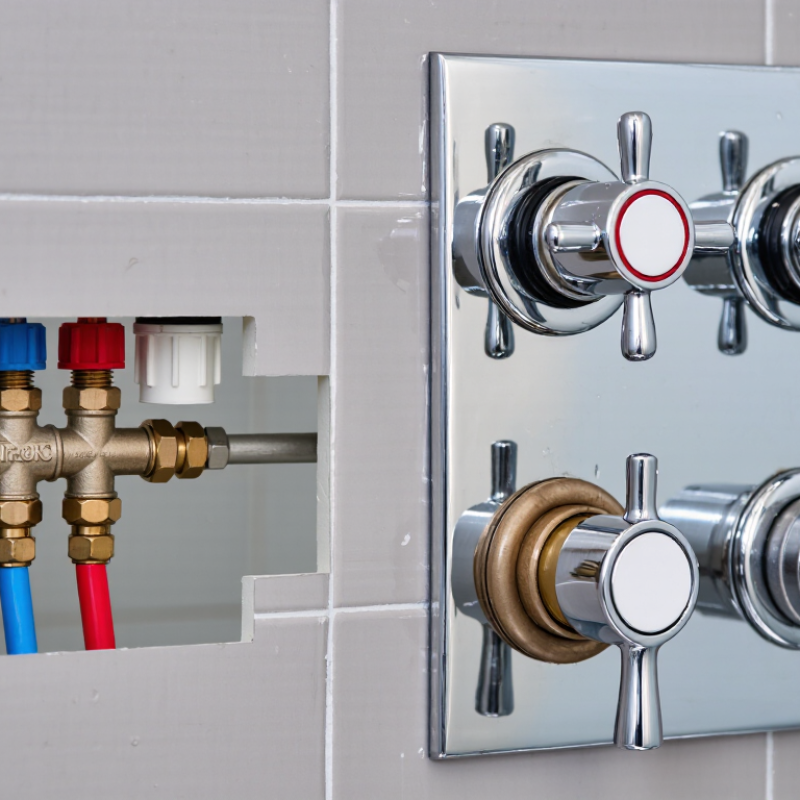
Shower Knobs control water flow, temperature, or both. They sit on the visible trim plate, but their real work happens behind the wall. When you turn a knob, it moves a stem, cartridge, or valve mechanism. That movement opens water passages and blends hot and cold supplies. The result should be a steady spray at a comfortable temperature.
Richard Trethewey, a master plumber and longtime plumbing expert, has said, “The shower valve is the heart of the shower.” That simple statement explains why the knob can feel small but matter greatly. A single knob often controls temperature and volume together. Two knobs usually separate hot and cold adjustment. Some modern systems use thermostatic valves, which maintain a selected temperature more precisely. Pressure-balancing valves also reduce sudden temperature changes when another tap runs.
Look closely at an older shower. You may notice a stiff turn, a slow drip, or a trim plate with mineral buildup. These details often point toward a worn cartridge, damaged seal, or poorly adjusted stop. I have found that users frequently blame the knob first. That assumption is not always correct.
The knob may only be the messenger. The hidden valve deserves attention.
This guide will explain the main Shower Knobs types, their internal parts, and their operating principles. It will also compare common failure signs and maintenance needs. One limitation remains: appearance alone cannot confirm compatibility. The valve brand, cartridge design, and installation depth must be checked carefully. Small differences can create frustrating results.
Shower knobs are hand-operated controls that regulate water flow and temperature. They connect to valves inside the wall, where water is mixed and directed toward the showerhead. A single knob often controls both functions. Turning it changes the temperature, while lifting or rotating it adjusts the flow. Small movements matter.
Two-knob systems usually separate hot and cold water. Users adjust each side until the temperature feels comfortable. The internal valve must balance pressure as water enters the pipe. Otherwise, a toilet flush or washing machine cycle may suddenly change the shower temperature. That uncomfortable surprise indicates a control or plumbing issue, not simply user error.
Some showers also include a diverter knob. It sends water to the showerhead, handheld sprayer, or tub spout. It does not usually control temperature. This distinction is easy to miss. I once assumed every knob performed the same job, but that assumption caused unnecessary adjustments. Clear markings help, although older controls may have faded labels.
A properly working knob should turn smoothly and respond predictably. If it feels stiff, mineral deposits may be restricting the cartridge. Do not force it. Gentle cleaning can help, but persistent dripping or sudden temperature changes require professional inspection. Turn off the water supply before removing any control parts, because hidden pressure can release unexpectedly.
Shower knobs regulate water temperature, water flow, or both by adjusting internal valves. The temperature references below show common residential guidance points for understanding how a temperature-control knob changes the mix of hot and cold water.
Comfort varies by person and plumbing system. A comfortable shower is commonly around 38–41°C, while 49°C (120°F) is a widely used residential anti-scald maximum at the fixture.
Shower knobs control two basic functions: water flow and temperature. Inside the wall, each knob connects to a valve that opens, closes, or adjusts water passages. Turning the flow knob clockwise usually reduces the stream. Turning it counterclockwise allows more water through.
A single-handle shower knob often controls both settings. Moving it upward may increase flow, while rotating it changes the temperature. Two-handle systems separate hot and cold water. The valve mixes these supplies before the water reaches the showerhead. Pressure-balancing valves help prevent sudden temperature changes when another fixture uses water. Thermostatic valves measure temperature more precisely and limit unsafe heat.
Small movements matter. A slight turn can change the spray from comfortable to uncomfortably hot. The result depends on household pressure, valve condition, and the water heater setting. A worn cartridge may cause dripping, stiff movement, or temperature swings. Do not ignore those signs. They can point to internal wear rather than a showerhead problem.
It is easy to assume every knob works the same way. That assumption can cause confusion. Some knobs regulate volume separately, while others combine volume and temperature. Check the valve instructions before removing anything. Shut off the water supply when servicing the control. If the valve is behind finished tile, professional inspection may prevent unnecessary damage.
One detail remains imperfect: even a correctly adjusted knob cannot compensate for unstable water pressure throughout the home.
Shower knobs control water flow, temperature, or both. Inside, a cartridge moves when you turn the handle. This movement opens passages for hot and cold water. The main system types are pressure-balancing, thermostatic, dual-handle, and diverter controls. A pressure-balancing valve adjusts hot water when cold-water pressure changes. It helps prevent sudden temperature spikes. A thermostatic valve senses temperature directly and maintains a selected setting. It usually offers finer control, especially in homes with changing water demand.
Dual-handle systems use separate controls for hot and cold water. They feel familiar, but temperature adjustment takes longer. Diverter controls send water between a showerhead, handheld spray, or tub spout. Some systems combine several functions in one trim plate. The underlying valve matters more than the visible knob. Look for compliance with ASSE 1016 performance requirements for pressure-balancing and thermostatic valves.
Water efficiency also depends on the showerhead. The U.S. Environmental Protection Agency’s WaterSense Specification for Residential Showerheads, Version 1.2, limits labeled models to 2.0 gallons per minute. Conventional federal limits allow up to 2.5 gallons per minute. The EPA estimates that an average family can save about 2,700 gallons annually with efficient showerheads. Real-world savings are messier. Low pressure, mineral buildup, and poor calibration can change performance. A valve may be technically advanced, yet still feel disappointing when installation depth or household pressure is wrong.
Shower knobs look simple, but their internal parts perform precise work. When you turn a knob, the handle moves a stem or cartridge inside the valve body. That movement changes the path of hot and cold water. In older designs, a rotating stem lifts or presses a valve seat. Modern designs often use a ceramic or pressure-balancing cartridge.
The cartridge contains small ports that align as the handle turns. These openings control water volume and temperature. Rubber seals and O-rings sit around the cartridge, preventing leaks between channels. They must remain flexible and properly seated. A damaged seal may cause dripping, stiffness, or water that changes temperature unexpectedly. I have found that a tiny grain of grit can affect the handle more than expected.
Many shower valves include a pressure-balancing spool. It responds when cold or hot water pressure changes, helping reduce sudden temperature swings. Thermostatic valves use a temperature-sensitive element instead. This element expands or contracts as water temperature changes, then adjusts the flow balance. Springs, retaining clips, and stop rings keep these parts aligned. Installation details matter. A cartridge installed slightly out of position may still operate, but poorly. That is easy to miss. I would not assume every hard-turning knob needs force; mineral buildup, worn seals, or an incorrect replacement part may be responsible.
Shower knobs control water flow, temperature, or both. Inside the valve, a cartridge or pressure-balancing mechanism moves when the knob turns. Hot and cold water then mix before reaching the showerhead. A stiff knob may indicate mineral buildup, worn seals, or a damaged cartridge. The first diagnosis is often wrong.
Begin with simple observations. Record temperature changes while turning the knob slowly. A sudden temperature swing suggests a balancing problem, not merely a loose handle. Water leaking from the handle usually points to a failed cartridge seal. Dripping from the showerhead after shutoff may indicate valve wear. The U.S. Environmental Protection Agency’s WaterSense specification limits efficient showerheads to 2.0 gallons per minute, compared with the federal maximum of 2.5 gallons. Reduced flow, therefore, is not automatically a defect.
Turn off the supply before removing any trim or handle. Photograph the valve assembly, then check the manufacturer’s service instructions for compatible internal parts. Never force a seized knob; broken stems can turn a small repair into wall damage. Clean removable screens with a soft brush and approved descaling methods. If water remains hot or cold after adjustment, a qualified plumber should test pressure and temperature. The U.S. Department of Energy reports that water heating represents about 18% of household energy use. A faulty shower valve can waste water, energy, and patience. One limitation remains: visual checks cannot reveal hidden corrosion inside the wall.
| Shower Knob Type | How It Works | Main Internal Part | Common Problem | Likely Cause | How to Identify It | Recommended Action | Difficulty |
|---|---|---|---|---|---|---|---|
| Single-handle pressure-balancing knob | One handle controls both water volume and temperature. A pressure-balancing mechanism adjusts the hot and cold water ratio when supply pressure changes. | Pressure-balancing cartridge or spool | Temperature changes when another fixture is used. | Restricted inlet screen, mineral buildup, worn cartridge, or unequal supply pressure. | Water temperature shifts when a toilet is flushed or a faucet is opened. | Clean accessible screens, confirm both supply valves are open, and replace the cartridge if cleaning does not restore stable operation. | Moderate |
| Single-handle thermostatic knob | A thermostatic element senses water temperature and automatically adjusts the hot and cold inlets to maintain a selected temperature. | Thermostatic cartridge | Water is consistently too hot, too cold, or slow to reach the selected temperature. | Incorrect temperature-limit setting, clogged filter, scale, or a failing thermostatic element. | The handle setting does not match the outlet temperature, even when supply pressure is stable. | Check the temperature stop and clean filters if accessible. Test the cartridge and replace it when it no longer responds correctly. | High |
| Two-handle shower knobs | Separate hot and cold knobs regulate each water supply independently through valves that open and close their respective passages. | Compression, ceramic-disc, or cartridge valve | A knob drips after the water is turned off. | Worn washer, damaged valve seat, deteriorated O-ring, or a worn cartridge. | Dripping continues from the showerhead or tub spout while both knobs are fully closed. | Shut off the water, remove the affected valve component, inspect seals and seats, and replace worn parts with correctly sized parts. | Moderate |
| Ceramic-disc knob | Two closely fitted ceramic discs rotate or slide to align water openings and control flow. The discs provide a tight seal when undamaged. | Ceramic-disc cartridge | The handle feels stiff, gritty, or difficult to turn. | Debris in the valve, mineral deposits, damaged discs, or a deteriorated seal. | Turning resistance is present throughout the handle movement, sometimes accompanied by a scraping sensation. | Do not force the handle. Shut off water, inspect and clean the cartridge if designed for service, or replace the cartridge if the discs are damaged. | High |
| Diverter knob | A diverter redirects water between outlets, such as a tub spout, fixed showerhead, and handheld shower. | Diverter valve, spool, or gate | Water comes from more than one outlet or will not switch outlets completely. | Worn diverter seals, scale buildup, debris, or an incorrectly adjusted valve. | Water continues to flow from the tub spout while the shower is running, or the selected outlet has weak flow. | Clean removable parts and check the diverter seal. Replace the diverter valve or cartridge if it cannot form a proper seal. | Moderate |
| Knob with a temperature limit stop | A mechanical stop limits how far the handle can rotate toward hot water to reduce the risk of scalding. | Adjustable rotational limit stop | The shower does not become warm enough, or the maximum temperature is too high. | Limit stop is incorrectly positioned, or the supply temperature has changed. | The handle reaches a firm stop before the desired temperature is reached, or the water feels dangerously hot. | Measure outlet temperature with a thermometer and adjust the stop according to the valve instructions. Do not remove safety limits without testing. | Moderate |
| Loose or spinning knob | The knob transfers hand movement to a stem or cartridge through a screw, adapter, or splined connection. | Handle screw, adapter, stem, or splines | The knob spins without changing water flow or temperature. | Loose retaining screw, stripped handle splines, damaged adapter, or broken valve stem. | The knob moves freely while the valve remains in the same operating position. | Remove the decorative cap, tighten the retaining screw if appropriate, and replace stripped hardware or the damaged valve component. | Low to Moderate |
| Leaking trim or escutcheon | The decorative plate covers the wall opening around the valve. It is not normally the primary water-control component. | Escutcheon gasket, sealant, or valve-body seal | Water appears behind the wall plate during or after a shower. | Failed gasket, missing sealant where required, loose trim, or a leak from the valve body or pipe connection. | Remove or loosen the trim according to the installation design and check whether water originates at the valve or from the wall opening. | Dry the area, identify the source, renew the appropriate gasket or seal, and obtain professional help if a concealed pipe or valve body is leaking. | High |
| Low-flow or restricted knob system | The knob opens the valve, but the actual flow also depends on supply pressure, valve passages, screens, and the shower outlet. | Cartridge passages, inlet screens, or flow restrictor | Flow is weak even when the handle is fully open. | Clogged aerating parts, blocked screens, partially closed stop valves, mineral deposits, or low household pressure. | Compare flow at the shower and another fixture. If only the shower is affected, inspect the shower outlet and valve screens first. | Clean the showerhead and accessible screens, verify stop valves are fully open, and inspect the cartridge if the restriction remains. | Low to Moderate |
| Knob that is hard to turn | Normal handle movement should operate the valve without excessive force; resistance is transmitted to the stem or cartridge. | Valve stem, cartridge, O-rings, or internal seals | The knob requires excessive force or becomes progressively harder to operate. | Mineral deposits, dry or swollen seals, corrosion, misalignment, or a failing cartridge. | Movement is stiff in one direction or across the full operating range, sometimes with squeaking or grinding. | Avoid lubricants not approved for potable-water plumbing. Inspect the valve and use a compatible replacement cartridge when cleaning is ineffective. | Moderate |
| Knob that causes temperature fluctuations | The valve mixes hot and cold water while maintaining a selected balance through a pressure-balancing or thermostatic mechanism. | Mixing cartridge, balancing spool, or thermostatic element | Water alternates between hot and cold during normal use. | Changing supply pressure, blocked screens, a stuck balancing spool, scale, or a damaged cartridge. | Temperature changes without moving the knob, especially when another fixture is turned on or off. | Check household pressure and inlet screens, flush or clean serviceable components, and replace the mixing cartridge when necessary. | High |
| General diagnostic and safety check | Shower controls should regulate flow and temperature without leaks, excessive force, or unsafe outlet temperatures. | Complete valve assembly and connections | Persistent leakage, sudden temperature changes, wall moisture, or unsafe water temperature. | Internal valve failure, concealed plumbing leak, incorrect installation, or a water-heater or supply issue. | Observe the valve during operation, check adjacent surfaces for moisture, and measure outlet temperature carefully. | Turn off the water when a leak may be concealed, protect against scalding, and contact a qualified plumber for in-wall repairs or unsafe conditions. | High |