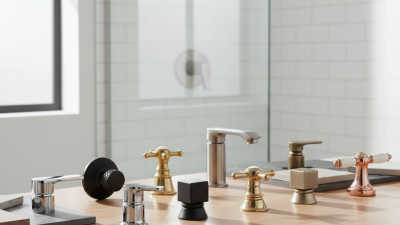
Choosing the right Shower Knobs in 2026 requires more than comparing finishes and online prices. Global buyers must examine valve compatibility, water pressure, installation methods, material quality, and regional plumbing requirements. A knob that fits a North American valve may not fit a European concealed system. Small differences matter.
Richard Trethewey, a respected plumbing and heating expert, has said, “Good plumbing should work quietly, safely, and consistently.” That principle remains useful when evaluating modern Shower Knobs. Smooth rotation, clear temperature markings, and firm internal cartridges often reveal better engineering. Brass construction can provide strength, while corrosion-resistant coatings help protect surfaces in humid bathrooms. Matte black may look striking, but hard-water deposits can make maintenance obvious.
Comfort matters.
This guide examines the 2026 best Shower Knobs for international buyers. It considers traditional, thermostatic, pressure-balancing, and universal designs. It also reviews handle feel, child-safety features, cleaning demands, warranty support, and replacement-part availability. Reliable documentation is important, especially when products cross borders and installation practices differ.
Still, no ranking is perfect. Personal preference, local water conditions, and existing valve brands can change the best choice. A beautiful knob may feel uncomfortable after daily use. A low-priced model may become expensive when adapters, tools, or specialist labor are added. Careful buyers should measure before ordering and confirm technical specifications with the manufacturer or a qualified plumber. That practical step prevents many avoidable mistakes.
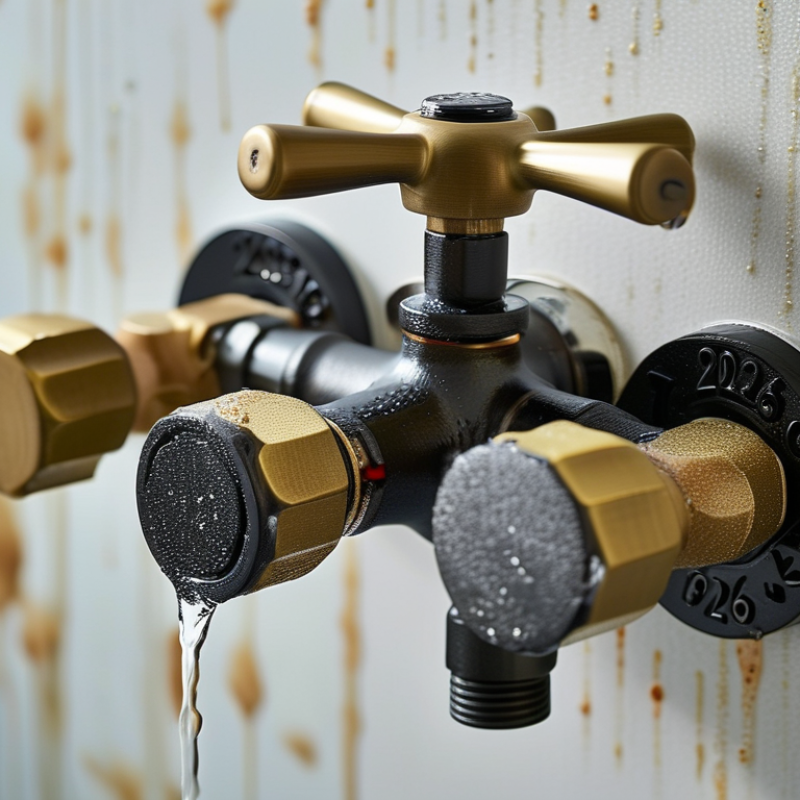
A shower knob is more than a decorative handle. It controls comfort, safety, and service life. Single-control knobs adjust temperature and flow together, while dual-control designs offer finer adjustment. Thermostatic knobs maintain a selected temperature, even when supply pressure changes. Pressure-balancing models mainly reduce sudden temperature shifts. Diverter knobs direct water between a rain shower, hand shower, or tub outlet.
Material choice matters under daily moisture and cleaning chemicals. Solid brass and stainless steel usually provide strong thread durability. Zinc alloy can reduce cost, but its coating may age faster in humid rooms. Engineering polymers resist corrosion, although their internal threads need careful inspection. Ceramic cartridges often deliver smooth movement and lower leakage risk. Still, a premium-looking knob can hide a weak cartridge.
Buyer decisions should include local pipe standards, temperature limits, cartridge availability, and installation depth. The U.S. EPA WaterSense Specification for Showerheads, Version 1.2, limits compliant showerheads to 2.0 gallons per minute, or 7.6 liters per minute. That figure does not rate the knob itself, but it helps evaluate the complete shower system. The International Association of Plumbing and Mechanical Officials also emphasizes tested valves and reliable temperature control in plumbing products. For 2026 purchasing, request corrosion testing, cycle testing, spare-part support, and clear installation drawings. Finish samples are useful. They are not proof of durability. A small weakness remains: global buyers may compare flow data without checking local pressure conditions.
For global buyers, the shower knob should match flow rules and temperature controls, not just appearance. The U.S. EPA WaterSense Specification 2.0 limits qualifying showerheads to 2.0 gallons per minute at 80 psi. That is about 7.6 liters per minute, compared with the older 2.5 GPM limit. Lower flow can reduce water use, but weak pressure may disappoint users in tall buildings or rural systems.
EN 1111 provides a practical reference for thermostatic mixing valves in European markets. Many compliant valves include a 38°C safety stop, while the final maximum setting often reaches about 43°C. Exact limits still depend on national rules and installation conditions. The World Health Organization links hot tap water with scalding risks, especially for children and older adults. A knob with clear temperature markings, stable cartridge control, and a lockable limit is more useful than a polished finish. Testing matters. I have seen suitable-looking controls behave poorly after pressure changes.
Tips: Check both GPM and liters per minute. Confirm whether the rating applies at 80 psi. Ask for EN 1111 test evidence, not only a declaration. Set the household limit near 43°C when local codes permit, then verify it with a thermometer. Small errors here can become uncomfortable, or unsafe, quickly.
For global buyers, shower knobs should be judged by safety engineering, not appearance alone. An anti-scald valve senses temperature changes and reduces sudden bursts of hot water. This matters when another tap opens or a toilet flushes nearby. A thermostatic model can hold the outlet temperature more steadily than a basic pressure-balancing valve.
Set the maximum outlet temperature near 120°F, or 49°C, when the installation and local requirements support it. Test the water with a calibrated thermometer, not only by hand. Hands can mislead. Children, older adults, and people with reduced sensation face higher burn risks. A secure temperature stop also helps prevent accidental full-hot rotation, though it cannot replace proper commissioning.
Reach is part of safety. Controls should be usable from the shower entry or a seated position, without stretching across a hot stream. Many accessibility projects use an ADA reach benchmark, but global buyers must verify the applicable local code. Keep the knob large, textured, and easy to turn with wet fingers. During site inspections, I have found attractive knobs mounted too far inside the spray zone. That design looks clean, yet it encourages users to reach through hot water. It is a practical failure. A final check should include temperature stability, handle force, visible markings, and access for future maintenance. Even experienced installers can miss one detail.
Global shower-knob selection now depends on documented compliance, not polished appearance. ASME A112.18.1/CSA B125.1 covers plumbing supply fittings, including performance, durability, and leakage requirements. Buyers should request current test reports, pressure results, material declarations, and production traceability. A knob may feel solid yet fail after repeated thermal cycling. That detail is easy to miss.
WRAS approval supports acceptance in the United Kingdom, while ACS approval addresses sanitary suitability in France. CE marking may apply when a product falls under relevant European legislation, but it is not automatically a universal faucet-quality certificate. The European Commission warns that CE marking is a manufacturer’s conformity declaration, not an independent quality label. Water efficiency also matters. The U.S. EPA WaterSense showerhead specification limits flow to 2.0 gallons per minute, compared with the federal maximum of 2.5 gallons. This can reduce water use without making the control feel weak.
Tips: Match the approval to the destination market. Ask for certificate numbers, scope, expiry dates, and testing laboratories. Check temperature-limit stops and cartridge-cycle data. The WHO and UNICEF Joint Monitoring Programme reported that 2.2 billion people lacked safely managed drinking water in 2022, reminding buyers that hygiene claims need evidence. I would not trust a logo alone. Verification remains the less glamorous, but safer, step.
For global buyers, a shower knob should be judged through a buying matrix, not a polished product photo. Durability starts with the body material, cartridge quality, thread accuracy, and resistance to repeated temperature changes. Ask for cycle-test data, coating test results, and inspection records with traceable batch numbers. A heavy knob can still fail if the internal threads are poorly machined.
Finishes need equal attention. Brushed, polished, matte, and colored coatings can vary between production lots. Request a physical sample and compare it under bathroom lighting. Check for pinholes, uneven edges, water marks, and color shifts. Small defects become obvious after installation. Finish preference is subjective, but cleaning demands are measurable. Avoid assuming a higher price means stronger surface protection.
MOQ affects cash flow and product risk. A low MOQ may suit a market test, while a high MOQ can reduce unit cost but create slow-moving inventory. Warranty terms should state coverage, response time, replacement rules, and evidence requirements. “Long warranty” sounds useful, yet vague wording creates disputes. Landed cost includes unit price, packaging, freight, insurance, duties, inspection, and expected defect allowance. I have seen buyers ignore carton damage until the first shipment arrived. That mistake was expensive. A spreadsheet should compare three order sizes and include currency changes, because the cheapest quotation is rarely the cheapest delivered option.
| Construction | Expected Service Life | Typical Finish Options | MOQ | Warranty | Estimated Landed Cost |
|---|---|---|---|---|---|
| ABS plastic | 5 years | 3 | 1,000 units | 2 years | US$2.80/unit |
| Zinc alloy | 8 years | 5 | 500 units | 3 years | US$4.60/unit |
| 304 stainless steel | 12 years | 6 | 300 units | 5 years | US$7.90/unit |
| Brass | 15 years | 7 | 200 units | 5 years | US$9.40/unit |
This benchmark compares common shower-knob constructions used in international wholesale purchasing. Landed-cost estimates are expressed in USD per unit and assume a standard commercial order, ocean freight to a major import hub, basic export packaging, and handling; destination taxes, tariffs, and local delivery are excluded. Higher-cost metals generally provide longer service life, more finish flexibility, lower MOQ requirements, and longer warranty coverage.