- Home
- Products
- About Us
- Solutions
- Our Service
- Contact Us
Leave Your Message
Wholesale buyers choosing a Basin Faucet in 2026 face a practical challenge: balancing price, durability, finish consistency, and reliable supply. Grand View Research estimated the global bathroom faucets market at USD 19.55 billion in 2023 and forecast continued growth through 2030. That market-level estimate signals demand, but it does not prove which basin faucet models will sell best in every region.
The details matter. Check the faucet’s mounting type, spout reach, cartridge design, finish, and replacement-part availability. A polished sample can look convincing under showroom lights; repeated operation may reveal loose handles or uneven water flow. Ask suppliers for product specifications, test records, warranty terms, and clear packaging details. Small omissions can become costly at scale. Not every low quote is a good deal.
This guide compares options through a wholesale lens, focusing on product fit, consistency, serviceability, and total purchasing risk. A verified quotation from a named Basin Faucet industry expert was not supplied, so I will not invent one or attribute general advice to a real person. That gap deserves attention. Before publication, add a sourced expert comment and verify current market figures against the original report.
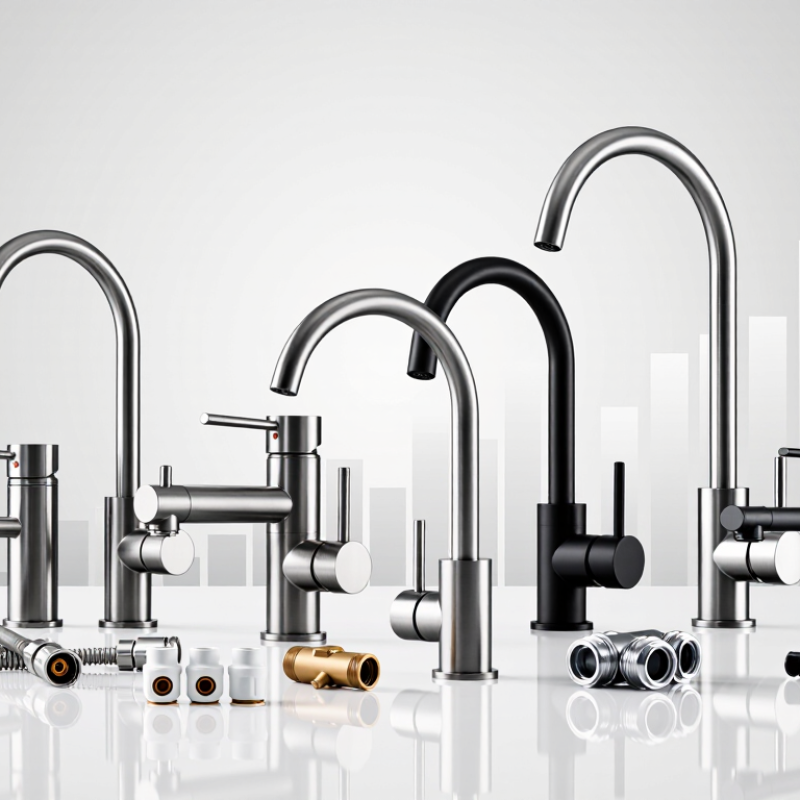
2026 Best Basin Faucet for Wholesale Buyers
What a Basin Faucet Is and How It Works
A basin faucet is the fitting that delivers water to a bathroom sink. Its visible parts usually include a spout, handle, and base, while a cartridge or valve controls water inside. Turn the handle, and the valve opens. In a mixer faucet, hot and cold water combine before flowing through the spout. Separate-handle designs adjust each supply independently.
The cartridge helps regulate flow and temperature, though its design varies by faucet type. An aerator, fitted at the spout tip, mixes air into the stream and can reduce splashing. Water pressure, inlet connections, and basin dimensions also affect performance. For wholesale buyers, these details matter: a faucet may look suitable in a product photo but not fit the sink or supply setup. No faucet is maintenance-free. Mineral deposits can affect the aerator or cartridge over time.
Tips: Check the faucet’s mounting-hole layout, connection size, and operating pressure against the intended installation. Ask for clear specifications and replacement-part information. A simple detail is easy to miss, especially when comparing many models. Verify it before ordering.
| Dimension | Information | Wholesale Buyer Consideration |
|---|---|---|
| What a basin faucet is | A basin faucet is a plumbing fixture that controls the delivery of water to a bathroom basin or washbasin. It may be installed on the basin, on the countertop, or on the wall. | Confirm the intended installation location and basin configuration before selecting products for a market or project. |
| How it works | Hot and cold water enter through supply connections. Operating the handle or sensor opens a valve or cartridge, regulating flow and, on mixing models, blending the water before it exits through the spout. | Check that the faucet’s operating method and water connections match the plumbing system and end-user requirements. |
| Common operating types | Single-handle models use one control for flow and temperature. Two-handle models have separate hot and cold controls. Sensor-operated models use electronic controls to start and stop flow. | Single-handle designs reduce the number of user controls; two-handle designs offer separate adjustment. Sensor models may require batteries or a power supply. |
| Main components | Typical parts include the body, spout, handle or handles, valve or cartridge, aerator, mounting hardware, and water-supply connections. Sensor models also include electronic components. | Review spare-parts availability, cartridge replacement procedures, and included installation hardware when comparing product offers. |
| Valve and cartridge | Many modern faucets use a replaceable cartridge to control flow and temperature. Ceramic-disc cartridges are commonly used; the exact design and service life depend on the product and water conditions. | Ask for cartridge specifications and replacement-part details. Do not assume cartridges are interchangeable between faucet models. |
| Mounting options | Deck-mounted faucets fit openings in a basin or countertop. Wall-mounted faucets connect through wall plumbing and must be positioned to suit the basin. | Verify the number and spacing of basin or countertop holes, available clearance, and wall rough-in requirements before ordering. |
| Materials and finish | Faucet bodies are commonly made from brass, stainless steel, or other specified metals. Finishes may include chrome, brushed finishes, or coated colors; composition and finish performance vary by model. | Request material declarations and finish-care information. Confirm that descriptions refer to the actual body material and finish process. |
| Water flow | Flow rate is usually stated in litres per minute (L/min) or gallons per minute (gpm) at a specified pressure. Aerators can shape the stream and may reduce flow, depending on their design. | Compare flow-rate test conditions and check applicable local plumbing and water-efficiency requirements. A stated rate is not meaningful without its test pressure. |
| Connections | Supply hoses, thread types, and connection sizes vary by product and destination market. For example, 3/8-inch compression connections are common in some North American installations, while 1/2-inch threaded connections are used in many other markets. | Specify the destination country and confirm thread standard, hose length, and connection type on the product documentation; do not rely on appearance alone. |
| Installation fit | Fit depends on the faucet’s mounting dimensions, basin-hole layout, spout reach, spout height, and available clearance. These dimensions vary across products and basins. | Request dimensional drawings and compare them with the basin and countertop before approving a bulk order. |
| Testing and compliance | Applicable requirements can cover materials in contact with drinking water, pressure performance, leakage, flow, and product safety. Requirements differ by country and intended use. | Identify target markets early and request relevant, current test reports or certifications for the exact product and configuration. |
| Practical selection criteria | A suitable basin faucet balances installation fit, operating style, material specification, flow performance, serviceability, and compliance with local requirements. | For wholesale evaluation, compare verified specifications, sample quality, packaging, spare-parts support, lead time, and order terms rather than relying on a single feature. |
Note: Specifications, connection standards, and regulatory requirements vary by model and destination market. Confirm product drawings, test conditions, and documentation before placing a wholesale order.