Choosing the best Bath Fittings is not only a style decision. It affects daily comfort, water use, cleaning, and whether a renovation works with your existing plumbing. A polished faucet may look right beneath warm bathroom lighting, yet feel awkward if its handle hits the backsplash. Small details matter.
The U.S. Environmental Protection Agency’s WaterSense program reports that certified bathroom sink faucets use at least 20% less water than standard models while maintaining performance. That figure makes flow rate worth checking alongside finish and price. The National Kitchen & Bath Association’s 2024 Bath Trends Report also highlights practical priorities such as accessibility, wellness, and easier-to-maintain spaces. These trends are useful, but they do not replace measuring your own room.
Richard Trethewey, longtime plumbing expert on This Old House, offers a practical perspective: fixture choices should suit the plumbing and the way people use the space. This guide distills that principle into one reminder: “Choose for the plumbing, then refine for style.” Before buying, check connection sizes, mounting type, spout reach, handle clearance, and water-pressure requirements. Compare warranties and replacement-part availability, too. A finish can be beautiful. It can also show fingerprints more than expected. That is easy to overlook in a showroom.
The right choice balances reliable performance with the bathroom’s proportions and routines. Some preferences are personal, and even careful planning may miss a small annoyance. A tape measure helps. So does thinking through a normal morning at the sink.
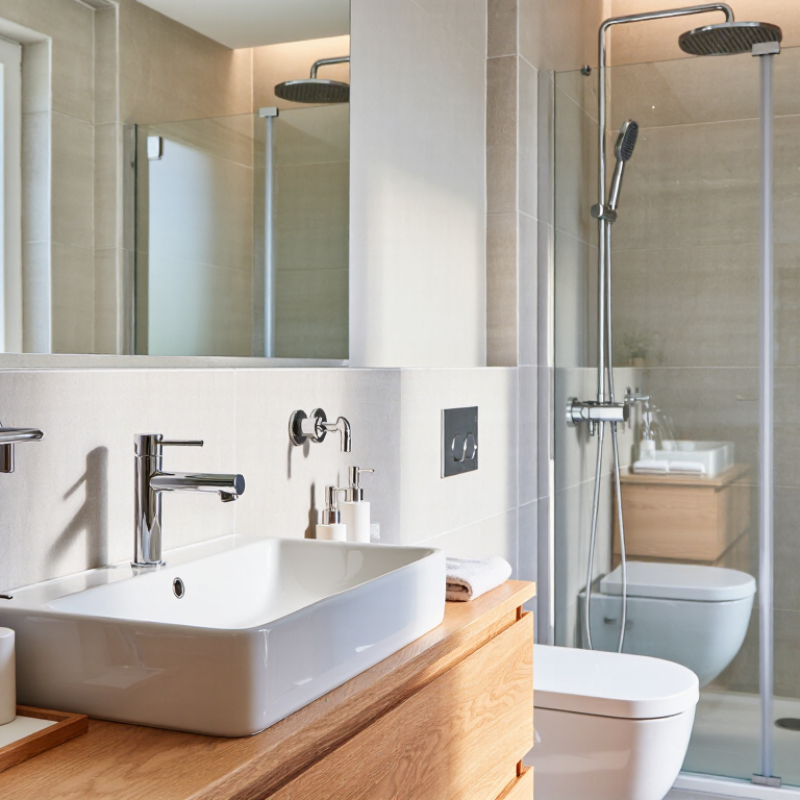
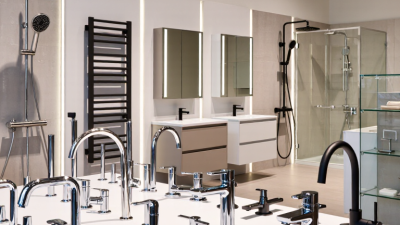
Bath fittings are the controls and outlets that make a bathroom usable, not just decorative. A basin tap may be a pair of separate hot and cold taps, or a mixer that blends water through one spout. Wall-mounted and deck-mounted versions suit different basin layouts, so check tap-hole positions before choosing. A bath spout fills the tub, while a diverter can direct water to a shower handset. For showers, the valve controls flow and temperature; the showerhead shapes the spray. A thermostatic valve helps maintain a steadier temperature when water pressure changes. Small details matter.
The best type depends on who uses the bathroom, available space, and the existing plumbing. Check water pressure and pipe connections before buying, since a fitting designed for a different setup may perform poorly. Finishes also affect upkeep: polished surfaces can show water spots, while textured finishes may need more careful cleaning. Ceramic-disc cartridges are common in modern taps and can reduce drips, but they still need proper installation. A handle that looks elegant can feel awkward with wet hands, so consider grip and reach. I sometimes give more weight to easy maintenance than appearance; that may not suit every bathroom. Not always. When replacing fittings, confirm clearances around the basin, bath, and shower, and ask a qualified installer if pipework or valves need changing.
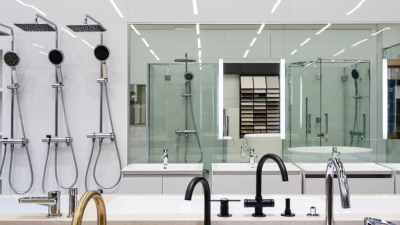
Before choosing bath fittings, map the room as it is, not as a showroom photo suggests. Measure the doorway, vanity, shower, and tub, then mark door swings and walking routes. Record existing pipe positions; moving them can add cost and disrupt a compact renovation. Measure twice. Check whether cabinet doors or drawers collide with taps, and whether a shower handle is reachable before stepping under the spray. A tape measure beats guesswork. Also note who uses the bathroom, when, and how: shared morning routines may call for separate basins, while a handheld shower can make rinsing easier. Small details matter.
Match fittings to actual use and water pressure. The U.S. EPA’s WaterSense guidance sets a 2.0-gallon-per-minute limit for labeled showerheads, compared with the federal standard of 2.5 gallons per minute; EPA estimates an average family can save 2,700 gallons yearly. WaterSense bathroom faucets are limited to 1.5 gallons per minute, versus the standard 2.2. These figures help compare flow, but they do not tell you whether a fixture feels comfortable in your home. Check the manufacturer’s pressure range and the distance between the spout and basin, so water lands in the bowl rather than on the counter. A plan can still miss a wet towel, a cold handle, or a tight reach. Recheck those details before ordering.
| Bathroom Area or Need | What to Assess | Fitting to Consider | Practical Selection Guidance | Measurements and Checks |
|---|---|---|---|---|
| Overall room layout | Door swing, window positions, existing pipe routes, and clear walking space. | Compact or wall-mounted basin and shower fittings where space is limited. | Choose fittings that do not obstruct doors, drawers, or the route between fixtures. Confirm that wall-mounted products can be properly supported and connected. | Measure the room and mark the door swing, fixture footprints, and plumbing locations on a simple plan before buying. |
| Shower enclosure | Available floor area, screen or door opening, entry access, and shower-user needs. | A fixed screen, sliding door, or hinged enclosure; a handheld shower or adjustable shower rail. | A sliding door can avoid the outward swing of a hinged door. Select an adjustable rail if different users need to set the showerhead at different heights. | Check the manufacturer’s required opening dimensions and measure walls for plumb and level. Confirm that the door or screen will clear nearby fittings. |
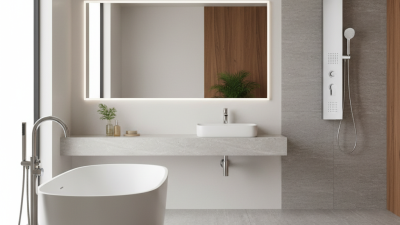
| Bath and bath taps | Bath shape, tap-hole arrangement, access to pipework, and whether the bath is freestanding or built in. | Deck-mounted, wall-mounted, or floor-mounted bath taps, chosen to suit the bath and plumbing. | Check the spout reaches over the bath without splashing onto the rim or surrounding floor. Ensure service connections remain accessible after installation. | Verify the tap-hole count and spacing against the fitting instructions; confirm spout reach, bath rim position, and pipe locations. |
| Washbasin and basin taps | Basin depth, tap-hole configuration, counter space, storage, and the position of the waste. | A single-lever mixer, separate hot and cold taps, or a wall-mounted tap compatible with the basin. | Match the spout height and reach to the basin so water falls into the bowl rather than onto the rim. Check that the handle can be used without hitting a wall or mirror. | Compare tap-hole diameter and spacing, basin depth, spout reach, and the fitting’s specified working pressure. |
| Water pressure and temperature | Available hot- and cold-water pressure, water-heating system, and whether pressure varies at different outlets. | A mixer or thermostatic shower valve rated for the home’s water system and pressure range. | Check product compatibility before purchase. A thermostatic valve helps regulate outlet temperature, but it must be installed and supplied according to its instructions. | Use the manufacturer’s minimum and maximum pressure specifications. Ask a qualified plumber to assess the system if pressure is unknown or inconsistent. |
| Accessibility and ease of use | Grip, reach, mobility, balance, and whether fittings will be used while seated or standing. | Lever-operated controls, a handheld shower on a rail, and controls positioned within comfortable reach. | Choose controls that are easy to identify and operate. Plan support rails and any seating with suitable structural fixing; seek professional advice for accessibility requirements. | Check reach and operating positions with intended users. Follow local building requirements and product installation instructions. |
| Cleaning and maintenance | Cleaning access, hard-water deposits, finish-care requirements, and access to valves or cartridges. | Fittings with accessible service parts and finishes suitable for the household’s cleaning routine. | Check care instructions before choosing a finish. Avoid cleaners that the manufacturer says may damage the surface, and keep service points accessible. | Review cleaning and maintenance guidance, cartridge availability, and the space needed to reach connections or service panels. |
| Water efficiency | Household water-use priorities, local efficiency labels, and the performance required from each outlet. | Water-efficient taps or shower fittings with flow information provided by the manufacturer. | Compare stated flow rates under the same test conditions. Confirm that a flow-limiting fitting is compatible with the water pressure and the intended use. | Check the product’s published flow rate and any applicable local water-efficiency rating before purchase. |
| Installation and future access | Wall construction, pipe connections, required access panels, and whether the project is a replacement or a remodel. | Fittings suited to the existing connections, or products planned alongside any pipework changes. | Do not assume existing pipe positions or connections will suit a new fitting. Plan access for repairs before enclosing pipework or valves. | Compare connection sizes, installation depth, fixing requirements, and clearances with the fitting’s technical documentation; use a qualified installer where needed. |
Comparing materials, finishes, and design styles
Material affects how fittings feel, wear, and respond to regular cleaning. Brass is commonly used for taps and valves because it is durable and easy to shape. Stainless steel offers a crisp, practical look, though its surface can still show water marks. Check the underside and any exposed joints. Small details matter. Ask what the fitting is made from, not just what its surface looks like. A thin decorative coating may not age like a solid material, and care instructions can vary.
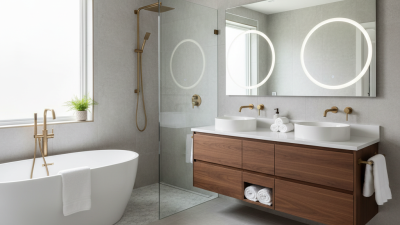
Finish changes the room’s mood and daily upkeep. Polished chrome reflects light and suits many bathrooms, but fingerprints and droplets can stand out. Brushed finishes soften glare and may disguise minor marks. Matte black creates contrast, yet limescale can be more noticeable in hard-water areas. Keep cleaning products in mind. For style, traditional crosshead taps can complement panelled baths, while simple lever handles often suit contemporary spaces. Matching every fitting can look orderly, but a carefully repeated finish is usually enough. I would not chase a perfect match at the expense of comfort; a handle that feels awkward gets noticed every day.
Before choosing a bath fitting, check the existing plumbing, not just its finish. Measure basin-hole spacing, tap centers, pipe threads, and the distance from the wall to the valve. For showers, confirm the valve rough-in, access-panel clearance, and whether the trim kit matches the valve. A beautiful handle is useless if its cartridge is incompatible. Small details matter. Check water pressure, too. Low pressure can make some flow-limiting fittings feel weak; high pressure may cause splashing or noise.
Water efficiency needs a performance check, not guesswork. EPA WaterSense sets a 2.0-gallon-per-minute limit for labeled showerheads. It estimates an average family can save 2,700 gallons annually by switching to one. For bathroom faucets, the WaterSense specification caps flow at 1.5 gallons per minute, compared with the common 2.2-gallon baseline. Don’t choose by flow rate alone: inspect the spray pattern, aerator access, and replacement-part availability. Installation can change the calculation. A kinked supply hose or poorly seated washer may cause leaks or weak performance. Read the dimensional sheet, then verify measurements on site; older plumbing is rarely perfectly square. That check is easy to skip.
Compare WaterSense-labeled flow-rate limits with U.S. federal maximums for bathroom faucets and showerheads.
Lower flow rates can reduce water use. WaterSense limits are 1.5 gallons per minute (gpm) for bathroom faucets and 2.0 gpm for showerheads; the corresponding U.S. federal maximums are 2.2 gpm and 2.5 gpm. Before buying, also check mounting-hole spacing, supply connections, water pressure, and the fitting’s installation requirements. Flow rates are specified at different test pressures: 60 psi for faucets and 80 psi for showerheads.
Durability, maintenance, and cost matter more than a low shelf price. Compare the fitting, installation, replacement parts, and cleaning effort over its expected service life.
The U.S. Environmental Protection Agency’s WaterSense specification sets a maximum flow of 1.5 gallons per minute for labeled bathroom sink faucets, compared with the federal standard of 2.2 gallons. EPA estimates that WaterSense faucets can save an average family 700 gallons of water annually. Small details matter.
For durability, check the body material, finish-care instructions, warranty, and whether replacement cartridges are available. A shiny surface alone does not prove long service life. In hard-water areas, mineral deposits can build up around the spout and handles; gentle cleaning may help protect the finish. Avoid assuming that a heavier fitting will last longer. A low-cost model can become expensive if parts are difficult to source or its finish needs frequent care.
Tips: Before buying, note the faucet’s flow rate and your water conditions. Ask how to replace the cartridge and what cleaners are safe. Compare the purchase and installation price with likely maintenance costs. EPA WaterSense, Bathroom Faucets, provides useful flow and water-saving figures; actual savings depend on household use.