


Top 10 Stainless Steel Shower Enclosure Connectors Explained

Stainless Steel Shower Enclosure Connector Glass Hardware plays an essential role in modern shower enclosures. It ensures structural integrity and enhances aesthetic appeal. Understanding each connector's specific function and application is crucial. This knowledge guarantees a functional and beautiful shower space. Proper selection of Shower Hardware provides robust support and contributes to a sleek, modern design.
Key Takeaways
- Stainless steel connectors make shower enclosures strong and look good.
- Wall-to-glass connectors attach glass to walls for stability and a modern look.
- Glass-to-glass connectors join glass panels at different angles to form corners.
- U-channels and support bars add extra strength to large glass panels.
- Shower door hinges and handles help doors open smoothly and add to the bathroom's style.
- Minimalist clips and standoffs hold glass with very little visible hardware.
- Gaskets and seals stop water leaks and protect glass panels from damage.
- Choose the right hardware based on glass thickness, weight, and your style preference.
Understanding Wall-to-Glass Stainless Steel Shower Enclosure Connector Glass Hardware

Wall-to-glass connectors form the backbone of many modern shower enclosures. They directly link glass panels to adjacent wall structures. This connection ensures stability and defines the enclosure's shape. These components are critical for both safety and design.
Wall-to-Glass Clamps and Hinges
Securing Fixed Glass Panels
Wall-to-Glass Clamps firmly secure fixed glass panels to walls. Installers use these clamps to create stationary sections of a shower enclosure. They hold the glass in place, preventing movement. Selecting clamps specifically designed for the glass panel's thickness and weight is crucial.Always consult manufacturer specifications. This ensures the chosen clamps adequately handle the required load.
Attaching Hinged Shower Doors
Wall-to-Glass Hinges allow shower doors to pivot smoothly. These hinges attach the door directly to a wall. They facilitate easy opening and closing. Different hinge types exist, including pivot hinges and wall-mount hinges. Each type offers specific operational characteristics. For optimal performance, consider the door's weight and width.
| Hinge Configuration | Maximum Door Capacity (lbs) | Maximum Door Width (inches) |
|---|---|---|
| 2 hinges | 110 | 36 |
| 3 hinges | 140 | 36 |
Another common specification for hinges indicates a maximum weight capacity of 50 KG and a maximum width of 910 mm.
Benefits of Wall-to-Glass Connections
Robust Support and Stability
Wall-to-glass connections provide robust support and stability for shower enclosures. They ensure the glass panels remain secure and rigid. This structural integrity is paramount for user safety and the enclosure's longevity. Industry standards guide the design and testing of these connections. For example, the E1300-24 Standard Practice determines the load resistance of glass in buildings. The E998-19(2025) Standard Test Method evaluates the structural performance of architectural glass products under static loads. These standards ensure the stability of glass installations. Other relevant standards include:
- E3401/E3401M-24 Standard Practice for Design and Performance of Laminated Glass Subject to Hydrostatic Loads: This practice addresses laminated glass performance under specific load conditions.
- E3491-25 Standard Practice for Determination of Laminated Glass Effective Thickness: Understanding effective thickness is vital for accurate structural calculations.
- E997-15(2021) Standard Test Method for Evaluating Glass Breakage Probability Under the Influence of Uniform Static Loads by Proof Load Testing: This standard helps predict glass breakage likelihood under loads.
Clean and Modern Aesthetic
Wall-to-glass connections contribute significantly to a clean and modern aesthetic. They minimize visible hardware, creating a frameless or semi-frameless look. This design choice enhances the bathroom's spacious feel. The sleek appearance of Stainless Steel Shower Enclosure Connector Glass Hardware complements contemporary decor.
Variety of Finishes and Styles
Manufacturers offer wall-to-glass connectors in a variety of finishes and styles. Common options include brushed, polished, and matte black. PVD coatings also provide unique aesthetic choices. These diverse finishes allow seamless integration with existing bathroom fixtures. They enable customization to match specific design preferences.
Glass-to-Glass Stainless Steel Shower Enclosure Connector Glass Hardware for Corners
Glass-to-glass connectors are essential for creating multi-panel shower enclosures. They join glass panels at various angles, forming the enclosure's structure. These specialized fittings ensure stability and maintain the frameless aesthetic.
90-Degree Glass-to-Glass Clamps
Connecting Two Fixed Glass Panels
90-degree glass-to-Glass Clamps connect two fixed glass panels. They create a secure corner in ashower enclosure. Installers use these clamps when panels meet at a right angle. The clamps hold the glass firmly, preventing movement.
Forming a 90-Degree Corner
These clamps are crucial for forming a precise 90-degree corner. They provide structural integrity to the enclosure. For durable 90-degree glass-to-Glass Clamps,Duplex 2205 Stainless Steel is a common material specification. This marine-grade alloy contains 22% chromium, 3% molybdenum, and 5-6% nickel. It offers superior strength and exceptional corrosion resistance. This is especially true in harsh outdoor and coastal environments, and around swimming pools. It provides more than double the yield strength of standard austenitic stainless steel. Finishes like electrostatically applied powder-coated and oven-cured Matte Black also contribute to durability. They provide scratch and weather resistance. High Quality Plated Solid Brass is another common material specification for these clamps.
135-Degree Glass-to-Glass Clamps
Joining Angled Glass Panels
135-degree glass-to-Glass Clamps join glass panels at an obtuse angle. They create a more open and spacious feel than 90-degree corners. These clamps are vital for non-standard shower designs.
Accommodating Unique Shower Designs
These clamps accommodate unique shower designs. They allow for angled walls and custom layouts. Different clamps support various glass thicknesses.
| Manufacturer/Product | Glass Thickness Range |
|---|---|
| Glassupply.com 135° Square Glass-to-Glass Railing Clamp | 1/2" (12 mm) – can accommodate 9/16" (13.5 mm) glass panels |
| CRL GCB635BR Polished Brass 135 Degree Junior Traditional Style Glass-to-Glass Clamp | 1/4" (6 mm) only |
| Glass Distributors Inc. White Square 135 Degree Glass-to-Glass Clamp - SGC135W | 5/16" to 1/2" (8 to 12 mm) |
| Dulles Glass Polished Chrome Square 135 Degree Glass-to-Glass Clamp | 5/16" (8 mm) to 1/2" (12 mm) |
180-Degree Glass-to-Glass Clamps
Connecting Panels in a Straight Line
180-degree glass-to-Glass Clamps connect panels in a straight line. They extend a glass wall or partition. These clamps create a seamless appearance between two glass sections.
Creating Continuous Glass Walls
These clamps are ideal for creating continuous glass walls. They maintain a uniform look across multiple panels. The ASC188 180-degree movable glass-to-glass panel clamp supports a glass thickness ranging from 3/8" to 1/2". Modexo's square 180-degree glass-to-glass movable transom clamps accommodate glass thicknesses from 5/16" to 1/2". They have a weight-bearing capacity of 62-92 lbs when using 2-3 hinges. This Stainless Steel Shower Enclosure Connector Glass Hardware ensures both strength and aesthetic continuity.
Supporting Elements: U-Channels and Support Bars
Shower enclosures often require additional components for comprehensive support and stability. U-channels and support bars play crucial roles in securing glass panels and preventing unwanted movement. These elements ensure the long-term integrity and safety of the shower structure.
U-Channels for Glass Support
U-channels are versatile components. They provide continuous support along the edges of fixed glass panels. Their U-shaped profile cradles the glass, distributing weight evenly and offering a clean, minimalist look.
Supporting Fixed Glass Panels Along Walls
Installers use U-channels to support fixed glass panels along walls. They create a secure anchor point for the glass. This method is particularly effective for frameless designs. For optimal glass support, installers follow specific guidelines. They gather essential tools like measuring tape, a level, and sealants. The installation process involves measuring and cutting the U-channel, then fixing it securely. Proper alignment and secure fittings are critical. Installers also test the installation's stability.
Providing Support Along Floors
U-channels also provide support along floors. They prevent the bottom edge of fixed glass panels from shifting. This floor support is vital for maintaining the enclosure's structural rigidity. Two primary installation methods exist for U-channels. The wet-set installation involves applying silicone inside the U-channel before setting the glass. This method offers significant strength, especially if a door hinges off the fixed panel. Key steps include ensuring clean, dry surfaces and using correct setting blocks. Installers apply a generous bead of silicone, allowing it to cure for seven days. Conversely, dry-set installation places panels into the U-channel without internal silicone. This method is simpler and cleaner for fixed panels not supporting a hinged door. Setting blocks prevent direct glass-to-metal contact. However, a dry-set panel may rattle.
Support Bars and Headers
Support bars and headers offer additional reinforcement. They are particularly important for larger glass panels. These components enhance the overall stability of the shower enclosure.
Adding Stability to Large Glass Panels
Support bars and headers add significant stability to large glass panels. They connect the top edge of the glass to an adjacent wall or ceiling. This connection prevents the glass from swaying or flexing. The added support ensures the enclosure remains rigid and safe.
Preventing Movement and Flexing
Support bars and headers prevent movement and flexing in large glass panels. They achieve this through engineering principles like deflection, modulus of elasticity, and moment of inertia. Deflection limits prevent glass breakage and ensure the glass stays within its pocket. They also control movement to avoid contact with adjacent building elements. The modulus of elasticity dictates a material's stiffness. Steel, for example, has a higher modulus than aluminum. This means steel deflects less under the same load. The moment of inertia measures a member's resistance to rotation. It is crucial for controlling deflection. Deeper sections or steel reinforcement increase the moment of inertia. This reduces deflection and enhances stability against loads like wind.
Stainless Steel Shower Enclosure Connector Glass Hardware for Door Functionality

Shower enclosure doors require specialized hardware for proper operation and user convenience. This hardware ensures smooth movement and contributes significantly to the overall safety and aesthetic appeal of the shower space. Stainless Steel Shower Enclosure Connector Glass Hardware plays a vital role in achieving these functional and design goals.
Shower Door Hinges
Shower door hinges are critical components. They allow the door to open and close efficiently. Their design and material directly impact the door's performance and longevity.
Allowing Door Pivot Operation
Hinges enable the shower door to pivot. This operation allows users to enter and exit the enclosure. Proper hinge selection ensures the door swings smoothly and securely. Different hinge types offer various pivot mechanisms, catering to diverse shower designs and user needs.
Diverse Hinge Types
Manufacturers offer a wide array of hinge types. Each type serves specific functional requirements. Continuous hinges, also known as piano hinges, run the entire height of the door. They provide even weight distribution, enhancing durability and stability, especially for frequently used enclosures. Self-closing hinges feature an automatic closing mechanism. These hinges prevent accidental openings and maintain a secure seal, crucial for effective water containment. Heavy-duty hinges are designed for large or heavy glass doors. They are constructed from robust materials like stainless steel and brass, ensuring durability and safety in high-traffic areas. Frameless Glass Door Hinges specifically cater to doors without frames. They offer a modern aesthetic and require strong load support and quality materials for stability. Swing door hinges allow glass doors to open in both directions. This facilitates easy passage in busy environments and promotes hygiene by reducing contact. Rust-proof hinges, made from materials such as stainless steel, brass, aluminum, and zinc-plated steel, resist corrosion in wet conditions. This ensures longevity and safety.Glass-to-glass hingesconnect a glass door panel to another fixed glass panel within an all-glass enclosure. They allow the door to pivot along the fixed panel. Wall-to-Glass Hinges attach glass door panels directly to the shower wall. Installers commonly find them in fixed shower glass panels and corner enclosures. Adjustable door hinges offer flexibility. They allow users to modify the range of door opening by adjusting screws, adapting to various shower door types for desired movement. Each shower door hinge typically has a load capacity of45 lbs. For example, a 90° wall-to-glass hinge pair can support up to 40kg.
Shower Door Handles and Knobs
Shower door handles and knobs provide essential functionality. They also contribute significantly to the enclosure's visual appeal.
Providing Secure Grip
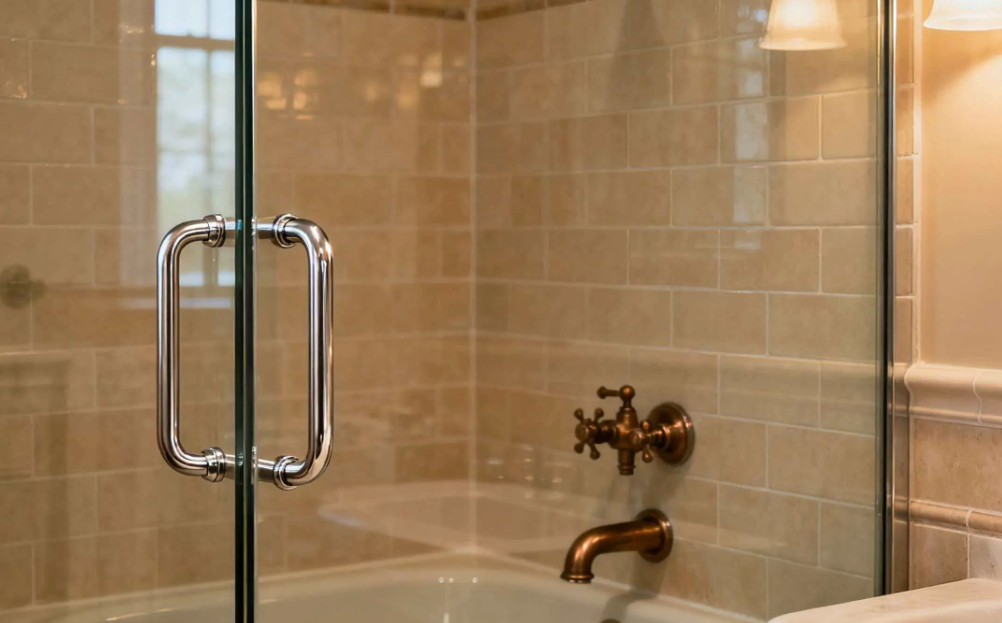
Handles and knobs offer a secure grip for opening and closing the shower door. Ergonomic design is a key consideration for these components. Handles should feel comfortable and secure in the hand, with smooth edges for safety and ease of use. Users should test the handle's grip for comfort, especially considering individuals with wet hands or mobility challenges. Bar handles provide a long, comfortable grip. They are ideal for larger or heavier doors and users with limited hand strength. Bar handles, being tubular, offer a firm grip. Handles should be easy to grip and operate, particularly for family or senior-friendly bathrooms. Designers consider handles with a substantial grip or ergonomic design. They avoid sharp edges or points that could cause injury, especially in showers used by children or the elderly.
Contributing to Enclosure Aesthetics
Shower door handles and knobs significantly contribute to the enclosure's aesthetics. They come in various designs, finishes, and styles. These options allow for customization, matching the overall bathroom decor. A well-chosen handle or knob enhances the modern and sleek appearance of a frameless shower enclosure.
Minimalist Stainless Steel Shower Enclosure Connector Glass Hardware
Modern bathroom design often emphasizes clean lines and an uncluttered appearance. Minimalist stainless steel shower enclosure connectors play a crucial role in achieving this aesthetic. These components offer robust support while remaining discreet, allowing the glass itself to be the focal point.
Glass Clips and Standoffs
Glass clips and standoffs represent the pinnacle of minimalist hardware. Designers engineer these small, yet powerful, fittings to provide secure connections with minimal visual impact. They are essential for creating truly frameless or nearly frameless shower enclosures.
Securing Fixed Glass Panels to Surfaces
Glass clips and standoffs firmly secure fixed glass panels to various surfaces. Installers typically attach these components directly to walls, floors, or ceilings. Clips grip the edges of the glass, holding it in place with precision. Standoffs, conversely, create a slight gap between the glass and the mounting surface, giving the panel a floating appearance. Both types of hardware utilize high-quality stainless steel, ensuring durability and corrosion resistance in wet environments. Manufacturers design these components for robust performance. For instance, frameless glass clamps, commonly used in shower enclosures, require a shear strength greater than 10 MPa. This critical metric ensures the hardware securely holds the glass under various stresses, providing both safety and long-term stability.
Achieving Minimal Visual Obstruction
The primary advantage of glass clips and standoffs lies in their ability to achieve minimal visual obstruction. Their compact size and sleek design allow the glass to dominate the visual field. This creates an open, airy feel within the bathroom. Unlike bulkier frames or channels, these minimalist connectors blend seamlessly with the surrounding decor. They enhance the illusion of a continuous glass surface. This design choice contributes significantly to a spacious and contemporary bathroom aesthetic. Homeowners and designers often select these fittings for their ability to deliver structural integrity without compromising on visual elegance.
Essential Sealing and Cushioning Components
Shower enclosures rely on more than just robust connectors. Essential sealing and cushioning components ensure water containment and protect the glass panels. These elements play a critical role in the long-term functionality and safety of any shower system. They prevent leaks and absorb shocks, contributing to a durable and watertight enclosure.
Gaskets and Seals
Gaskets and seals are indispensable for a high-performing shower enclosure. They create a barrier against water and provide vital protection for the glass. These components are often made from flexible, resilient materials.
Preventing Water Leakage
Gaskets and seals primarily prevent water leakage from the shower enclosure. They fill the small gaps between glass panels and other surfaces. This creates a watertight barrier. EPDM elastomers are highly effective in this role. They resist weather and ozone, making them ideal for plumbing and HVAC systems where preventing water leakage is crucial. Various materials offer specific advantages for water impermeability:
| Material | Cell Structure | Water Leakage Prevention Characteristic |
|---|---|---|
| Silicone Sponge | Closed-cell design | Prevents water absorption, water impermeability |
| Neoprene/EPDM Blend | Closed-cell structure | Prevents water absorption, excellent water impermeability |
Other materials also excel at resisting water ingress. Closed-cell sponge rubber, a type of foam gasket, offers excellent weather sealing. EPDM elastomers provide superior resistance to water, steam, and UV radiation. These material choices ensure the shower enclosure remains dry outside its boundaries.
Providing Cushioning for Glass
Beyond preventing leaks, gaskets and seals provide crucial cushioning for glass panels. They act as a buffer between the glass and harder surfaces like metal connectors or tiles. This cushioning absorbs minor impacts and vibrations. It significantly reduces the risk of glass chipping or cracking during installation and daily use. The soft, compressible nature of these materials also helps to create a snug fit. This snug fit minimizes stress points on the glass. It ensures the panels remain securely in place without direct, damaging contact with rigid hardware. This protective layer extends the lifespan of the glass and enhances the overall safety of the shower enclosure.
Choosing the Right Stainless Steel Shower Enclosure Connector Glass Hardware
Selecting the correct Stainless Steel Shower Enclosure Connector Glass Hardware is a critical decision. It impacts the safety, functionality, and aesthetic appeal of the entire shower space. Careful consideration of several factors ensures a successful and lasting installation.
Key Considerations for Selection
Glass Thickness and Enclosure Design
The thickness of the glass panels directly influences the type of connectors required. Thicker glass demands more robust hardware to ensure secure support. The overall design of the enclosure, whether frameless, semi-frameless, or a custom configuration, also dictates the specific connectors needed.
Weight Capacity and Installation Method
Proper installation methods and adequate weight capacity are paramount for safety. Installers require proper wood blocking for the base and walls of any shower unit. This supports the enclosure's weight and prevents product failure. A minimum of 2x4 blocking is necessary at the location of all structural members, including hinges, clamps, and header brackets. Fasteners must install into this blocking. Inadequate blocking can lead to screws moving, enlarging holes, and causing cracks in gelcoat or acrylic. This eventually breaks down fiberglass backing. Manufacturers often require a minimum of 1-1/4 inch thread engagement for all fasteners into blocking at load-bearing locations.
| Structural Support Type | Configuration |
|---|---|
| Single 2x4 stud | Needed behind the wall where the header meets the wall for top and bottom pivot units. |
| Double 2x4 studs | Needed behind the wall on the hinge side for wall mount hinges. |
| Double 2x4 studs | Needed at the threshold for hinge mounting and weight support. |
| Two 2x4 studs (Option 1) | Floor-to-ceiling, in line with other studs and secured together. |
| Two 2x4 studs (Option 2) | Floor-to-ceiling, 90 degrees to other studs, secured together. |
| One 2x6 stud (Option 3) | Floor-to-ceiling, turned 90 degrees to other studs. |
| Horizontal blocking (Option 4) | Lumber attached horizontally between other floor-to-ceiling studs at required locations. |
Improper use of 'U' channel cut into 2-inch pieces, resembling clamps, proves insufficient for heavy panels. This leads to flexing and dangerous installations. Hinges must be designed to carry the door's weight; exceeding their capacity causes doors to slip. Proper installation for glass-to-glass hinging requires larger, structural clamps. These clamps necessitate two fabricated holes through the glass and include a back leg for additional support. Pivot hinges are preferred for glass-to-glass hinging. They secure at the bottom and support 90% of the weight, unlike patch hinges which place 100% of the weight on the joined glass. One example of a shower enclosure connector's weight capacity is 180 lb (81 Kg). This capacity accommodates 3/8 inch (9.5 mm) or 1/2 inch (12.7 mm) glass while maintaining a 1-7/16 inch (36.5 mm) separation between panels.
Aesthetic Preference and Budget
Personal aesthetic preference plays a significant role. Homeowners choose finishes and styles that complement their bathroom decor. Budget considerations also guide hardware selection.
Importance of Stainless Steel Material Quality
Superior Corrosion Resistance
Stainless steel offers superior resistance to rust and corrosion. Grades like 304 and 316 are commonly used. For bathrooms in coastal regions or high-humidity areas, marine-grade stainless steel (316) and PVD-coated finishes are ideal. They withstand both humidity and salt corrosion. Hardware corrodes faster in such environments. Stainless steel grade 304 is susceptible to chlorides and sodium hypochlorite found in commercial cleaning products. Chrome-plated options show pitting within two years under identical conditions. Coastal facilities require marine-grade 316 stainless steel. Salt air corrosion can destroy standard hardware in 12-18 months. Pool areas and locker rooms necessitate non-ferrous materials. Iron-based components rust completely within six months. Temperature fluctuations exceeding 40 degrees daily can cause aluminum components to develop stress cracks. 316-grade stainless steel demonstrates superior performance compared to 304 in humid environments. It is recognized as marine-grade, making it highly suitable for coastal or high-humidity regions.
Durability and Longevity
High-quality stainless steel ensures exceptional durability and longevity. Schools and airports require cast stainless steel mechanisms. These can withstand over 250,000 operations without replacement. Lightweight aluminum systems fail within 18 months under similar high-traffic conditions. Schools have seen hardware lifespans increase from 2 years to over 8 years by selecting commercial-grade components.
Ease of Maintenance
Stainless steel is easy to clean and maintain. This contributes to the long-term appearance and hygiene of the shower enclosure.
Installation Best Practices for Stainless Steel Shower Enclosure Connectors
Proper installation ensures the longevity, safety, and aesthetic appeal of a stainless steel shower enclosure. Following best practices minimizes errors and guarantees a high-quality finish.
Preparing for Installation
Thorough preparation forms the foundation of a successful shower enclosure installation. This stage involves meticulous planning and gathering the right resources.
Measuring and Planning
Accurate measurements are paramount. Installers must measure the area multiple times from different angles. This accounts for inconsistencies in the space. They factor in the thickness of tiles and grout. Utilizing reliable tools such as measuring tapes, laser measurers, or spirit levels ensures precision. This prevents ill-fitting panels, leaks, and compromised structural integrity. Thorough planning considers the bathroom layout, door swing, plumbing fixtures, and potential obstacles. Installers verify door clearance before drilling or mounting hardware. This prevents doors from scraping walls or blocking vanities. The shower layout must allow doors to open comfortably without interfering with other fixtures. The curb should slope slightly inward, about 1/8 inch per foot, toward the drain. This prevents water spillage. Installers check the drain position to ensure alignment with the shower base. The shower floor should have a slight slope, 1-2%, towards the drain. This prevents water pooling and leakage. Installers select eight to ten-millimeter tempered glass for most homes. This balances strength, safety, and affordability. For households with children or seniors, laminated glass offers a safer option. Installers carefully measure the shower door space before purchasing. When cutting tracks, they measure twice and cut once. Shower doors are designed for plumb enclosures. If an enclosure is out-of-plumb by less than 3/8 of an inch, adjustments to roller assemblies can accommodate this. For differences greater than 3/8 inch, installers consult a contractor.
Necessary Tools and Safety
Installers use tempered glass for safety and durability. Tempered glass is strong but can shatter if mishandled during installation. They refer to glass safety and installation guides for proper techniques. Installers use high-quality hinges and seals. This prevents leaks and alignment problems. They ensure the hardware matches the door's weight and thickness. Frameless glass requires heavy-duty hinges.
Step-by-Step Installation Overview
A systematic approach to installation ensures efficiency and accuracy. Each step builds upon the last, contributing to a secure and functional enclosure.
Securing Wall Mounts
Installers ensure adequate structural support for the weight of the glass panels. They consult building codes for reinforced walls, sturdy anchors, and proper framing. Proper stud location is crucial for structural integrity and safety. Installing without mounting studs can lead to the enclosure failing or collapsing. For attaching wall mounts, a tightening torque of 12 - 14 N·m is recommended. Installers use the correct equipment. They ensure fasteners are not under or over-torqued. This prevents damage to the structure. Special care is taken with power tools. Installers ensure a hand-tight clutch setting and a fine impact drive.
Attaching Glass Panels
Installers attach glass panels with precision. For securing glass panels, a tightening torque of 12 - 14 N·m is recommended. They ensure fasteners are not under or over-torqued. This prevents damage to the panels and maintains sufficient clamping force. Installers take special care with power tools. They ensure a hand-tight clutch setting and a fine impact drive. This protects fragile glass panels and threads. Installers place the inside panel closest to the shower head. This prevents water from escaping between panels and reduces leaks.
Final Adjustments and Sealing
Installers check alignment with a level tool before final tightening. This prevents wobbles, gaps, leaks, and potential glass breakage. Misaligned hinges or rollers can cause sliding doors to drag or shift unevenly. Installers apply high-quality sealant specifically designed for glass showers evenly. They follow manufacturer instructions. This prevents water leakage, mold, and material deterioration. They use a high-grade waterproof sealant, applying it evenly without air bubbles or gaps. Installers regularly inspect and replace worn-out sealing strips. They ensure the area where the enclosure meets the wall is sealed.
Maintenance and Care for Stainless Steel Shower Enclosure Connector Glass Hardware
Proper maintenance and care significantly extend the lifespan and preserve the aesthetic appeal of stainless steel shower enclosure connectors. Regular attention prevents common issues and ensures the shower remains a functional and attractive space.
Routine Cleaning Tips
Consistent cleaning practices keep stainless steel hardware looking new and performing optimally. These practices focus on preventing buildup and using appropriate cleaning agents.
Preventing Water Spots and Stains
Water spots and mineral buildup detract from the appearance of stainless steel. To prevent these issues, especially with hard water, individuals should wipe down shower surfaces immediately after each use. This practice removes water and minerals before they can evaporate and leave stains. A small squeegee effectively removes all water.
Recommended Cleaning Products
For removing water scale from stainless steel, vinegar is an effective solution due to its acidic properties. After applying vinegar, individuals should follow up with warm soapy water. It is crucial to avoid using any abrasive cloths or pads. These materials can scratch the stainless steel surface, damaging its finish.
Addressing Common Issues
Even with routine cleaning, shower enclosure hardware can develop issues over time. Addressing these promptly maintains the enclosure's integrity and safety.
Loose Connections
Over time, vibrations and regular use can cause connections to loosen. Individuals should periodically inspect all stainless steel connectors for any signs of movement or instability. Tighten any loose screws or bolts using appropriate tools. Avoid over-tightening, as this can strip threads or damage the glass. A professional can also perform these checks during routine bathroom maintenance.
Worn Seals
Seals are critical for preventing water leakage. Regularly inspect seals for cracks, discoloration, or loss of flexibility. Water pooling outside the shower indicates improper sealing. This can lead to water damage on floors and walls, and encourage mold and mildew growth. Persistent mold and mildew growth, especially in older enclosures with worn-out seals or hard-to-clean areas, suggests failing seals. This poses health risks and creates unpleasant odors. Seals generally need replacement every 1-2 years, though high-quality seals may last longer. Regular maintenance and cleaning can extend their lifespan. Replace worn seals promptly to maintain a watertight enclosure and prevent further damage.
The Aesthetic Impact of Stainless Steel Shower Enclosure Connector Glass Hardware
Stainless steel shower enclosure connectors significantly influence a bathroom's overall aesthetic. They provide structural integrity and enhance the visual appeal of the space. These components contribute to a modern, sleek design and offer various customization options.
Modern and Sleek Design
Modern bathroom design often prioritizes clean lines and an uncluttered appearance. Stainless steel connectors perfectly align with this philosophy.
Enhancing Bathroom Decor
Stainless steel fixtures complement modern and contemporary bathroom designs. Their sleek and modern appearance integrates well with various styles. This includes minimalist and industrial aesthetics. They also suit more traditional spaces. Their clean, minimalist lines and neutral tones offer versatility. They complement diverse color schemes and design elements. Polished or brushed finishes create a reflective surface. This enhances the illusion of cleanliness and spaciousness. Bathrooms feel brighter and more inviting. Stainless steel bathroom faucets are a top choice for their clean and contemporary design. Manufacturers offer them in various styles and finishes. Stainless steel shower heads often feature modern, minimalist designs. Stainless steel bathroom sinks, available in undermount, drop-in, and vessel styles, offer durability and ease of maintenance. Stainless steel towel bars, hooks, and other accessories provide a contemporary touch and functionality.
Creating a Spacious Feel
Minimalist design, including clear glass shower doors, offers psychological advantages. These go beyond physical space-saving. Using monochromatic color schemes and simple lines creates an illusion of a larger space. Bright, light-reflecting colors and large mirrors contribute to a more open and airy feel. Clear glass shower doors visually extend the space. This makes the bathroom feel more expansive. Frameless glass shower doors reduce visual clutter. They eliminate frames and excessive hardware. This prevents visual distractions. Small bathrooms feels less overwhelming. They facilitate unimpeded light flow. This creates an expansive atmosphere. The room feels more illuminated and larger. This enhances liveliness and warmth.
Finish Options and Customization
The finish of shower enclosure connectors allows for significant customization. This helps match the hardware to the bathroom's overall design.
Brushed, Polished, and Matte Finishes
Stainless steel shower hardware contributes to a cohesive and sophisticated look in modern bathroom designs. It effortlessly complements contemporary aesthetics. It emphasizes clean lines and sleek finishes. While specific finish characteristics vary, the material itself offers customization options for various styles. This allows for personalization to match individual tastes. Brushed Stainless Steel (BS) is a common finish available for many shower enclosure connectors.
Matching Bathroom Fixtures
Matching shower enclosure connector finishes with existing bathroom fixtures requires careful consideration. Avoid subtle mismatches. These can create a visual clash. Choose intentionally different finishes or select products from the same company or product line for consistency. If mixing brands, distribute each finish evenly throughout the bathroom for a balanced look. Select one dominant and one secondary finish. A third can be used sparingly. Use the dominant finish for major fixtures like faucets and shower hardware. Use the secondary for accents such as towel bars and lighting. Combine warm tones like antique brass, bronze, or gold with cooler ones like nickel, chrome, or matte black. Contrast polished metals with brushed or matte finishes for layered sophistication. Ensure hardware style and form echo the bathroom's architectural language. This reinforces the design narrative.
A comprehensive understanding of diverse stainless steel shower enclosure connectors is vital. Each connector uniquely contributes to a functional, safe, and aesthetically pleasing shower space. Informed decision-making in hardware selection ensures lasting quality and design for your Stainless Steel Shower Enclosure Connector Glass Hardware. This knowledge empowers you to create a durable and beautiful bathroom environment.
FAQ
What is the main purpose of stainless steel shower enclosure connectors?
Stainless steel shower enclosure connectors ensure structural integrity and enhance aesthetic appeal. They provide secure connections for glass panels. This creates a functional and beautiful shower space.
Why is stainless steel a good material for shower hardware?
Stainless steel offers superior corrosion resistance, especially grades 304 and 316. It provides exceptional durability and longevity in humid bathroom environments. This material is also easy to maintain.
What is the difference between wall-to-glass and glass-to-glass connectors?
Wall-to-glass connectors secure glass panels directly to walls. Glass-to-glass connectors join two glass panels. They often connect panels at various angles to form corners or continuous walls.
How do I choose the right glass thickness for my shower enclosure?
Glass thickness depends on the enclosure design and panel size. Thicker glass, like 3/8 inch or 1/2 inch, requires more robust hardware. Always consult manufacturer specifications for compatibility.
What are the benefits of frameless shower enclosures?
Frameless enclosures create a clean, modern aesthetic. They minimize visible hardware, enhancing the bathroom's spacious feel. This design allows light to flow freely, making the space appear larger.
How often should I clean my stainless steel shower hardware?
Clean stainless steel hardware regularly to prevent water spots and mineral buildup. Wipe surfaces after each use. Use mild cleaners like vinegar and warm soapy water. Avoid abrasive materials.
What should I do if my shower door hinges become loose?
Periodically inspect all connections for looseness. Tighten any loose screws or bolts using appropriate tools. Avoid over-tightening. If issues persist, consult a professional.
Can I install shower enclosure hardware myself?
Professional installation is recommended for shower enclosure hardware. It ensures proper alignment, structural integrity, and safety. Incorrect installation can lead to leaks or glass damage.