2026 How to Choose the Right Aluminum Tube for Your Project?
When embarking on a project that requires strong materials, the choice of aluminum tube is crucial. Aluminum tubes are versatile and lightweight, making them suitable for various applications. However, selecting the right type can be challenging. With different sizes, alloys, and finishes available, understanding your project's specific needs is essential.
Consider the weight and strength required for your application. An aluminum tube for a framework needs to be durable yet lightweight. Think about the environment it will be exposed to. Will it experience moisture or extreme temperatures? The tube's finishing can impact its longevity. You might feel overwhelmed by the options.
Each project is unique. Reflect on how the aluminum tube will be used. Too often, people make hasty decisions without evaluating all factors. But with careful consideration, you can find the right aluminum tube that meets your needs efficiently.
Understanding the Basics of Aluminum Tubes and Their Applications
Aluminum tubes come in various shapes and sizes. Understanding their basics is crucial for any project. They are lightweight, durable, and resistant to corrosion. This makes them suitable for many applications, such as construction, automotive, and aerospace.
When selecting an aluminum tube, consider the dimensions. Think about the length and diameter that best fits your needs. Weight can also be a factor. A heavier tube might seem stronger, but it can add unnecessary weight. Look for a balance between strength and weight.
**Tip:** Always check the wall thickness. A thicker wall provides better strength. However, it also adds weight. You may need to compromise based on your project's requirements.
Also, think about the type of alloy. Different alloys offer different properties, such as flexibility or strength. Select the alloy that aligns with your project needs. Sometimes, the most common choice may not be the best for your specific situation.
**Tip:** Don’t overlook the finish of the tube. A clear anodized finish can enhance corrosion resistance. Remember, aesthetic qualities may also matter, depending on your project.
Choosing the right aluminum tube is not always straightforward. It involves understanding your specific needs and potential limitations. Take your time to analyze each option thoroughly.
2026 Aluminum Tube Applications
Factors to Consider When Selecting Aluminum Tube Specifications
When selecting an aluminum tube for your project, various factors come into play. First, consider the intended application. Different projects may require specific strength or weight properties. For instance, a lightweight tube works well for aerospace applications but may not suffice for structural purposes.
Next, look at the dimensions of the tube. Inner and outer diameters can significantly impact performance. A tube that is too thick may add unnecessary weight, while one that is too thin may not provide adequate support. It’s crucial to strike a balance between these elements. This can sometimes be challenging, as the wrong choice often becomes clear only after testing.
Another vital consideration is the aluminum alloy used. Different alloys offer various benefits, such as corrosion resistance or improved machinability. You might find yourself overwhelmed by choices. Take time to evaluate your project's specific needs. Sometimes, choosing the wrong specification leads to unnecessary delays or additional costs. Reflecting on previous experiences can be beneficial in making a more informed decision.
Comparing Different Aluminum Alloys for Tube Construction
When selecting aluminum tubes for construction, understanding the different alloys available is crucial.
Aluminum 6061 is among the most popular choices. It offers excellent
corrosion resistance and weldability. In fact, industry reports show that 6061 accounts for nearly 50% of the
aluminum usage in structural applications. Lightweight yet strong, it is ideal for many projects.
On the other hand, aluminum 5052 is known for its superior formability
and fatigue resistance. This alloy is often used in marine applications due to its enhanced corrosion resistance when
exposed to salt water. It may be difficult to weld compared to 6061, which can pose challenges during assembly. A
careful analysis is vital because the performance characteristics can significantly impact the overall project outcome.
Another option, aluminum 7075, is recognized for its high strength-to-weight
ratio. This alloy is often favored in aerospace applications. However, it's less corrosion resistant and more difficult
to work with. Understanding these trade-offs is essential. Choosing the right alloy can greatly influence not only
performance but also the long-term durability of the project. The decision requires a balance between attributes
and application needs.
Assessing the Manufacturing Processes for Aluminum Tubes
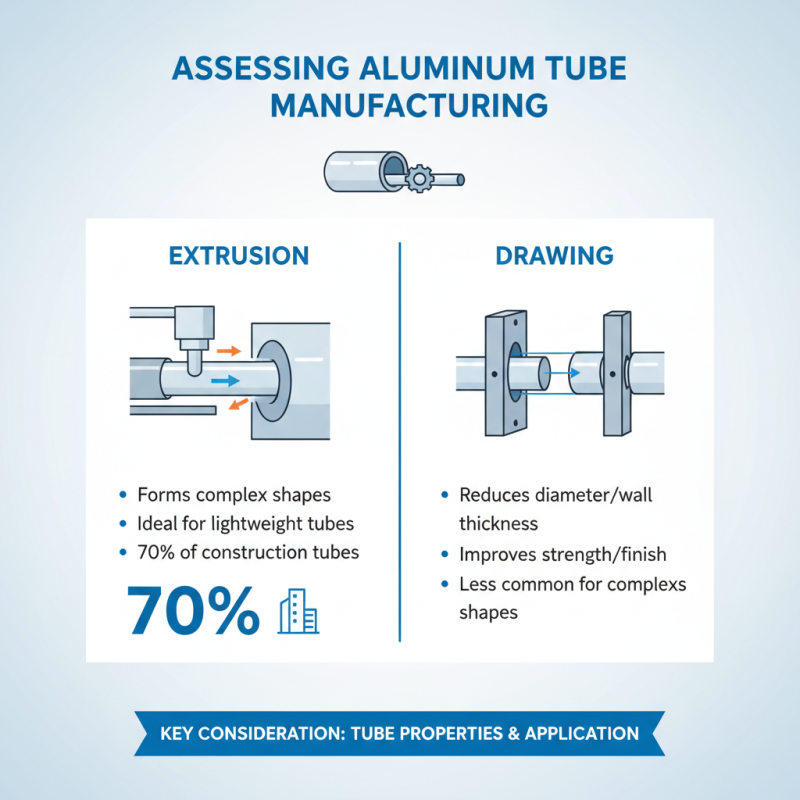
When selecting aluminum tubes, understanding the manufacturing processes is crucial. Various techniques, including extrusion and drawing, affect the tube's properties. Extrusion is popular for producing lightweight tubes. This method allows for complex shapes, making it ideal for diverse applications. According to a recent industry report, 70% of aluminum tubes in construction are made using extrusion due to its efficiency.
In contrast, the drawing process enhances strength and dimensional accuracy. Drawn tubes often have tighter tolerances. This method is vital for applications requiring high precision, like aerospace. A study showed that drawn aluminum tubes can achieve up to 30% increased tensile strength compared to other methods. However, the drawn process can be more expensive and time-consuming.
It's essential to consider these factors when choosing manufacturing methods. Not every project demands the highest strength or lowest cost. Reflecting on specific project needs is vital. Understand trade-offs in quality and cost. Industry trends suggest that customization and sustainability are becoming increasingly important. Making informed choices is key to optimizing resources and performance.
Evaluating Cost vs. Performance in Aluminum Tube Selection
Choosing the right aluminum tube for your project requires a careful balance between cost and performance. According to industry reports, the cost of aluminum tubes is influenced by several factors including alloy composition, thickness, and finish. For instance, 6061 aluminum is often praised for its strength and corrosion resistance, but it might cost more than other alloys. This trade-off is crucial for developers and engineers.
When evaluating your options, consider both short-term and long-term implications. Cheaper materials may lead to higher maintenance costs down the line. Data shows that projects using high-quality aluminum tubes see fewer failures, saving up to 20% in overall costs. That means investing more initially could benefit your project in the future.
Tips: Always assess the weight-to-strength ratio. Lighter tubes can reduce shipping costs. Evaluate your project's environment. Will it face moisture or chemicals? Also, check the fabrication process. Some tubes are easier to work with than others. Carefully analyzing these factors will lead to more informed decisions.
2026 How to Choose the Right Aluminum Tube for Your Project? - Evaluating Cost vs. Performance in Aluminum Tube Selection
| Tube Diameter (mm) |
Wall Thickness (mm) |
Length (m) |
Cost per Meter ($) |
Weight per Meter (kg) |
Strength (MPa) |
Typical Applications |
| 25 |
1.5 |
3 |
15 |
0.65 |
220 |
Frameworks, Railings |
| 30 |
2.0 |
5 |
20 |
1.0 |
260 |
Bicycles, Automotive Parts |
| 40 |
3.0 |
6 |
30 |
1.5 |
310 |
Construction, Machinery |
| 50 |
4.0 |
8 |
40 |
2.0 |
350 |
Industrial Equipment, Aerospace |